Mazes and Logic Puzzles: The Quiet Way to Build Focus
By Hellen Gomez • October 12, 2026 • 1 min read
Mazes and logic puzzles build focus and planning without feeling like work. Here's how to use them well.
Key Takeaways
- Practical, Montessori-inspired ideas you can use today.
- Printables and activities that fit a calm home routine.
Table of contents
Why mazes work
A maze is a small, self-contained problem. There's a start, an end, and one rule: find the way through. No reading, no explaining, no wrong answer to feel bad about. Many parents find that a child who can't sit still for a worksheet will sit with a maze for ten minutes.
What it's actually building
- Planning: look ahead before you move
- Fine motor: keep the pencil on the path
- Frustration tolerance: a dead end isn't the end
- Focus: one task, start to finish
How to pick the right level
Start easier than you think. A child who flies through an easy maze will ask for a harder one. A child who's stuck on a hard one may not ask for anything again. Many parents find the confidence from an easy win is worth more than the challenge.
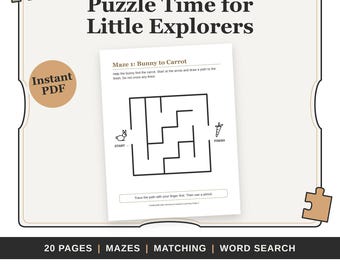
Puzzles and Games for Kids Easy
Simple mazes, matching, and word searches to build confidence and fine motor skills, ages 4-8.
View PrintableLogic puzzles, the next step
Once mazes are easy, logic puzzles add a new layer: the answer comes from thinking, not just tracing. "The cat is not in the red box." Simple rules, real deduction.
A small note
These aren't busywork. They're quiet focus, in a form a child will actually choose. Inspired by Montessori principles, the calm comes from the doing, and the printable just holds the path.
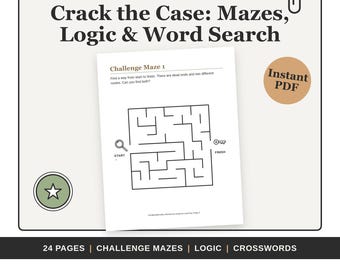
Puzzles and Games for Kids Medium
Mazes, logic puzzles, and word searches that build problem-solving and focus for ages 5-8.
View PrintableSome links go to our Etsy shop. We only recommend printables we would use in our own learning routines.