Fine Motor Tracing Before Letters: Why Order Matters
By Hellen Gomez • October 23, 2026 • 1 min read
Fine motor tracing prepares a hand for letters. Why lines and curves come first, and how to practise without frustration.
Key Takeaways
- Practical, Montessori-inspired ideas you can use today.
- Printables and activities that fit a calm home routine.
Table of contents
Letters are the hardest shapes
Every letter is a combination of lines and curves. If a hand cannot draw a steady curve on its own, a letter is several skills away, and practising letters too early mostly teaches a child to dislike them.
The order that works
- Straight lines, in every direction
- Arches and waves
- Zigzags
- Spirals and circles
- Paths that need control
Short sessions, real gains
Five to ten minutes is enough. Tired hands make messy lines, and messy lines convince a child they are bad at this.
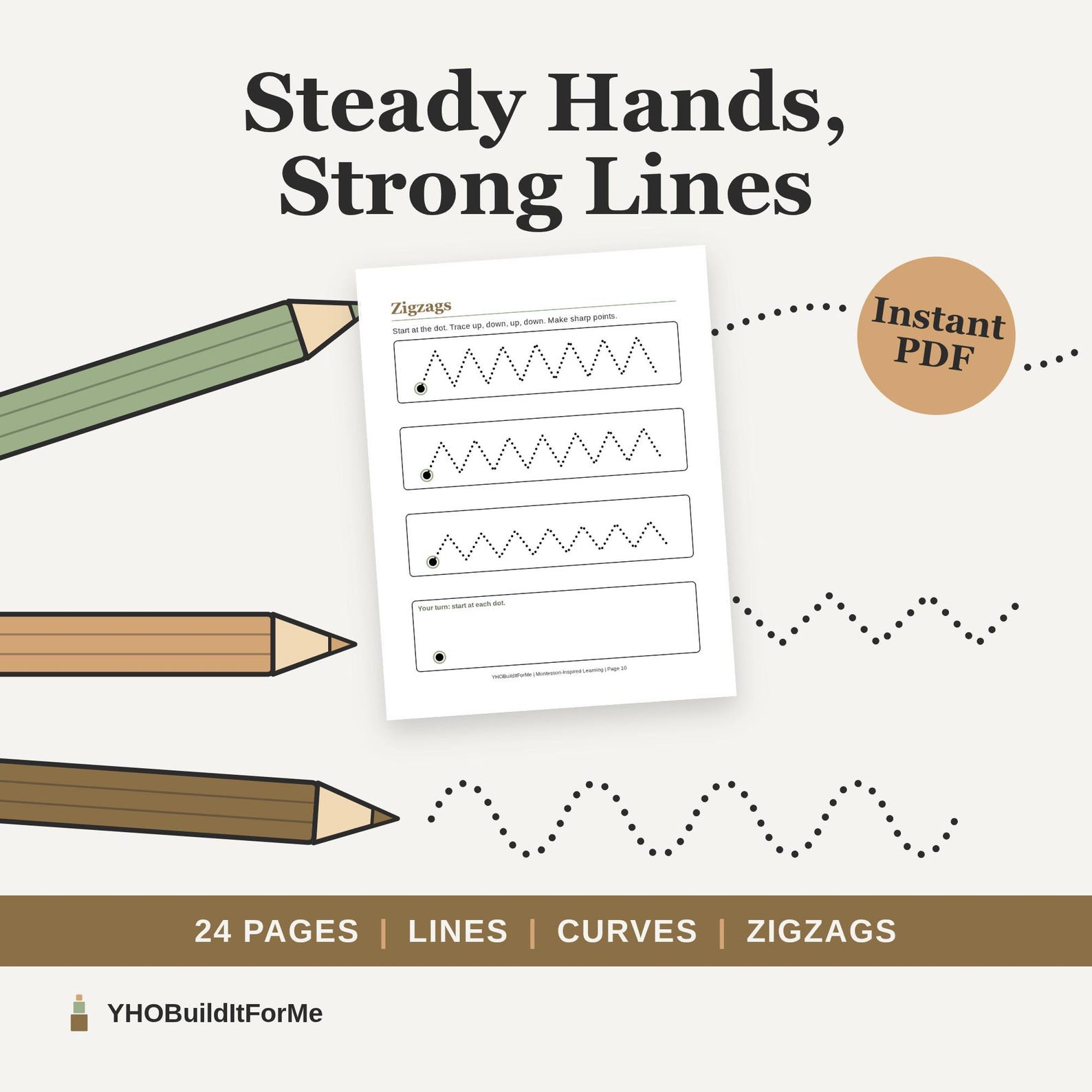
Fine Motor Tracing Book
24 printable tracing pages of lines, arches, zigzags and spirals that build pencil control before writing letters.
View PrintableWatch the posture, not the line
Feet flat, page steady, pencil held lightly. A child who is comfortable will keep going. A child who is straining will stop, and no amount of encouragement changes that.
Make the path a story
A bee flying to a flower is a line with a reason. Children trace stories far more carefully than they trace dotted rows.
A small note
Inspired by Montessori principles, the hand is prepared before it is asked to write. Many parents find that slow tracing now saves a lot of letter practice later.
Some links go to our Etsy shop. We only recommend printables we would use in our own learning routines.