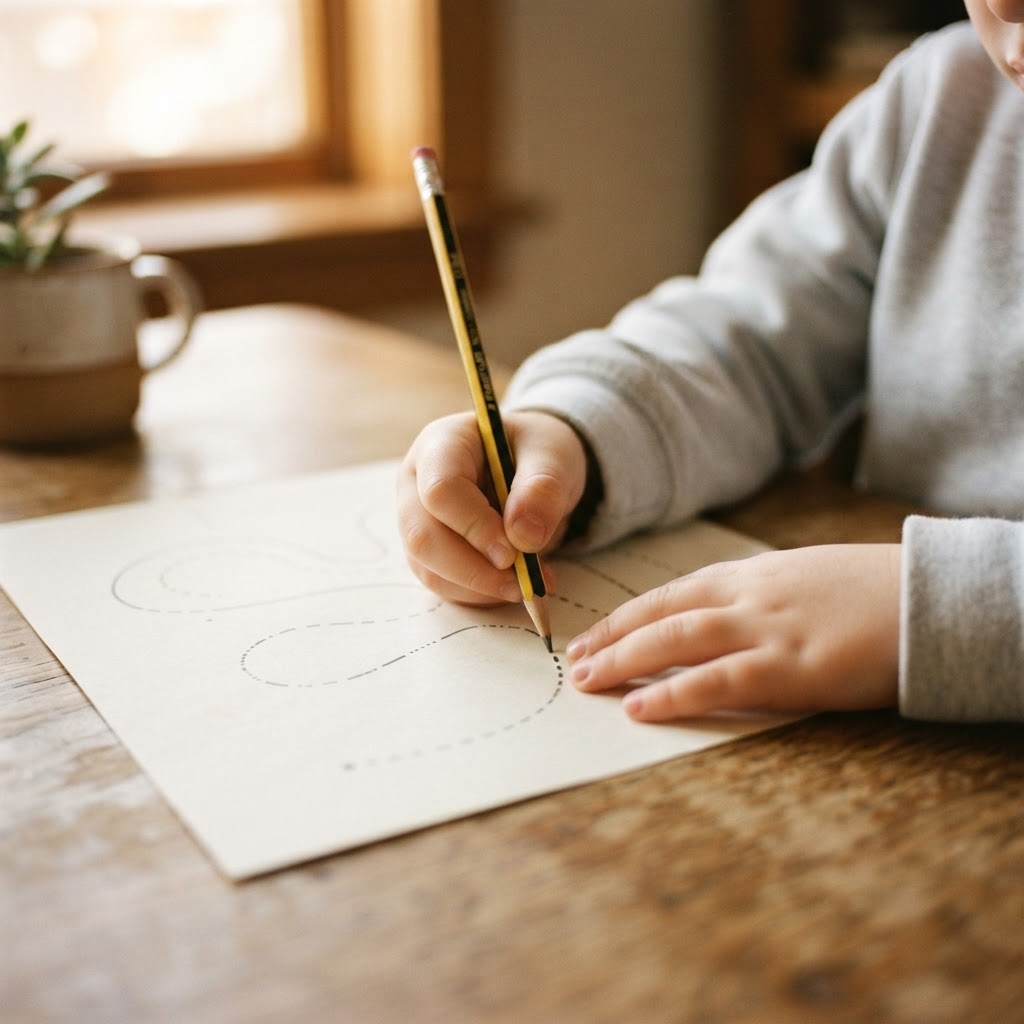
The Importance of Printables at Home
By Hellen Gomez · October 30, 2026 · 4 min read
Printables look like the least exciting thing on the shelf. Here is what they actually do for a child at home: real feedback in the hand, repetition that costs almost nothing, and work a child can start alone.
Table of contents
Printables get a bad reputation in Montessori circles, and I understand why. A worksheet handed to a whole class, filled in silently, and marked by an adult is the opposite of child-led work. But a printed page on a tray at home is a different object entirely, and I think it earns its place.
I'm Hellen. I design printable books for a living, so read this knowing my bias. I also have a shelf at home, and the printables stay because of what they actually do.
The feedback is in the child's hand
A good printable page is self-correcting. A shape that will not fit its outline, a line that wanders off the path, a pattern that stops repeating: the child can see the problem without an adult leaning over to say something.
That matters more than it sounds. When the correction comes from the page, the child stays in charge of the work. When it comes from you, the work quietly becomes about you.
Repetition gets cheap
Children repeat things. A four-year-old may trace the same curve forty times, and that is not a failure of imagination, it is practice. The trouble is that hands-on materials are expensive to repeat and screens are easy to overuse.
A printed page can be printed again. That sounds trivial until you have watched a child ask for the same tracing sheet for the fifth day in a row. Repetition is where the skill settles, and printables make repetition affordable.
Work a child can start alone
The best thing on your shelf is the thing your child can begin without you. Printed work does that: paper, pencil, tray, start. You are nearby, not required.
This is the difference between a page and a project. A page has an obvious first move. A project needs an adult, a plan, and a conversation. Both belong at home, but on the mornings when you are making lunch with one hand, the page is the one that holds.
A record you can actually keep
Progress in early childhood is hard to see day to day. Then you find a page from three weeks ago with shaky, wobbling lines, and this week's page with the same lines drawn steady, and suddenly it is obvious.
Keep a folder. Not a portfolio system, just a folder. Date the pages with a pencil when you remember. When someone asks how it is going, you have an answer that is not a feeling.
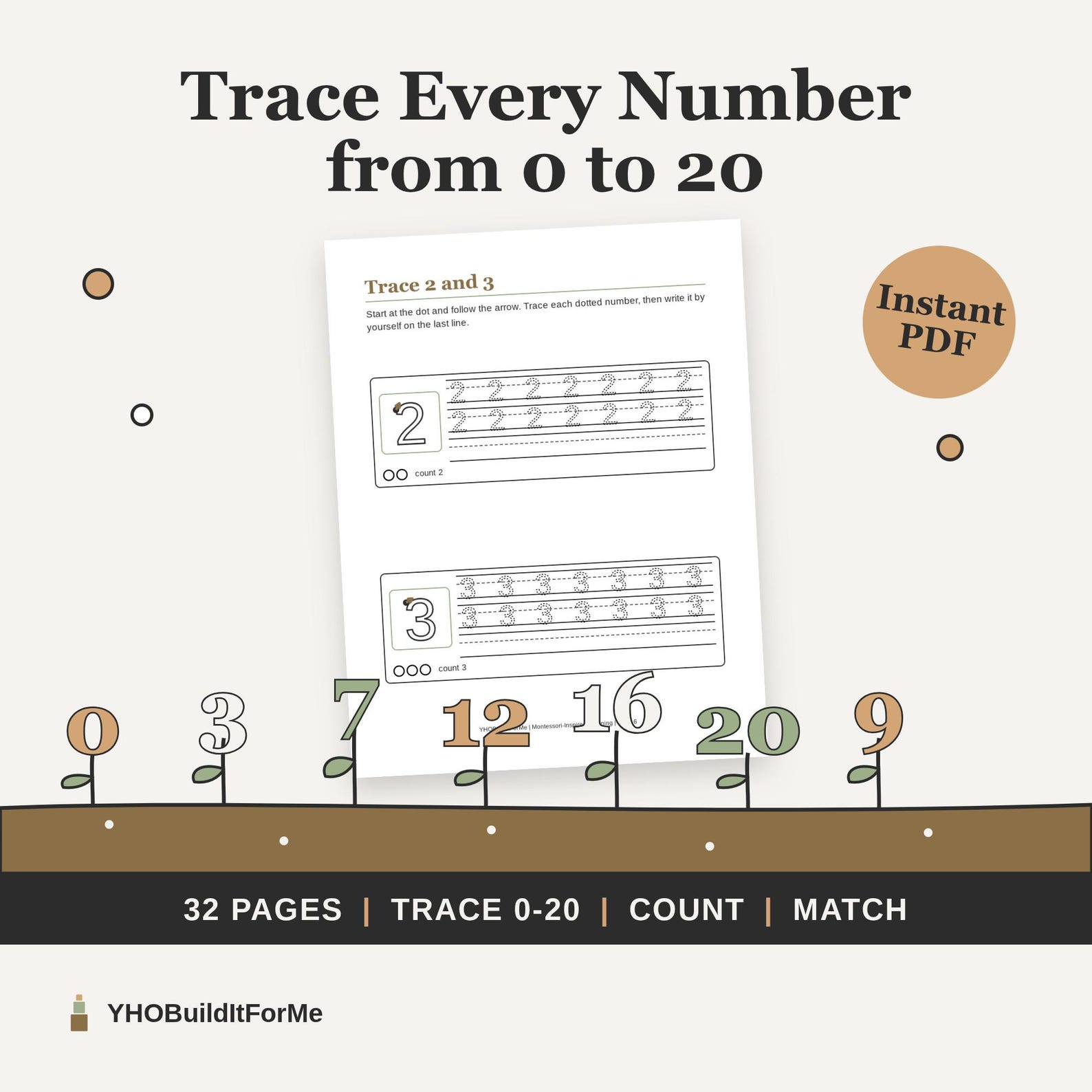
Early Number Tracing 0-20
32 printable pages for tracing and counting numbers 0 to 20, with matching pages and simple counting practice.
View printableHand strength before handwriting
A pencil grip is built long before a child writes letters. It is built in pinching, tracing, coloring inside a shape, and cutting along a line. Printed pages give that work a reason to happen, which is the part children care about.
If your child is in the stage where holding a pencil is awkward, start with tracing rather than writing. The fine motor tracing book exists for exactly that stage, and number tracing 0-20 does double duty once the hand is ready for more.
Quiet, without a screen
There is a particular kind of afternoon where everyone needs the room to be quieter. A printed page is the calmest thing I have found for that hour. It is absorbing without being loud, and it ends on its own.
The app I built does the same job in digital form, and I recommend it. But paper still has one advantage nothing digital has matched: it can be dropped, folded, carried to a restaurant, and colored on in a car without a single battery.
Where printables fit in a Montessori home
Keep them on a shelf, not a folder in a cupboard. Put out two or three, with a pencil or a tray of colored pencils, at child height. Change them when interest fades, not on a schedule.
Do not correct the page. Let the page do it, or let it go. And when a child finishes, do not praise the result. Say what you see: "You stayed with that line all the way to the end."
Common questions
What age are printables for? The ones in my shop start at four, when a child has the hand control and attention for a printed task. Younger children usually do better with real objects first.
How often should I print new pages? When the old ones stop being chosen. That might be three days or three weeks, and both are fine.
Is printing expensive? A page costs pennies. Compared with a subscription toy box, it is close to nothing, which is one of the reasons I still print at home.
If you want somewhere to start, browse the full printable collection. Two pages on a tray is a real beginning.
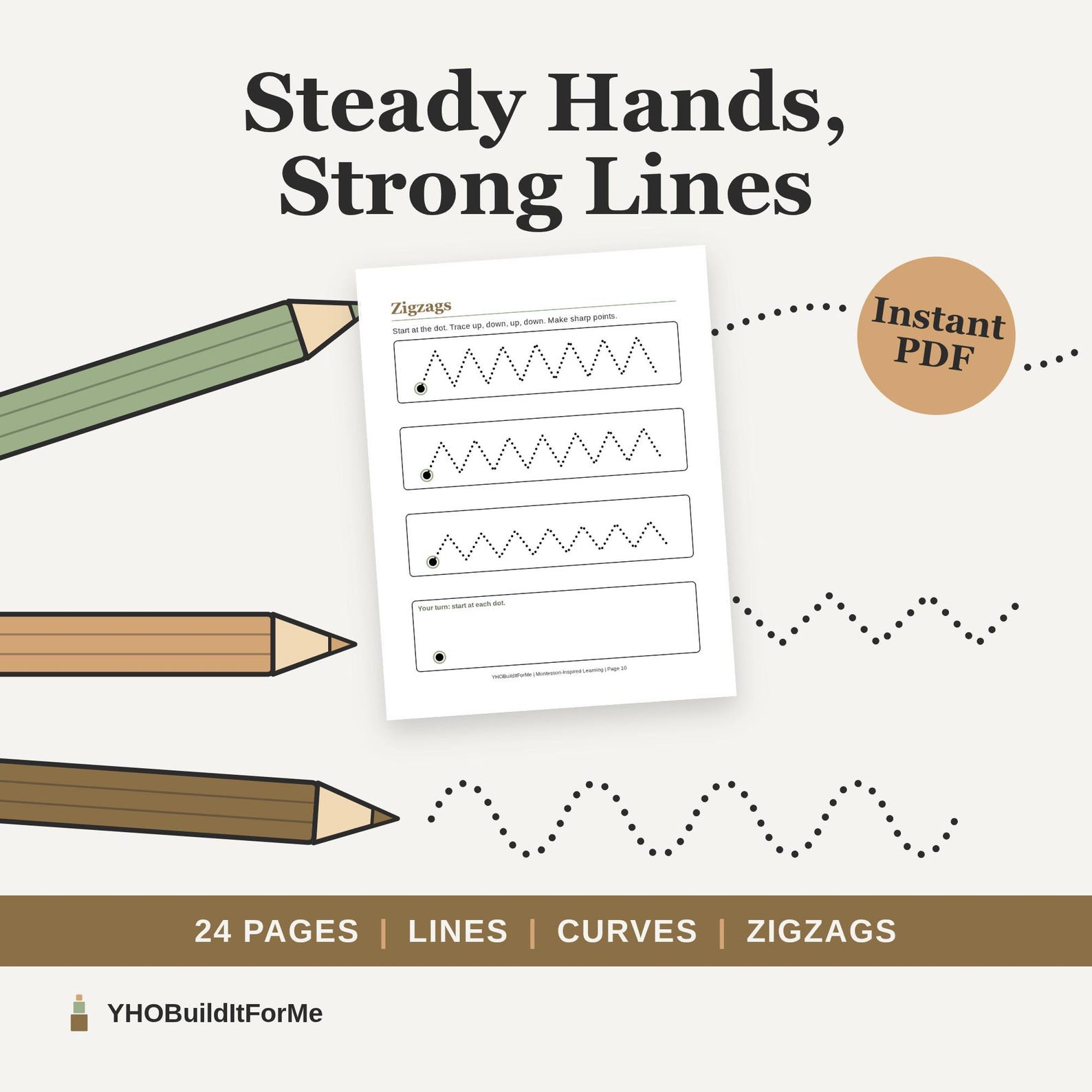
Fine Motor Tracing Book
24 printable tracing pages of lines, arches, zigzags and spirals that build pencil control before writing letters.
View printableSome links go to the Etsy shop. Every printable here is one I would use in my own learning routine.