Homeschool Preschool Routine | YHO Build It For Me
By The YHO Team · September 23, 2026 · 4 min read
A 20-minute daily routine for homeschool preschool that fits around a nap, a toddler, and a phone call.
Table of contents
A homeschool preschool routine that lasts is small. Twenty minutes, four blocks, one folder. Everything else in the day is life, which at four teaches more than a table ever will.
This is the routine I would run if I had one child, a toddler, and a Tuesday. It assumes nothing about curriculum, and it survives a missed day without a catch-up plan.
The four blocks
Each block takes about five minutes. Move through them in the same order every day, because the order is what makes it a routine rather than a series of suggestions.
- A practical life job. Pour water, wipe the table, fold cloths, sort laundry.
- A number or letter page. One page, one skill, printed the night before.
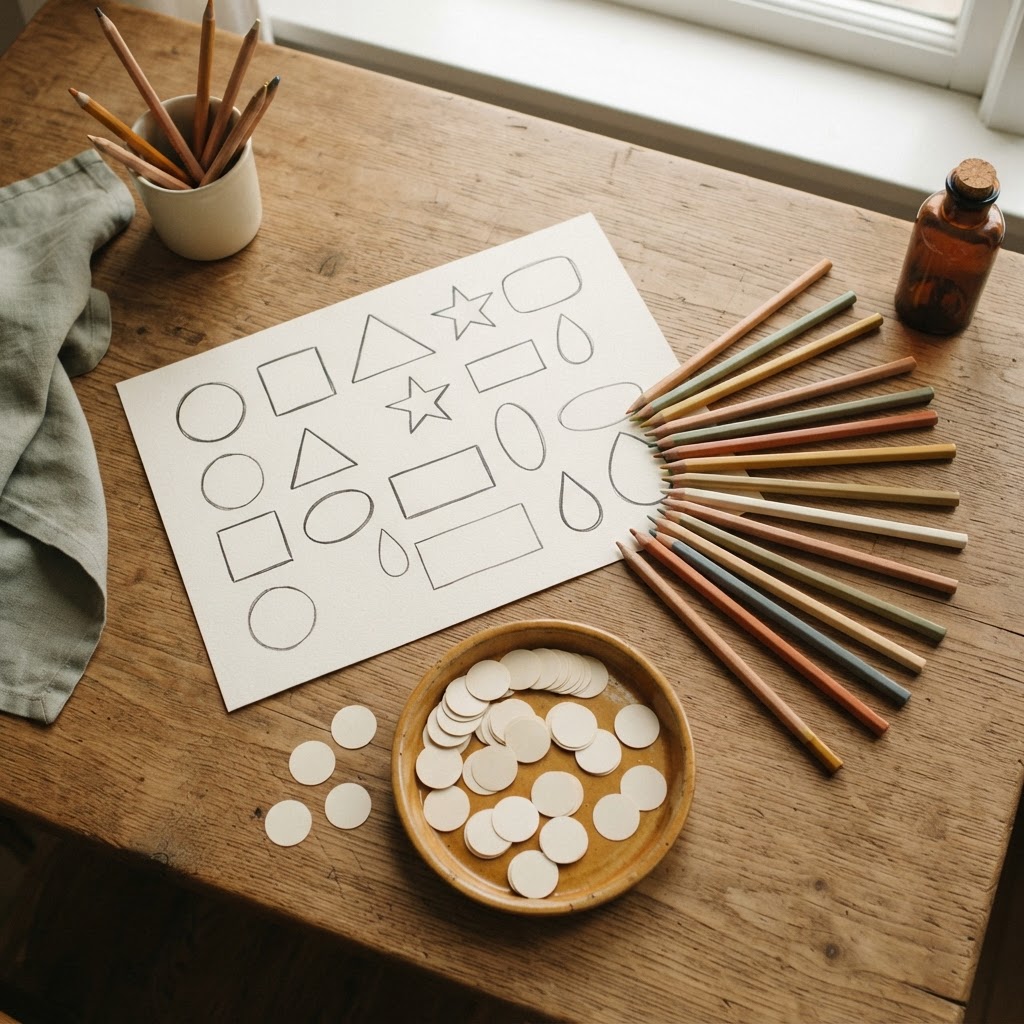
- A fine motor task. Cutting a strip, tracing a line, colouring a shape.
- A read-aloud. One picture book, read slowly, with time to look at the pictures.
That is the whole homeschool preschool day. No circle time, no calendar board, no pledge.
What to prepare the night before
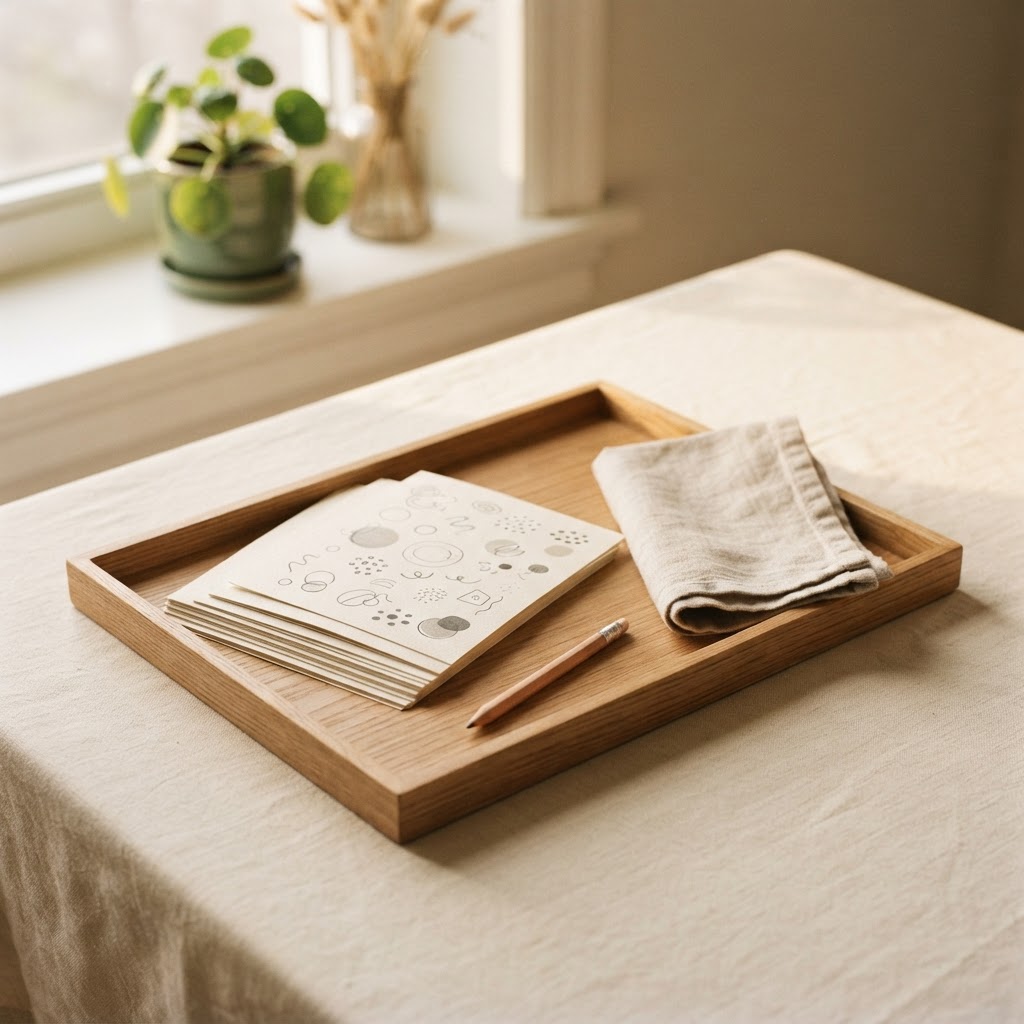
Five minutes the night before buys the morning. Print the one page you need. Cut anything that needs cutting. Put the tray on the table with the pencil and the cloth. When the child wakes up, the work is already possible.
If you prepare nothing, the morning will not fail. It will simply become screen time, which is what happens when the table is empty and the adult is tired.
How to run a block
Show the first step once. Then sit nearby and be quiet. When the child asks a question, ask one back. When they finish, put the work in the folder and move on. Do not extend a block that ended early and do not force one that is going badly.
A block that gets abandoned is data. Either the skill is too new or the timing was wrong. Try a smaller version tomorrow.
Why so little
Because attention at four is short and precious. Twenty focused minutes, done daily, adds up to more than two hours done once and never repeated. It also leaves the child wanting more, which is a good place to stop.
Keeping a record without a spreadsheet
One line a day in a notebook: the job, the page, the book, anything the child said. At the end of a month you have a portfolio, and at the end of a year you have a record of what actually happened rather than what was planned.
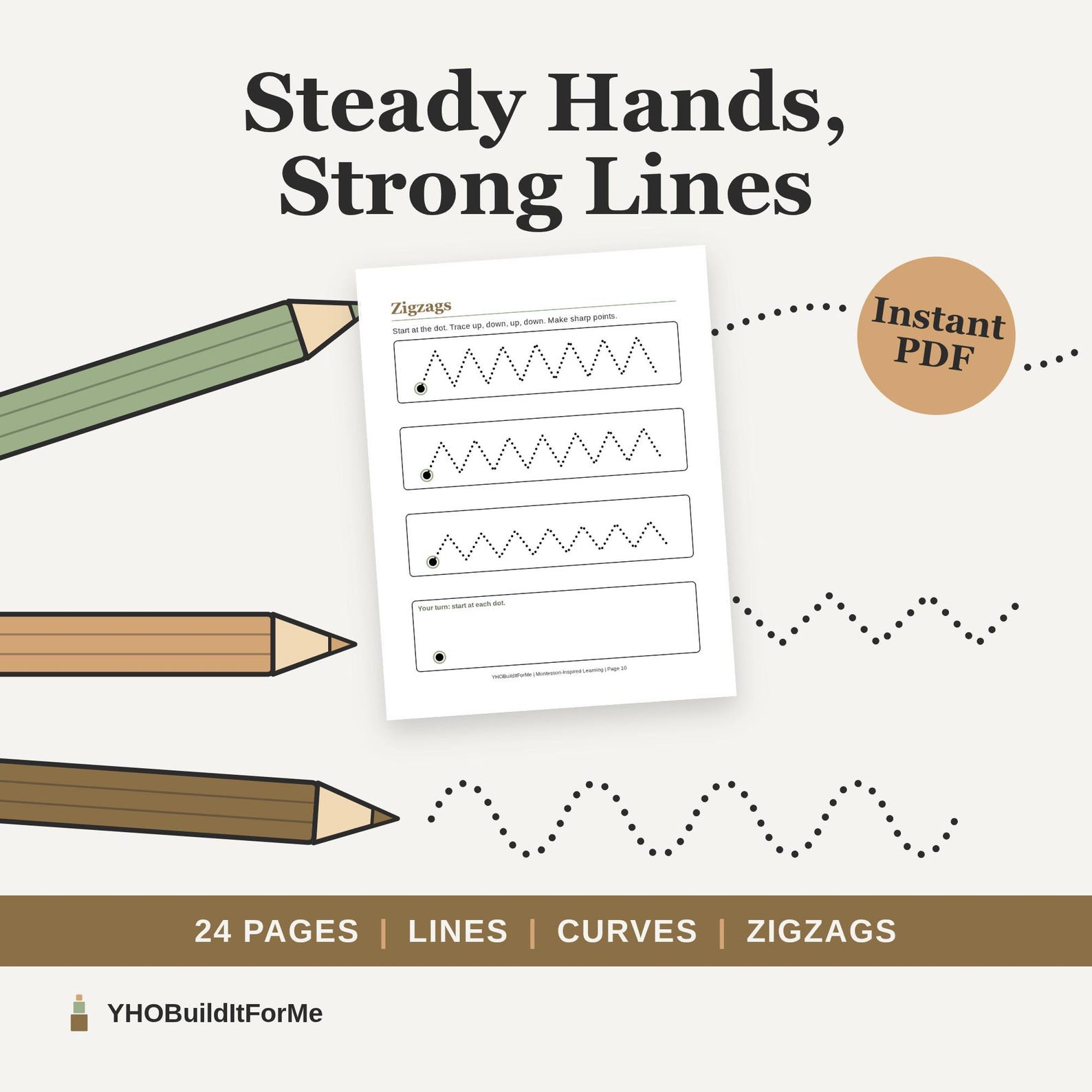
Fine Motor Tracing Book
24 printable tracing pages of lines, arches, zigzags and spirals that build pencil control before writing letters.
View printableWhere to take it next
When this routine is steady, this sample homeschool week shows how printables and real objects share a fuller week, and this starter guide to learning at home covers the approach behind the blocks.
With a toddler in the room
The toddler is the reason most routines fail, so plan for them rather than around them.
Give the toddler their own tray, set up before the older child's work starts. Same shape of activity, fewer pieces. A jug with a lid, a cloth, a board book. They will copy the older child, which is the point.
Run the routine while the toddler is awake rather than waiting for a nap that may not come. The work is short enough to survive an interruption, and an interruption that can be absorbed is better than a routine that needs a silent house.
When the routine goes quiet
Some weeks it disappears entirely. Illness, a trip, a new baby, a stretch of bad sleep. Nothing needs to be made up.
Restart with the shortest block: the read-aloud. One book, on the sofa, no table. When that returns, add the practical life job. The page work comes last, and it comes back on its own.
A routine that can restart at half its size is worth more than a schedule that has to begin again from the beginning. That is why the blocks are five minutes and not twenty.
The smallest version
On the worst weeks, run the routine at a quarter size. One practical life job in the kitchen, one book on the sofa. That is five minutes and it still counts. A homeschool preschool routine that can shrink is one that survives a winter, and the shape is what the child remembers rather than the volume. Keep the folder where it lives even when nothing goes into it. When the week improves, the read-aloud comes back first, then the tray, then the page. Nothing about the order is precious except the consistency of doing something small, most days, with no catch-up owed.
One tray, one page, one book, and a line in the notebook. That is the whole routine, and it fits in a weekday.
Where to start
Set out one tray tonight and do one block tomorrow morning. Printable practical life and tracing pages are in the YHO Build It For Me shop.
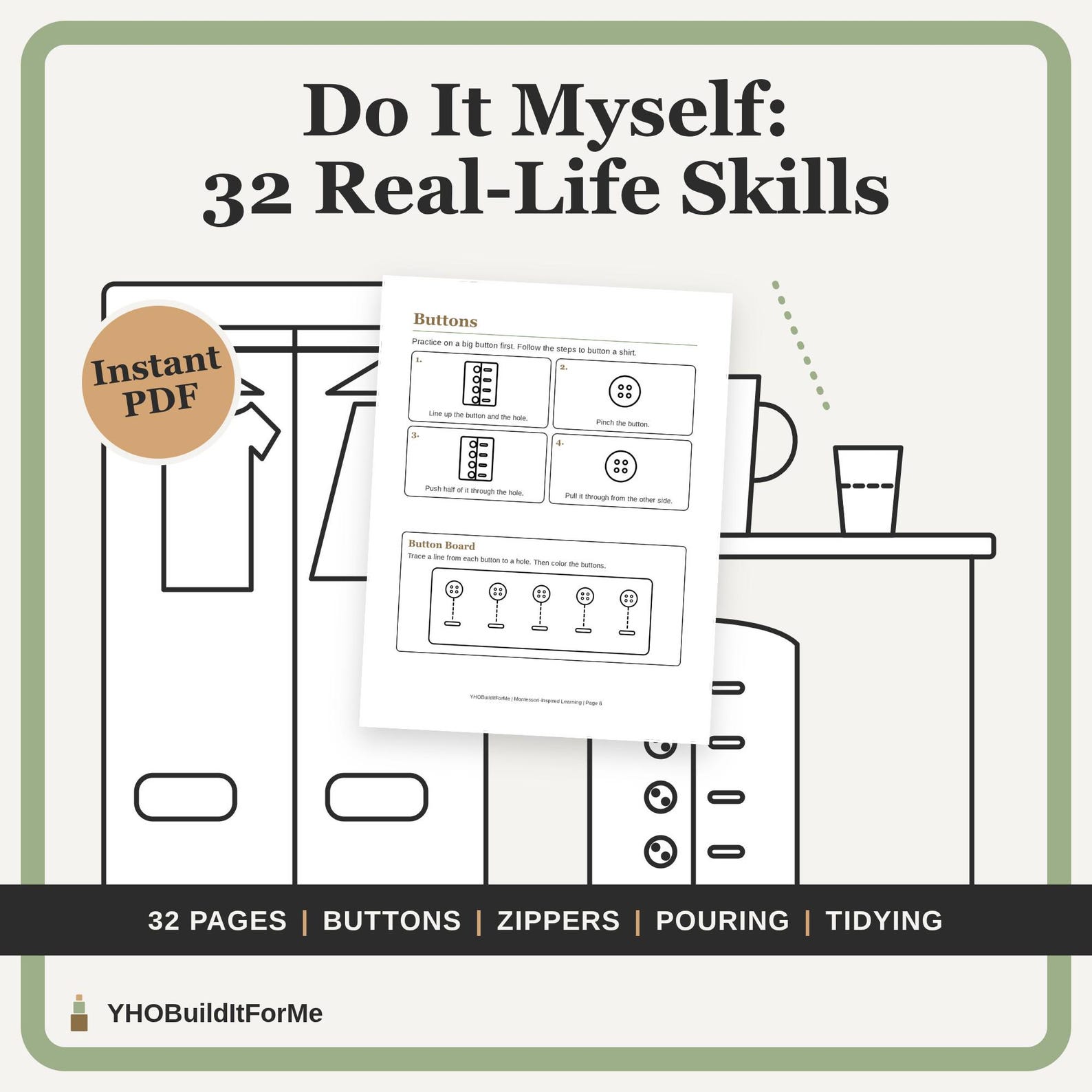
Montessori Practical Life Printable
32 printable pages of real-life skills: buttons, zippers, pouring, tidying and table setting, with step-by-step pictures.
View printableFrequently asked questions
How long should a homeschool preschool day be?
Twenty minutes of focused work is a full day at four. The rest of the day is play, errands, and real jobs around the house.
What are the four blocks of the routine?
A practical life job, a number or letter page, a fine motor task, and a read-aloud. Each block is about five minutes.
What if we miss a day of homeschool preschool?
Nothing happens. The routine is deliberately small so it can resume the next morning without catching up.
Some links go to the Etsy shop. Every printable here is one I would use in my own learning routine.