Kids Logic Puzzles Printable | YHO Build It For Me
By The YHO Team · October 30, 2026 · 4 min read
The practice sequence for logic grids: three by three first, then three friends, then four. How to know when to move up.
Table of contents
Kids logic puzzles printable pages come in sizes, and the size is the whole progression. Three by three, then three friends with two categories, then four friends, then four with three categories. Each step adds one thing to hold in the head.
Most children rush this. Parents rush it too, because a bigger grid looks like progress. It is only progress if the child finishes it.
Step one: three by three
Three names down the side, three colours along the upper edge, three or four clues. One name gets one item; every other square in that row and column is out.
This size teaches the cross-out, which is the entire method. Do not move on until the child marks the cross-out without being reminded.
Step two: three friends, two categories
Same size, different content: three children, three pets, three houses. Two categories means two grids or one larger grid with two sections.
This is where children learn that clues can connect across categories: the child with the cat lives in the blue house. That sentence contains two facts, and seeing it is a step up.
Step three: four friends
Four names, four items, five or six clues. The grid is bigger, but the method is identical. The difficulty is patience, not logic.
Expect the first four-by-four grid to take twenty minutes and need some company. Expect the third to take ten and need none.
Step four: four friends, three categories
This is the ceiling for most children under eight, and it is plenty. Three categories means three sections and clues that link all three.
Do not go further until this is comfortable. A five-by-five grid is a different activity, and it belongs to a later year.
Signs of readiness for the next step
- The current size is finished without help.
- The child explains a clue out loud, in their own words.
- The child asks for a harder one.
- Nothing is guessed; every mark comes from a clue.
Three of four is enough. Guessing is the sign to stay put, because guessing means the method is not yet doing the work.
Keeping the grids
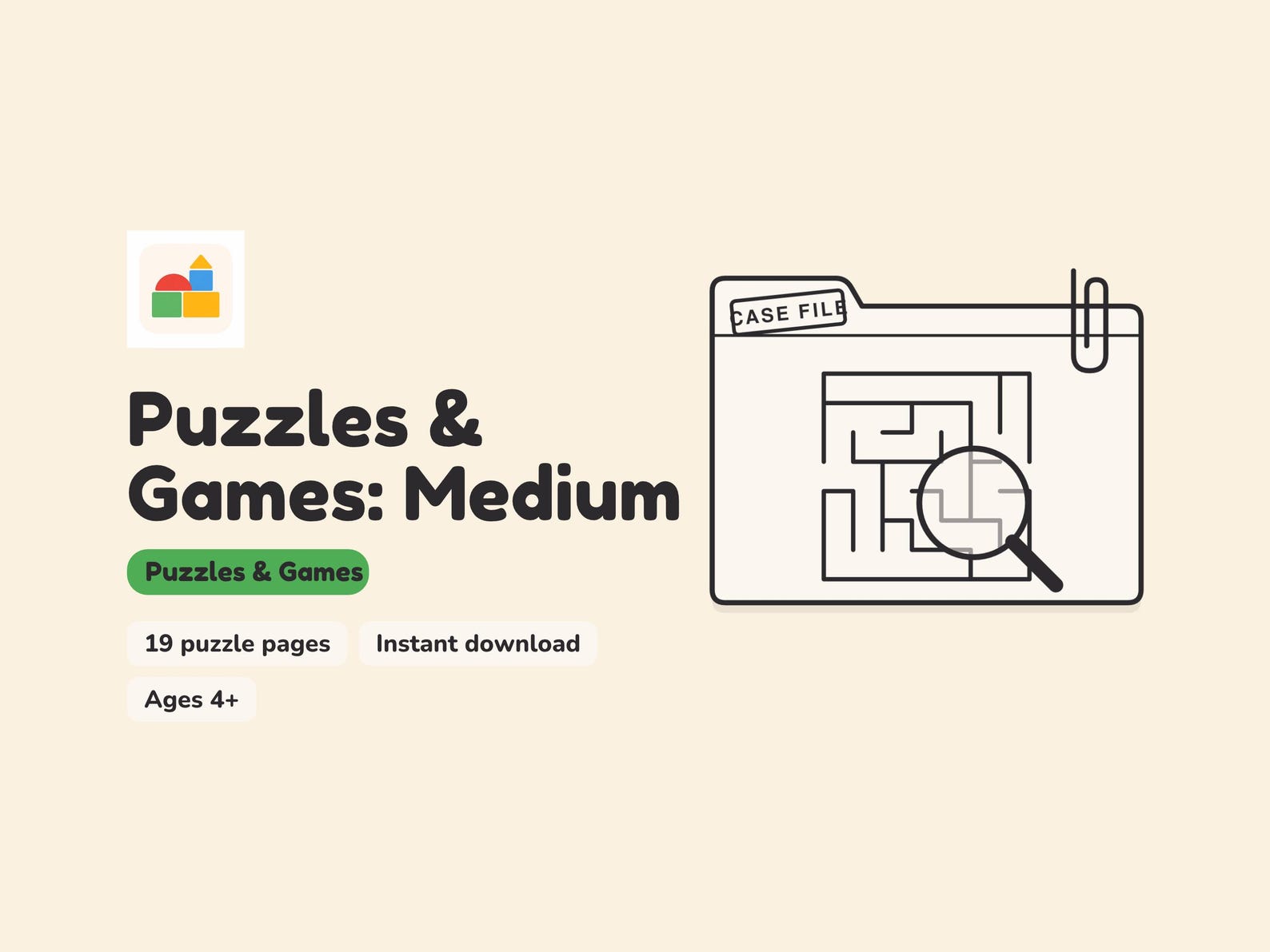
Puzzles & Games: Medium
19 challenge pages: mazes, logic grids, word searches and crosswords.
View printablePrint a set and keep them in a folder with the answer key at the back. A child who can check their own grid is working independently, which is the goal of the whole exercise.
Where the sequence starts
Patterns and odd-one-out come first; this guide to logic puzzles kids covers that foundation. For the method itself, read the step-by-step logic grid guide.
Keeping a grid folder
A folder of finished grids is a surprisingly good record. Write the date and the grid size in the corner, and keep them in order.
After a month, the folder shows a child moving from three by three to three friends, which is a visible ladder. Children respond to that more than to praise, because they can see it themselves.
Keep the answer keys in a separate envelope at the back. A key that lives beside the puzzle gets used too early, and checking your own work only counts after the work is done.
When to slow down
If a child finishes a grid in three minutes, the grid was too easy rather than the child being fast. Move up a size, or add a category, but only one at a time.
If a child needs help on every clue, drop back a size for two weeks. The point of a practice sequence is that each step is finishable, and a step that is not finishable is not a step.
Two grids a week
Kids logic puzzles printable pages are heavy work. Two a week is plenty, with mazes and word searches filling the other days.
A ladder, not a test
The grid sizes are a ladder, and ladders are climbed at different speeds. Some children move from three by three to four friends in a month; some take a year, and both are normal. What matters is that each grid is finishable and each finish is noticed. Kids logic puzzles printable pages belong in a folder with the dates written on them, because the folder is where the progress becomes visible to the child. Keep the answer keys separate, keep the sessions short, and let the ladder stay exactly where the child is standing.
Date every grid. The folder is a record of the ladder, and children like seeing their own handwriting get steadier along with their reasoning.
Kids logic puzzles printable grids work as a ladder. Each rung is finishable, and the next one is only worth climbing when this one is comfortable.
Where to start
Print one three-by-three grid and one three-friends grid, and keep the second for next week. Medium puzzle books with logic grids are in the YHO Build It For Me shop.
Frequently asked questions
What is the first grid in a kids logic puzzles printable sequence?
Three items and two categories, with three or four clues. That is small enough to finish in one sitting and large enough to require real deduction.
When should a child move to four friends in a logic grid?
When three-by-three grids are finished alone, in one sitting, with the child explaining at least one clue out loud.
What if a child gets stuck on a larger grid?
Go back one size for a week. The skill is the method, not the grid, and the method only sticks when the puzzles are finishable.
Some links go to the Etsy shop. Every printable here is one I would use in my own learning routine.