Logic Puzzles Kids Can Solve | YHO Build It For Me
By The YHO Team · September 17, 2026 · 4 min read
Patterns and odd-one-out pages are the simplest form of logic practice. Here is how to use them well.
Table of contents
Logic puzzles kids can actually solve do not start with grids and deductions. They start with two rows of drawings and one question: which one does not belong? That single question contains the whole engine of logical thinking, and four-year-olds can answer it.
Patterns first, because they are visible
A pattern asks a child to find a rule and continue it. Circle, square, circle, square. Before they answer, they have to notice the repeat. That noticing is the skill, and it is the same one used later in a logic grid, where the repeat is hidden in a set of clues.
Start with two elements, then three, then a pattern where one element doubles. Keep the shapes large and the row short. A row of eight is a chore; a row of five is a puzzle.
Odd one out, and the reason why
The answer is not the point. The reason is. If a child picks the apple out of a row of balls, ask why. The reply tells you which rule they used. Any defensible rule counts, and you can then offer a second rule for the same row: this time find the one that does not belong for a different reason.
Good rows for early practice:
- Three round things and one square.
- Three things you wear and one thing you eat.
- Three big items and one small.
- Three things that are red and one that is not.
Change the property between rows rather than making the rows longer.
From spotting to deducing
When a child can explain two odd-one-out answers, they are ready for a simple logic grid. A three-by-three grid with two categories and three clues is enough. Read the clues out loud, then let the child mark the grid. Do not solve it in your head and lead them to the answer; the marking is where the thinking happens.
Expect the first grid to need help. Expect the third to be independent. That is roughly the normal pace.
Paper or conversation
Both work. A printed logic page has the advantage of being checkable later and of looking like the work it is. A conversation has the advantage of needing nothing at all, and it travels well. Many families use conversation in the car and paper at the table.
Keep it short and stop early
A logic puzzle that has gone on too long stops being fun and starts being a test of patience. Ten minutes is a full session at four. Stop while the child still wants one more.
Puzzles & Games: Medium
19 challenge pages: mazes, logic grids, word searches and crosswords.
View printableWhere the sequence goes
Once patterns and odd-one-out are comfortable, these logic puzzles for kids printable walk through a full logic grid step by step, and this practice sequence covers moving from a three-by-three grid to four friends.
Making your own odd-one-out row
You can build a row in thirty seconds with a pencil, and a homemade row is often better than a printed one because you can pitch it exactly.
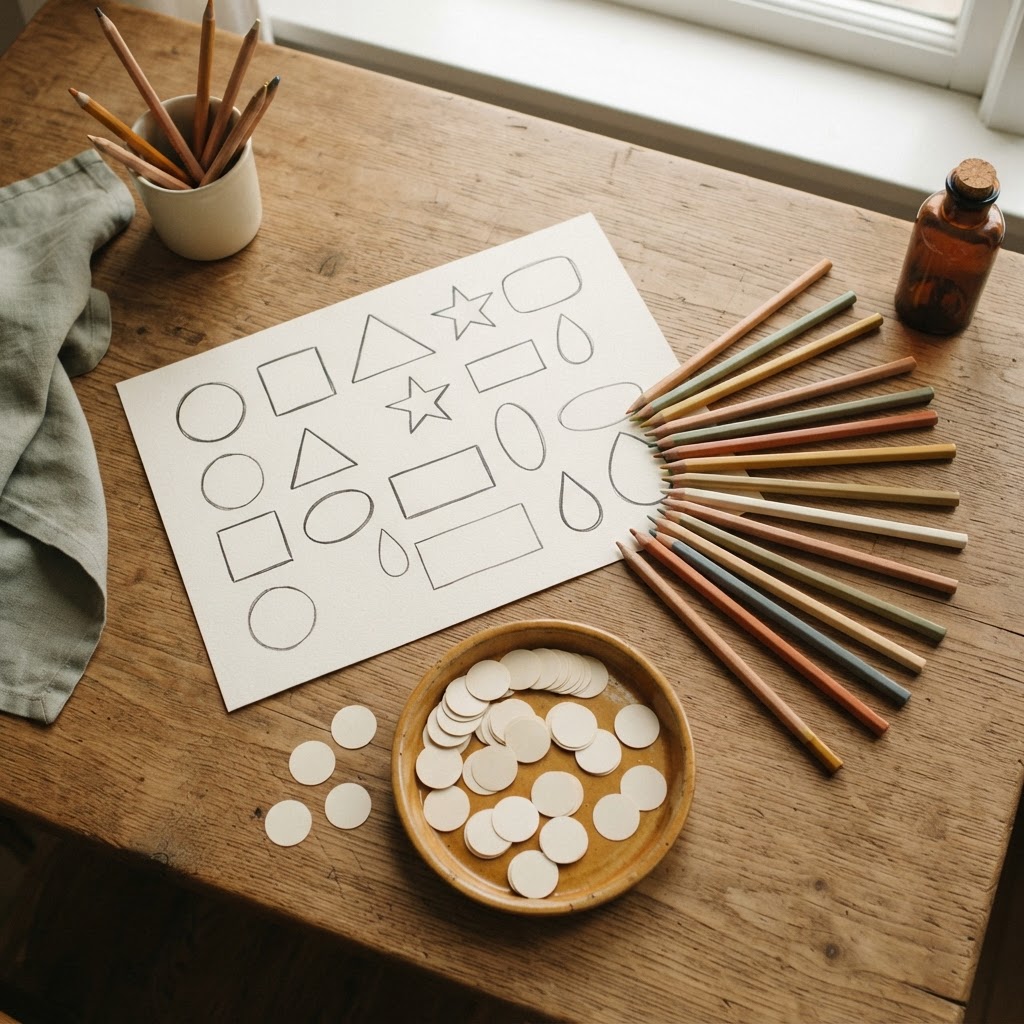
Draw four simple things. Three share a property and one does not. Keep the drawings large and uncluttered, and make the difference visible rather than clever.
Good early properties: size, colour, shape, whether something has legs, whether something can be eaten. Later properties: what a thing is used for, where it is found, how many parts it has.
Then do the interesting part. Ask for a second rule for the same row. A row with a square among circles can also be sorted by size, or by colour, or by which ones can roll. The second rule is where the thinking moves from spotting to reasoning, and children often produce a better rule than the one you had in mind.
When a child gets the answer wrong
Usually they have used a different rule rather than made a mistake. Ask why. If the reason holds, the answer counts, and you can offer your rule as a second possibility.
If the reason does not hold, do not correct the choice. Change the row. A clearer row teaches more than an explanation, and it keeps the session short and pleasant.
The logic puzzles kids remember are the ones they finished, not the ones they were walked through.
A habit of noticing
The point of these pages is not the answer on the page. It is a habit of looking for a rule before acting, which is useful in every subject and most of the day. Ten minutes of logic puzzles kids can actually finish builds that habit faster than a longer session they abandon. Keep the pages short, the drawings large, and the conversation in the background. When a child starts inventing their own odd-one-out rows for you to solve, the habit has arrived. That is the moment to hand over the pencil and let them be the one who asks the question.
Start where the child is comfortable and stay there for a fortnight. The pages keep, and a rule understood once is worth more than three rows completed in silence.
Where to start
Write one odd-one-out row on a piece of paper tonight and ask the question. Then browse printed puzzle pages in the YHO Build It For Me shop.
Frequently asked questions
What is an odd-one-out puzzle?
A row of pictures where all but one share a property. The child finds the one that does not belong and explains why, which is the real work.
Are pattern puzzles really logic puzzles for kids?
Yes. Extending a pattern means working out a rule and applying it, which is the same thinking a logic grid asks for, only simpler.
How do I know my child is ready for a logic grid?
When they can explain an odd-one-out answer out loud. Explaining a rule is the step between spotting a pattern and using one.
Some links go to the Etsy shop. Every printable here is one I would use in my own learning routine.