
Morning Routine for Kids: A Calm Picture Plan in 5 to 7 Steps
By The YHO Team · November 6, 2026 · 3 min read
Build a calm morning routine for kids with five to seven picture steps, what to put first, and what to do on slow mornings.
Table of contents
A morning routine for kids works well when it is short, in a fixed order and visible. Most mornings feel hard because the same instructions get repeated while the clock runs. A picture plan takes the repeating out of your voice and puts it on the wall.
This post walks through how to choose the steps, what to put first, and how to keep the routine going on the days that do not go to plan. If you are new to picture schedules, our visual schedule guide explains the basics.
Choose five to seven steps
Write down what has to happen between waking and leaving the house. For most families it looks something like: get up, use the toilet, get dressed, eat breakfast, brush teeth, put on shoes, pack the bag. That is seven steps. If your child is younger or the mornings are tight, drop it to five by combining or removing steps.
More than seven steps starts to feel like a list rather than a routine. Keep each step to one action a child can finish in a few minutes.
What to put first
Put the most automatic step first so the routine starts with a win. Many children find getting dressed easier after breakfast, while others prefer to dress first. The right order is the one that matches how your child actually behaves in your house, not the one in a book.
A useful rule: put the step that needs the most of your help early, while you have the most patience, and leave the independent steps for the end when time is tight.
Make the morning routine chart visible
Hang the chart at your child's eye level near where the first step happens. The Morning and Bedtime Routine Chart gives you both a morning and an evening sequence on the same set, so the two routines look the same and feel familiar.
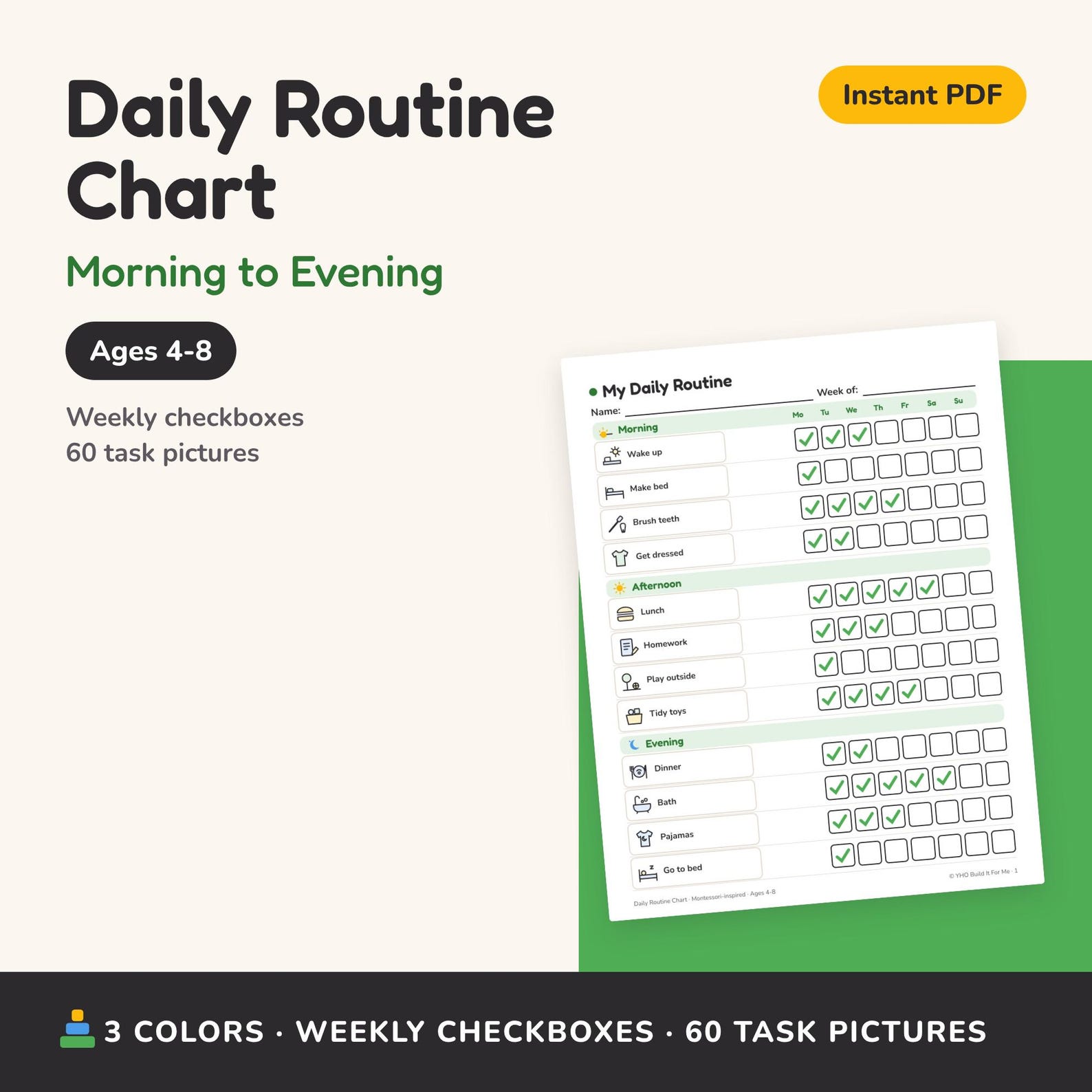
If you want a chart that covers the whole day, the Daily Routine Chart shows morning, afternoon and evening in one place.
Teach the routine before you need it
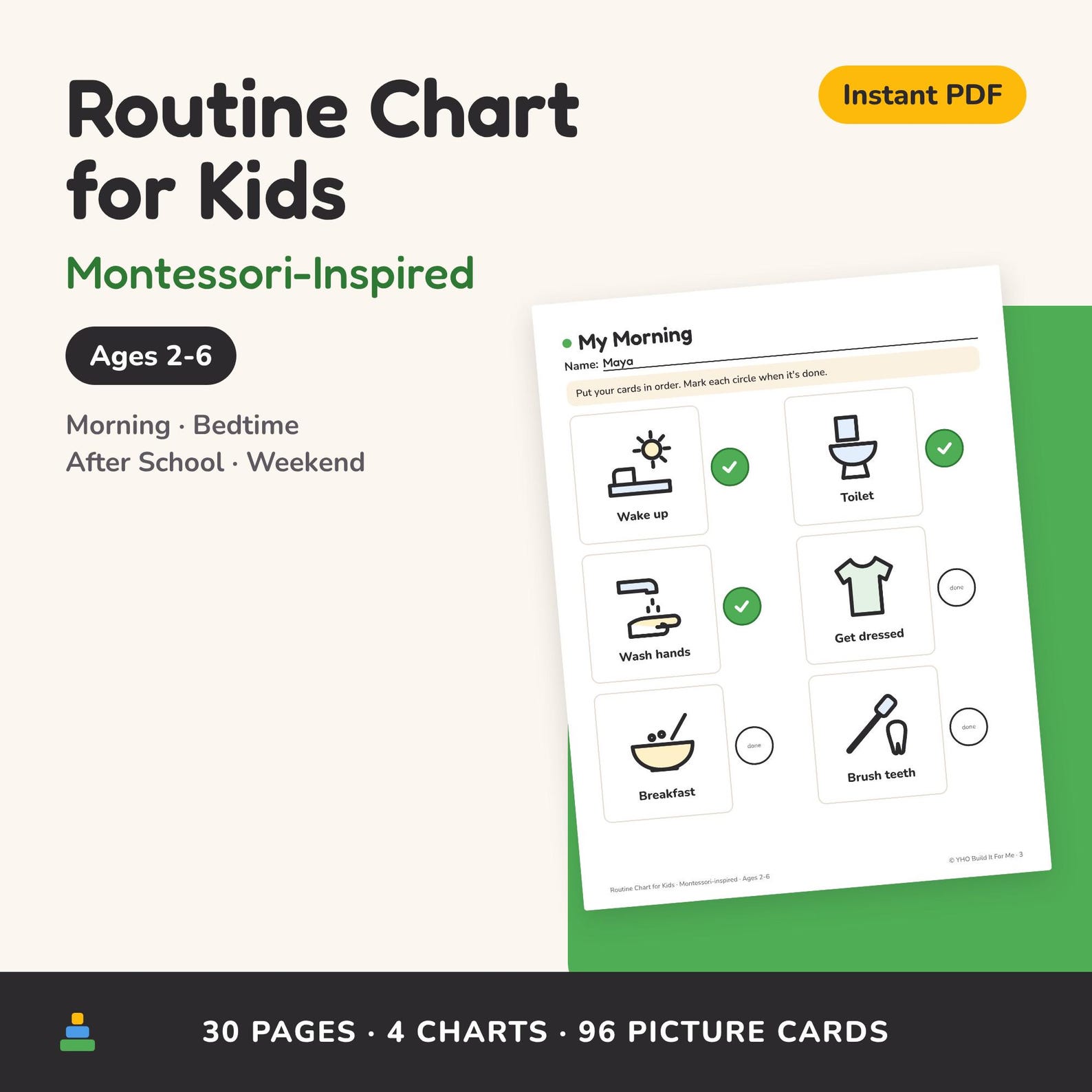
Do not start on a school morning. Pick a weekend, walk through the steps slowly and let your child move each card or tick each box. Play it like a game: "What is next? Let us look at the chart." Two or three relaxed practice runs make the first real morning much easier.
Let the chart do the reminding
When your child stalls, resist the urge to repeat the instruction. Instead, point to the chart and ask, "What comes next?" This small change shifts the job from you to the routine. It also treats your child as someone who can read the plan, not someone who has to be told.
Handling slow mornings
Some mornings go slowly whatever you do. A few ideas that keep the routine intact:
- Drop one step rather than abandoning the chart. Cover it with a sticky note and tell your child, "We are skipping this one today."
- Move the hard step to the end. If shoes are the trouble spot, try them on before breakfast.
- Give a short warning: "Two more steps, then the door."
- Keep your voice flat and friendly. The routine is the plan; you are not the one asking.
Adding independence over time
After a few weeks, hand over more. Let your child place the cards, decide the order of two steps, or tick off the chart without a reminder. When a step has become automatic, you can remove it from the chart and add something new, such as packing a lunch bag or watering a plant.
Related guides
For the evening version, see bedtime routine for kids. For afternoons, see after-school routine for kids.
Where to start
Pick five steps, print the chart, and practice on a weekend. Browse the full set of routine charts and cards in the collection.
Frequently asked questions
How many steps should a morning routine for kids have?
Five to seven steps is a workable range for most preschool and early school-age children. Younger children may do better with three to five.
Should my child get dressed before or after breakfast?
Either order works. Choose the one that suits your child, keep it the same each day, and put it on the chart.
What if my child ignores the chart?
Practice at a calm time first, let your child handle the cards, and point to the chart with a question instead of repeating instructions. Give it a couple of weeks before changing anything.
Part of a series: Visual Schedule for Kids: How to Choose and Use One at Home
Where to start
More Routines and Visual SchedulesWritten by the YHO Team, the makers of the YHO app and YHO Build It For Me printables. Montessori-inspired. Not affiliated with or certified by any Montessori organization. Some links go to our Etsy shop.