
Visual Schedule for Kids: How to Choose and Use One at Home
By The YHO Team · November 6, 2026 · 4 min read
What a visual schedule is, how picture cards, charts and boards differ, and a five-step way to set one up at home.
Table of contents
A visual schedule for kids is a set of pictures, in order, that shows what happens next. Instead of hearing "get dressed, brush teeth, shoes on" three times, a child can look at the board, see the next picture and move on. It is a small tool, and it tends to make days feel more predictable for children and calmer for the adults running them.
This guide explains the three main formats, how to set up a picture schedule at home in five steps, and how to change it as your child grows. It is the starting point for our whole routines series, so you will find links to the more specific guides along the way.
What a visual schedule actually does
A picture schedule moves the "what comes next" from your voice to the page. Children who are still learning to read can follow pictures, and children who read can still benefit from seeing the whole sequence at once. Many families notice that asking "what does the chart say?" feels friendlier than repeating instructions.
A visual schedule is not a punishment tool and it is not a rewards system. It is simply a shared plan that your child can see.
Picture cards, charts and boards: which format fits
Routine cards are single pictures, one task per card. You arrange them in order on a strip or pocket board. They are flexible because you can swap, add or remove a card when the day changes. Our Toddler Routine Cards work this way for the youngest children.
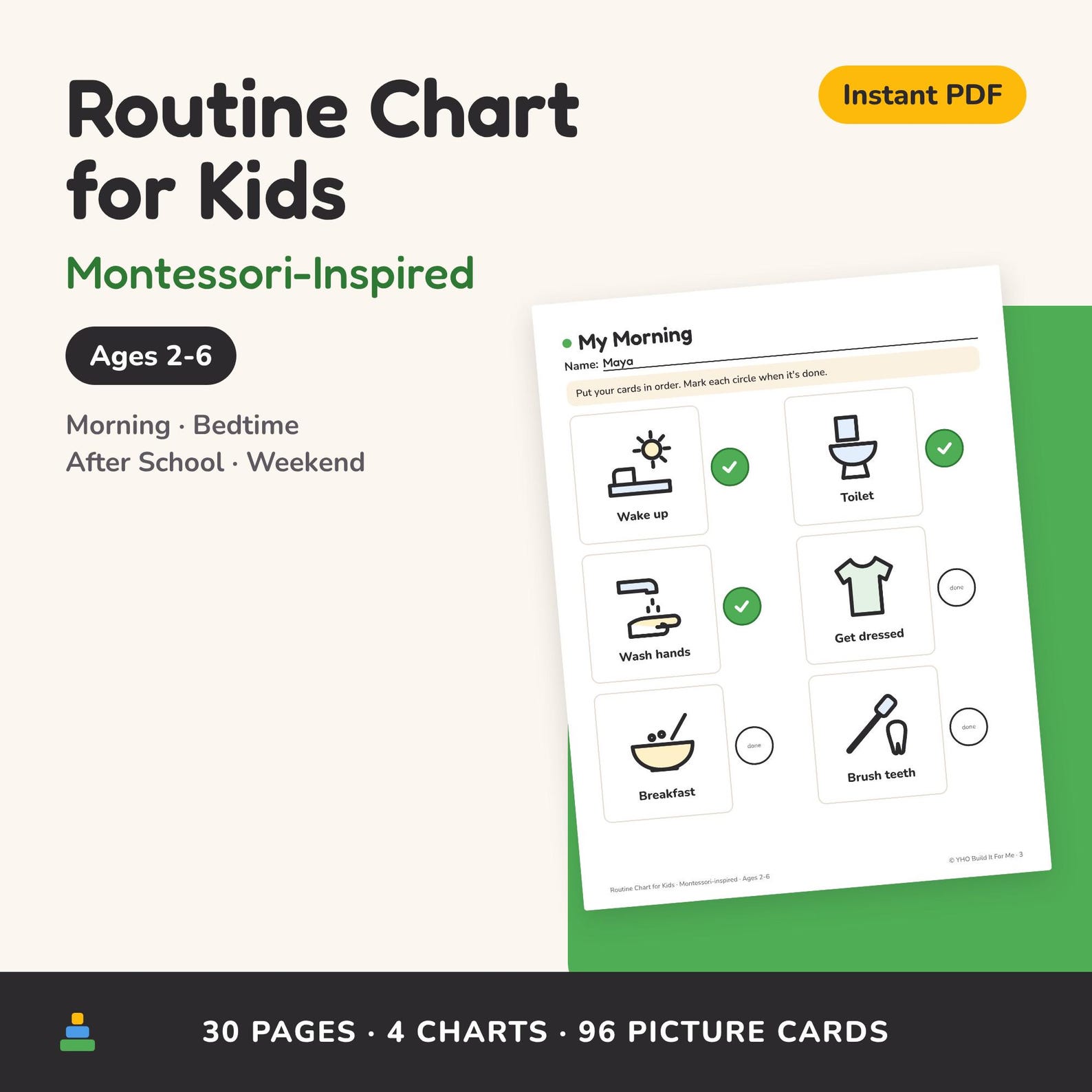
Routine charts show a fixed sequence on one page, such as morning or bedtime. They are quick to set up and good for routines that rarely change. The Morning and Bedtime Routine Chart is an example.
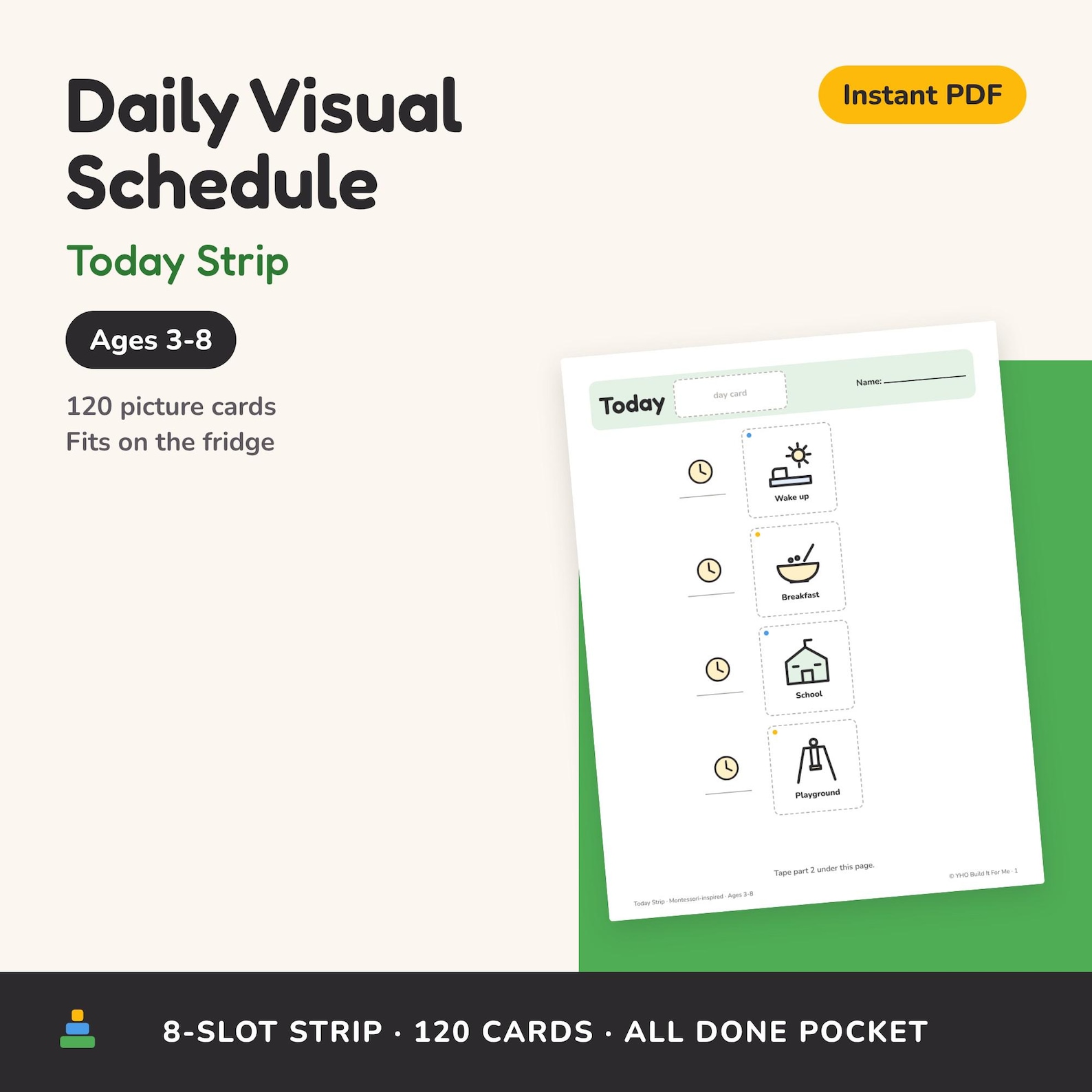
Schedule boards and strips show the whole day in blocks. A strip like the Today Strip Visual Schedule lets you place only the cards you need for today, which suits days that look different from one another.
If you are unsure, begin with one chart for the routine that causes the most friction, then add cards later.
How to set up a visual schedule at home in five steps
- Pick one routine. Mornings and bedtime are the usual starting points. Starting with one keeps the setup small.
- List the steps in the order they really happen. Walk through it yourself and write down each step, then keep to 4 to 7 steps for younger children.
- Choose a spot at your child's eye level. A wall near where the routine happens works well: the bathroom door for teeth, the bedroom for getting dressed.
- Introduce it at a calm time. Do not unveil it in the middle of a rushed morning. Look at it together the afternoon before and let your child touch the cards.
- Let your child do the moving. Turning a card over or sliding it to a "done" pocket gives your child a job in the routine rather than just a list to follow.
Give it two weeks of steady use before deciding whether it works. New routines usually wobble at first.
Making a routine card set last
Print on cardstock if you can, and cut the cards out neatly so they are easy to handle. If you want to reuse them, laminating or slipping them into sheet protectors keeps them tidy. Every printable we make includes US Letter and A4 sizes.
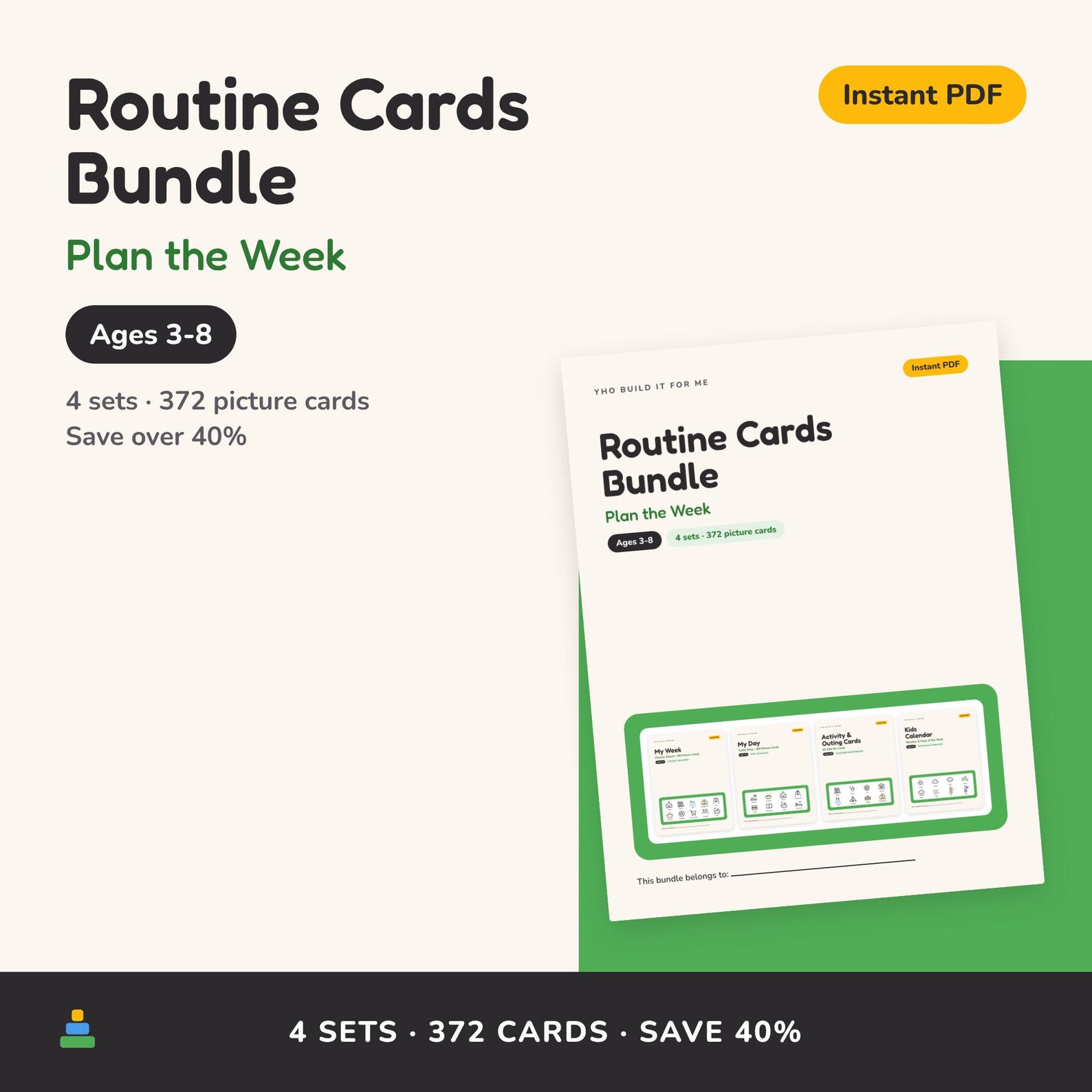
If you want several routines in one go, the Routine Cards Bundle groups related sets so you do not have to decide on one format first.
Changing the schedule as your child grows
A toddler might need only two or three cards at a time. A preschooler can follow a full morning of five to seven steps. A school-age child may prefer a written checklist with small pictures, or a weekly board they fill in themselves.
Watch for signs that the schedule has become too easy: your child ignores it, or finishes the steps before you point to it. That is the moment to add a step, hand over more of the arranging, or move from a daily chart to a weekly planner. Our guide to a kids weekly schedule covers that next step.
Common questions about routine cards
Parents often ask whether a schedule will make a child rigid. A visual schedule is a plan you can change, and changing it together ("today we are going to the library, so this card comes out") is useful practice with flexibility.
Another common question is how many cards to show. For young children, fewer is better. Show the next two or three steps rather than the whole day if the full board feels like too much.
Related routine guides
- Morning routine for kids: a five-to-seven step morning in pictures.
- Bedtime routine for kids: a calm, repeatable evening order.
- How to use a first-then board: the simplest two-card schedule for toddlers.
- Toddler daily routine: a sample day in picture cards.
- After-school routine for kids: a predictable afternoon order.
Where to start
Pick the one routine you wish ran more smoothly, choose a chart or a set of cards, and try it for two weeks. You can browse every option in our routines collection.
Frequently asked questions
What is a visual schedule for kids?
A visual schedule for kids is a sequence of pictures that shows what happens next in a routine or day, so children can follow along without repeated verbal reminders.
How many steps should a picture schedule have?
For young children, about four to seven steps per routine is a good range. For toddlers, start with two or three cards and add more as they get comfortable.
Can I use routine cards for more than one routine?
Yes. Many families keep separate sets for morning, after school and bedtime, and swap them in at the right time of day.
Where to start
More Routines and Visual SchedulesWritten by the YHO Team, the makers of the YHO app and YHO Build It For Me printables. Montessori-inspired. Not affiliated with or certified by any Montessori organization. Some links go to our Etsy shop.