Preschool Math Worksheets | YHO Build It For Me
By The YHO Team · October 29, 2026 · 4 min read
Early number sense on paper: more or less, matching numbers to groups, and ordering from smallest to largest.
Table of contents
Preschool math worksheets should do three things and not much else: match a numeral to a group, compare two groups as more or less, and put numbers in order. Everything else can wait until those three are solid.
More or less, before numerals
Comparison is the first real math idea, and it does not need symbols. Two plates of grapes. Which has more? How do you know?
A good page shows two groups, close in size, and asks the child to circle the one with more. Make the groups close, three and four rather than two and nine, so the child has to count rather than glance.
Follow with less. Then with equal, which is the hardest and most useful of the three.
Matching numerals to groups
A numeral is a symbol for a quantity, and the connection takes practice. A page with a number on one side and three groups on the other, where the child draws a line to the matching group, is the clearest version of this exercise.
Start with numbers one to five. Add six to ten only when the child counts a group reliably without losing track.
Ordering
Cut-out number cards, shuffled, ordered from one to ten. This is a physical task before it is a paper task. Once the child can order cards, a page where they write the missing number in a sequence makes sense.
Missing-number pages are excellent because they require counting forward and holding a place at the same time.
The short session
Five to ten minutes. One page. Sit nearby, say the first instruction once, then stop talking. If the child asks whether they are right, ask them to count again rather than answering.
Correcting mid-page turns practice into a test. Let the page finish, then check one row together.
What to leave out
Leave out addition and subtraction symbols at this stage, timed drills, and pages with thirty small problems. Leave out reward charts too: a sticker for finishing teaches a child to finish fast.
Also leave out pages that mix counting with colouring instructions. Attention splits and the math gets lost.
Paper needs hands
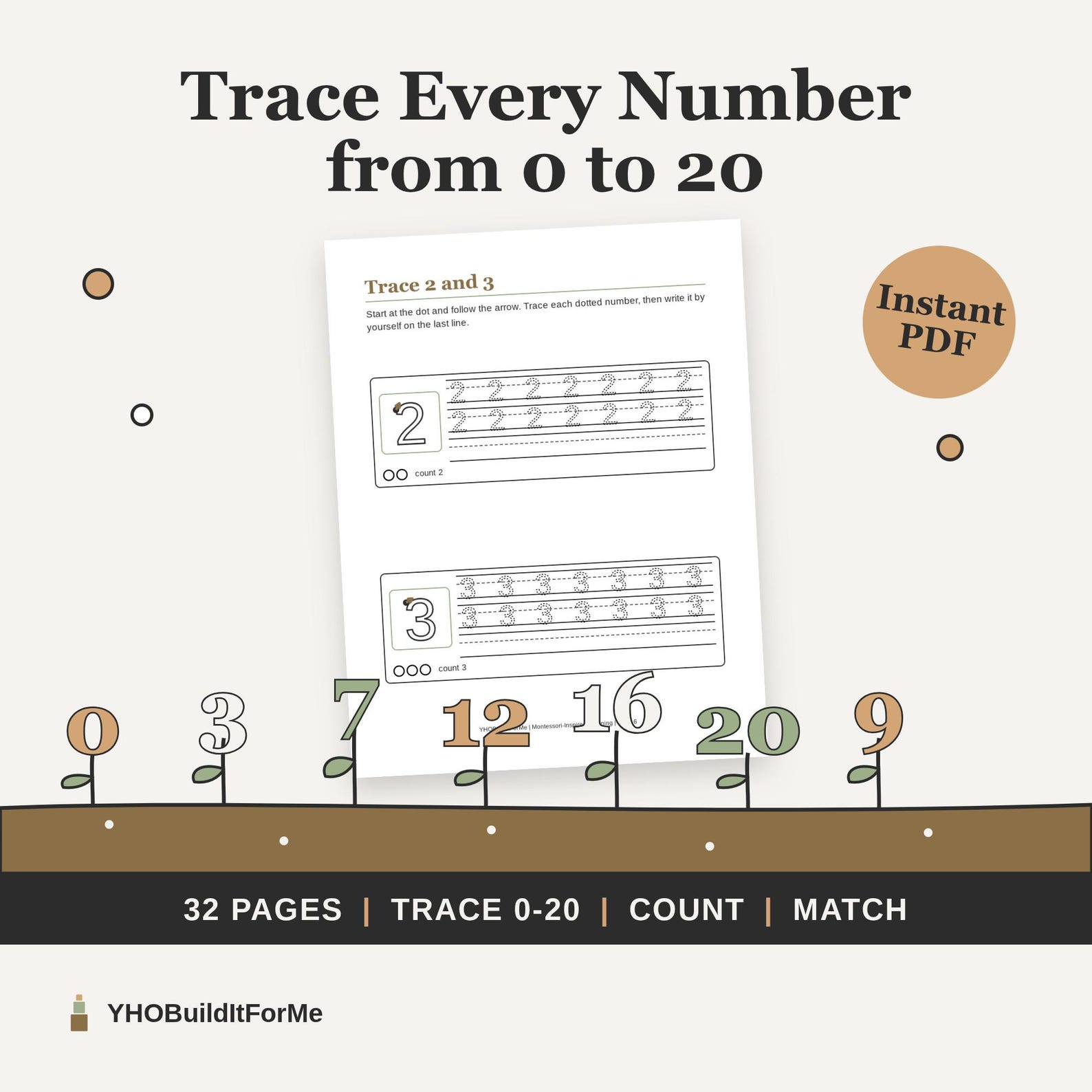
Early Number Tracing 0-20
32 printable pages for tracing and counting numbers 0 to 20, with matching pages and simple counting practice.
View printableBefore and after the page, count real things. Set the table and count the forks. Count the stairs on the way up. Hand out four biscuits and check the number. A page records what the hands already know; it rarely teaches it first.
Where it fits
For the counting basics, read math worksheets for kids. For choosing a page in general, the preschool printable guide covers what to look for.
Numbers in the room
A preschool math worksheet is most useful after a week of noticing numbers in the house.
Count the stairs every time you go up. Count the forks at the table. Find the number four on a clock, a book, a door. Put magnetic numerals on the fridge and ask for one by name.
By the time a page arrives, the numerals are familiar shapes rather than abstract marks, and the page becomes a record of something the child already knows. That order matters more than any worksheet's design.
Comparing without counting
More and less can be answered without counting, by matching one to one: one cup per plate, one shoe per foot. If a cup is left over, there are more cups. That physical comparison is the foundation of the greater-than symbol, years before the symbol appears.
Do it with snacks, with socks, with blocks. Then let a page ask the same question with pictures.
What progress looks like
Not faster pages. A child who counts a group of six and checks by touching again is progressing. A child who writes numerals steadily and stops guessing is progressing. Preschool math worksheets are one small part of that, and a quiet one.
Words that carry the math
The language used during a page matters as much as the page. More, less, same, one more, how many, altogether. Use those words while setting the table, sorting socks, and handing out biscuits, and the worksheet becomes familiar rather than new. A preschool math worksheet is a quiet record of that vocabulary, not a substitute for it. Keep the sessions short, count with a finger, and let the child check their own rows. Steady counting with real objects is the foundation everything else stands on, and it arrives through daily life rather than a page.
One preschool math worksheets page a week is enough when the counting happens daily at the table, in the kitchen, and on the stairs.
Where to start
Print one more-or-less page and do it with real plates of grapes first, then on paper. Number tracing and counting sets are in the YHO Build It For Me shop.
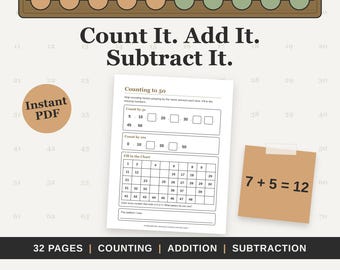
Math Learning Activities for Kids
Counting, addition, and subtraction activities that make early math hands-on, K-2.
View printableFrequently asked questions
What number sense should a preschool math worksheet cover?
Matching a numeral to a group, comparing two groups as more or less, and ordering numbers from one to ten.
Should preschool math worksheets include writing numbers?
Tracing is fine and useful for control. Writing numerals from memory can wait until the child is steady with counting groups.
How often should we use preschool math worksheets?
Two short sessions a week, alongside daily counting in real life such as setting the table or counting stairs.
Some links go to the Etsy shop. Every printable here is one I would use in my own learning routine.