Preschool Printable Guide | YHO Build It For Me
By The YHO Team · September 2, 2026 · 5 min read
A parent guide to what a preschool printable is, what it should contain, and how to choose one that fits your child.
Table of contents
A preschool printable is a digital file you print at home and hand to a child, usually for one small skill at a time: tracing a letter, matching a picture, counting a group, cutting a strip of paper. That is the whole thing. No app, no account, no subscription, just paper on a table.
Parents often come to printables after trying something larger: a workbook, a curriculum box, a stack of screens. The appeal is that a page is small. It can be printed on a Tuesday, finished in ten minutes, and put in a folder. This guide covers what belongs on that page and how to choose one without wasting ink.
What a good preschool printable contains
A preschool printable should hold one idea. A page about letter sounds should not also ask the child to count objects and colour a border. Each extra instruction splits attention, and a split-attention page is the one that gets abandoned halfway.
Look for four things: a clear first step, a clear ending, thick outlines for small hands, and instructions an adult can read in one line. If you need a paragraph to explain the page to a four-year-old, the page is doing too much.
Choose by skill, not by theme
Themes are easy to market and easy to ignore. A child does not care whether the leaves are seasonal; they care whether the tracing line is short enough to finish. Pick the skill first, then let the theme be a bonus.
A useful sort for a shelf at home:
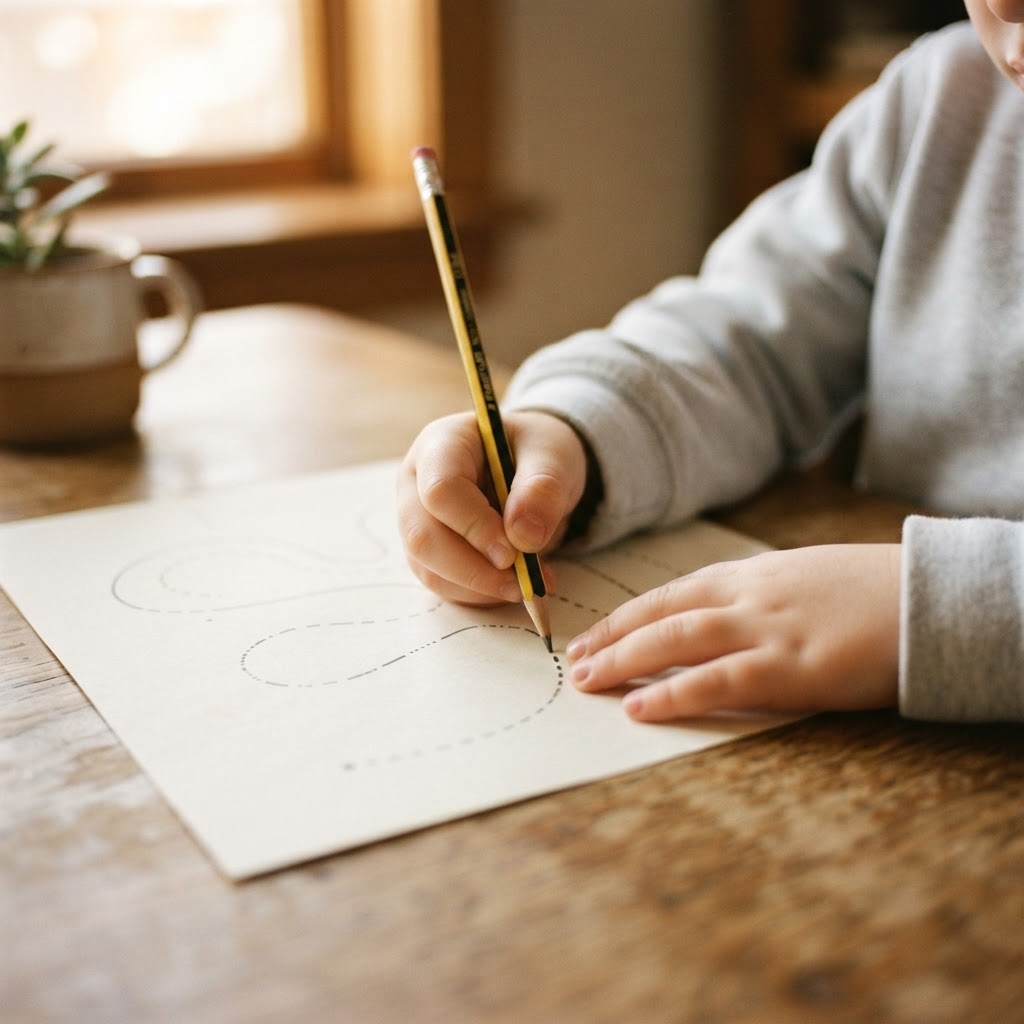
- One tracing page, for grip and control.
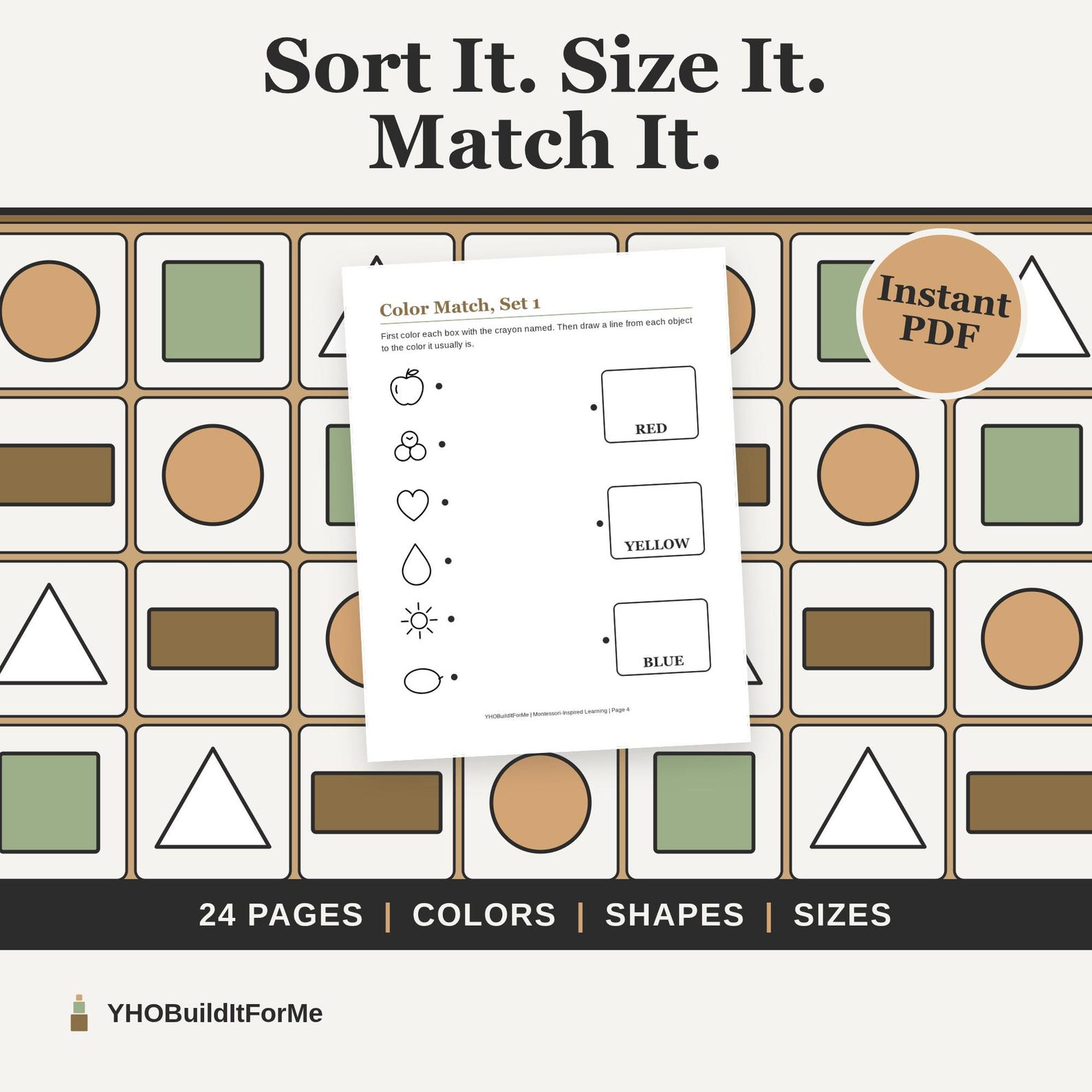
- One matching or sorting page, for visual attention.
- One counting page, for number sense.
- One cutting or colouring page, for fine motor work.
That is four jobs. A shelf with those four covered will get used every week.
What to skip
Skip pages that ask a four-year-old to write words independently, pages covered in small print, and pages with a reward chart at the bottom. A chart turns a calm ten minutes into a transaction, and the child learns to ask what they get rather than what they made.
Also skip anything you have to laminate before the first use. If the setup takes longer than the activity, the activity will not happen on a normal weekday.
How to use a page in a real house
Print two pages, not twenty. Put one on the table with a short pencil and leave it there. Sit nearby with your own work. Say the first step once, then stop talking. When the child finishes, put the page on the fridge or in a folder rather than the bin, because the work matters to them even when it looks like scribbles to you.
If a page comes back unfinished, that is information. Either the skill is too new, the page is too long, or the moment was wrong. Try again next week with a shorter page rather than the same one repeated.
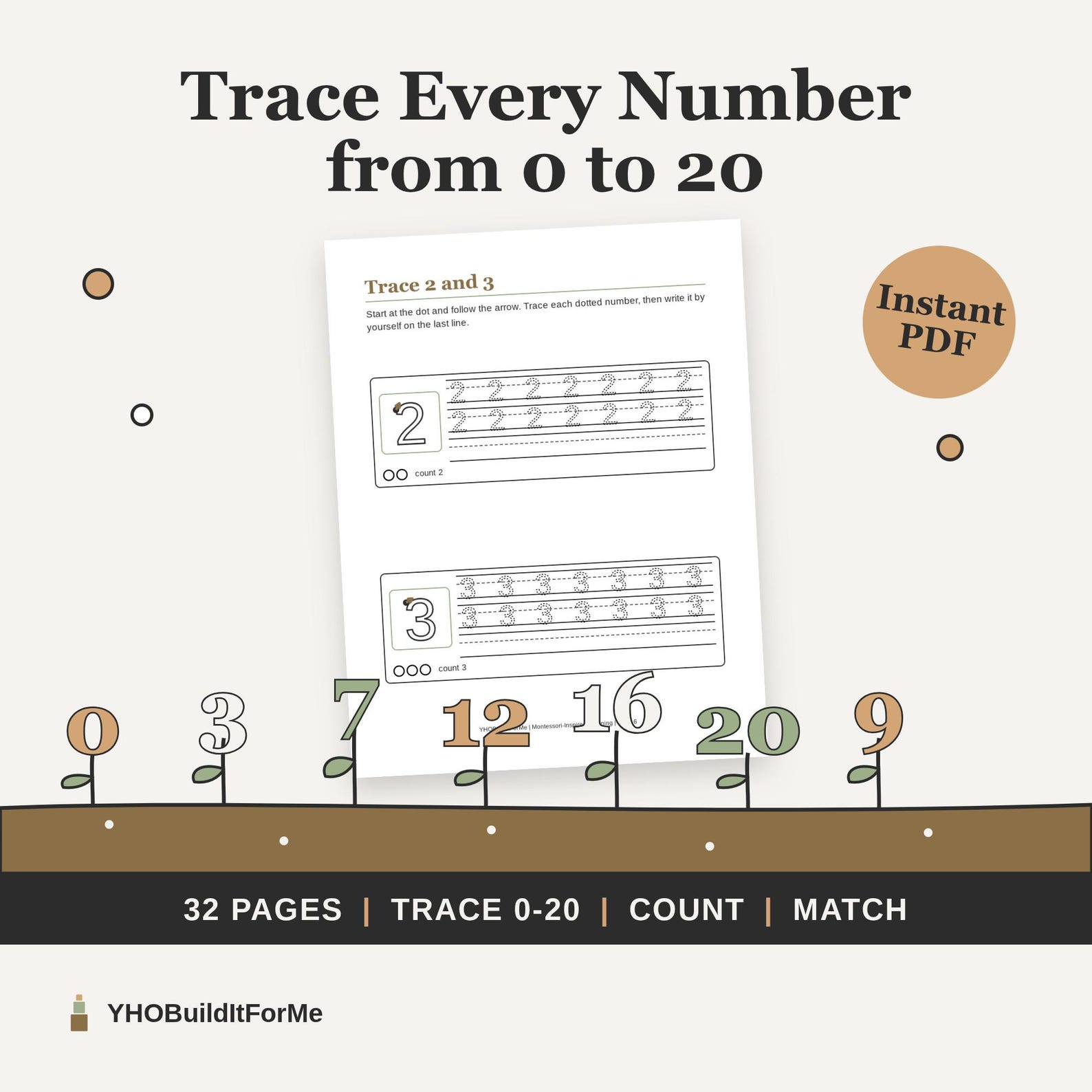
Early Number Tracing 0-20
32 printable pages for tracing and counting numbers 0 to 20, with matching pages and simple counting practice.
View printableHow this fits with other work
Printables are one part of a week, not the whole of it. Pair them with real objects: a bowl of beans to pour, a pile of socks to sort, a jug of water and a cloth. Paper and hands teach different things, and a child who does both is rarely bored by either.
If counting is the current interest, these math worksheets for kids cover the foundation, and a set of preschool math worksheets keeps number sense going without a screen.
Keeping a printable shelf that gets used
A shelf with forty pages on it is a shelf a child stops seeing. Keep three trays out, each with one page, and store the rest in a folder behind a cupboard door. Change a tray every two weeks, not every day.
The three trays that earn their place:
- Tracing, because control takes repetition.
- Matching or sorting, because it needs no adult.
- Counting, because numbers show up everywhere else.
Everything in a folder is waiting, not abandoned. A page brought out in February often gets finished when the same page was ignored in November, because the child changed, not the paper.
When a page goes wrong
It will, and usually for one of four reasons. The skill is too new. The page is too long. The pencil is wrong. The moment is wrong.
Work through them in that order. Offer an easier page first, since that costs nothing. Then cut the page in half; half a page is still a page. Then try a shorter pencil and a clipboard, which fixes most wobbles. If none of that works, put it away and try again in a week.
What not to do is sit down and finish the page with the child watching. That turns their work into your work, and the next page will be refused before it starts.
A preschool printable is a tool, not a test. When it stops feeling like a tool, the paper is the thing to change.
Where to start
Start with one skill you have actually seen your child attempt this week. Print one page for it. Keep the rest of the stack for later in the season. You can browse the printable collection at YHO Build It For Me and choose a single page rather than a bundle, which is often the better first purchase.
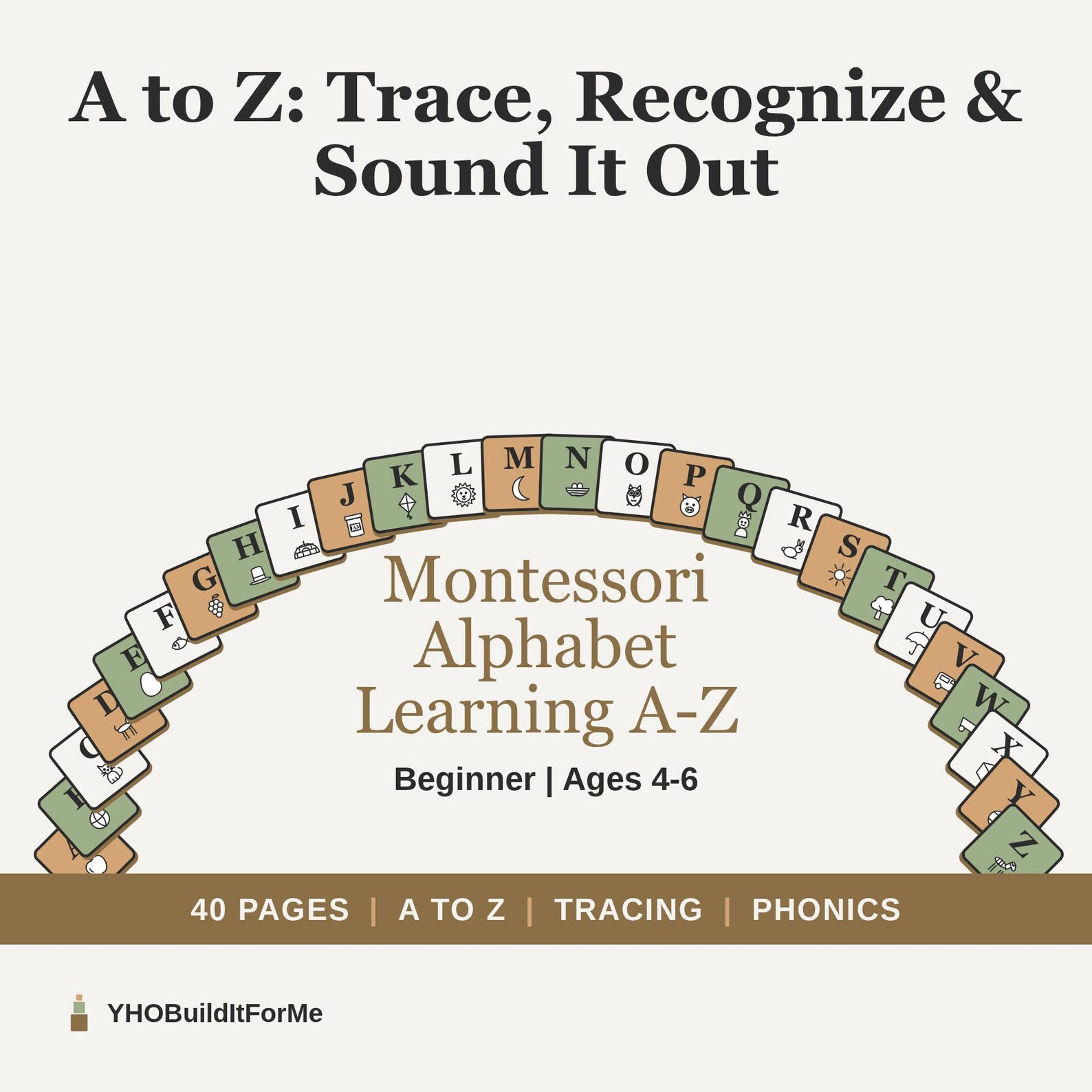
Montessori Alphabet Learning A-Z
Printable A to Z letter cards and pages for tracing, recognising and sounding out letters with real pictures.
View printableFrequently asked questions
What is a preschool printable?
A preschool printable is a digital file you download and print at home, designed for one small skill such as tracing, matching, counting, or cutting. It is paper rather than software.
How many pages should I print at one time?
Two or three. A small stack gets used, a thick one sits in a drawer and makes the whole idea feel like homework.
Do preschool printables replace real objects?
No. They sit alongside them. Paper supports the work a child already does with blocks, jugs, cloths, and nature finds.
Some links go to the Etsy shop. Every printable here is one I would use in my own learning routine.