Printable Fine Motor Work at Home
By Hellen Gomez · October 30, 2026 · 3 min read
Hand strength is built in small, boring, repeated movements. Here is the printable sequence that actually builds it, in the order a child is ready for it.
Table of contents
Fine motor work looks like nothing from across the room. A child bent over a page, drawing a slow curve, then another, then another. It is the least dramatic learning there is, and it is the foundation for writing, buttons, scissors, and eventually tying shoes.
I'm Hellen, and I have spent an unreasonable amount of time watching four-year-olds trace. Here is the order that works, and the setup that makes it stick.
Start with the whole arm, not the fingers
Before a child can control a pencil, they need a stable shoulder and a wrist that can hold still. Big movements come first: painting at an easel, drawing on a big sheet on the floor, squeezing, pinching, pouring.
If your child's tracing looks like it is coming from the elbow and the whole body is moving, they are not being careless. They are using the joints they have. A few weeks of big movement work fixes more of this than any amount of practice on a small page.
Then tracing, in this order
- Lines with a clear path. Straight, then curves, then zigzags. Thick paths first, thin later.
- Shapes. Circle, square, triangle, and the point where a line has to change direction.
- Letter-like forms. Curves that will later be c, a, d. Lines that will be l, t, h. Not letters yet, just the shapes of them.
- Numbers and letters. Once the hand can follow a path, symbols become possible.
The fine motor tracing book follows this order on purpose, and number tracing 0-20 picks up when letters and numerals are ready to try.
Coloring is not a lesser activity
Parents often skip coloring because it looks like filler. It is not. Coloring inside a boundary requires a child to slow down, plan where the pencil goes, and change pressure to fill an area. That is control, not decoration.
Use short pencils or broken crayons. It sounds odd, but a short tool forces the grip into the fingers and out of the fist, which is exactly the shift you want.
The setup matters more than the page
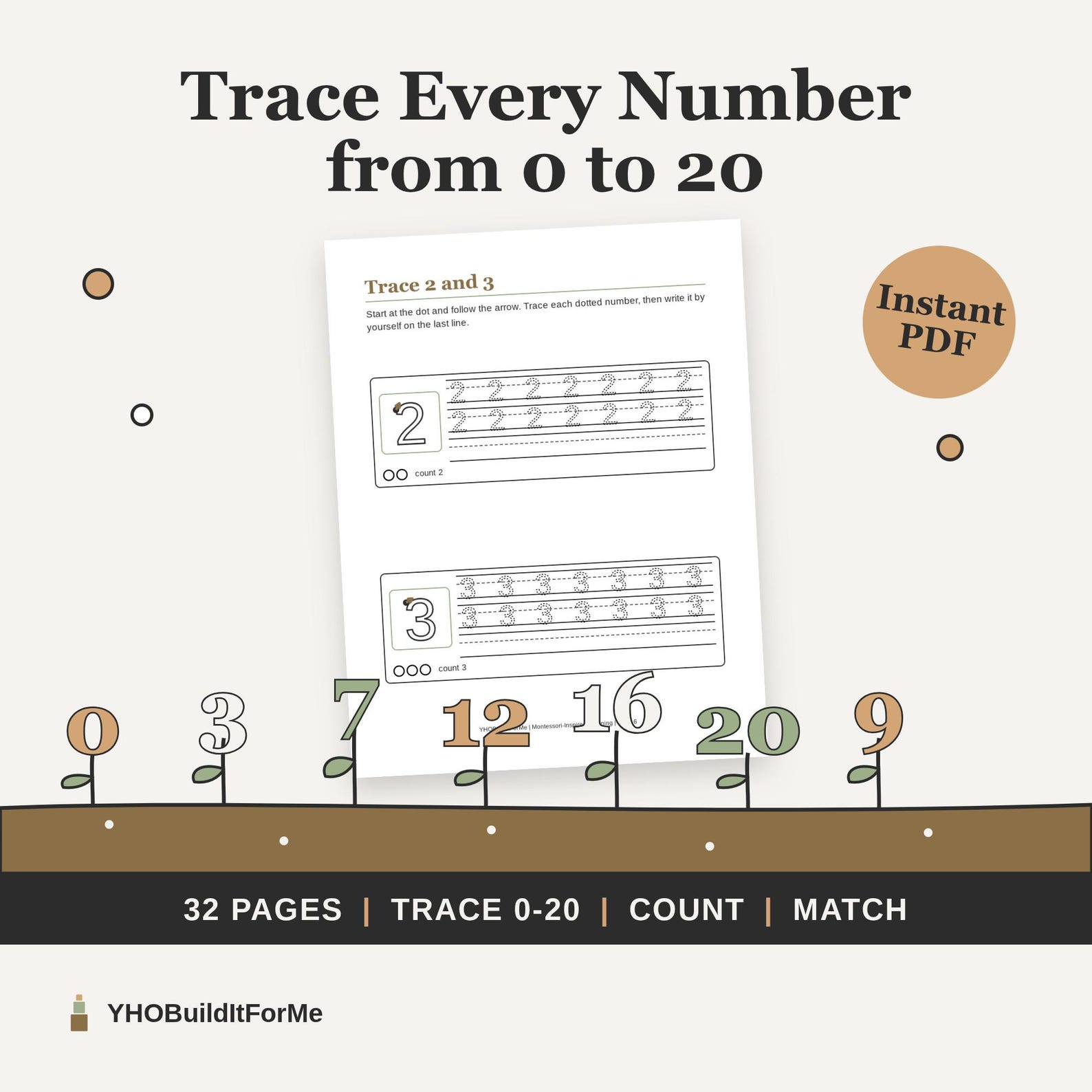
Early Number Tracing 0-20
32 printable pages for tracing and counting numbers 0 to 20, with matching pages and simple counting practice.
View printable- One page, one tray, one pencil. Not a stack, not a whole workbook.
- A table and chair at the child's height. Feet flat, elbows just below the tabletop.
- Paper taped down if it slides. Sliding paper is the most common reason tracing looks wild.
- Light, from the side if you can. Shadows are hard on small eyes.
When to stop
The signal is not the page. It is the hand. Marks get lighter, the shoulders rise, the tongue comes out, and the child starts scribbling over what they were carefully doing. That is a tired hand, and the right response is "let's put it away" rather than "two more lines".
A child who stops happy will come back tomorrow. A child pushed through a tired hand starts avoiding the shelf.
What progress looks like
Not straight lines. Progress is: fewer rest breaks, lighter pressure turning into even pressure, a child who returns to the same page without being asked, and a child who starts drawing circles on their own paper without a model.
Keep a few pages in a folder. In three months you will see the difference in a way that is impossible to notice day by day. If the folder idea appeals, how to print printables at home covers the paper and printer settings that make the lines clean enough to trace.
Common questions
Is tracing bad for creativity? Not in small doses. Ten minutes of tracing and a blank sheet afterwards is a good pair. The blank sheet is where the creativity goes.
My child is left-handed. Anything different? Yes: put the paper slightly to the left and angle it, keep the pencil above the writing line so the hand does not smudge, and expect tracing to take a little longer at first.
What if they refuse altogether? Check the tool and the table before you check the child. A blunt pencil, a slippery page, and a chair that is too high are the usual culprits.
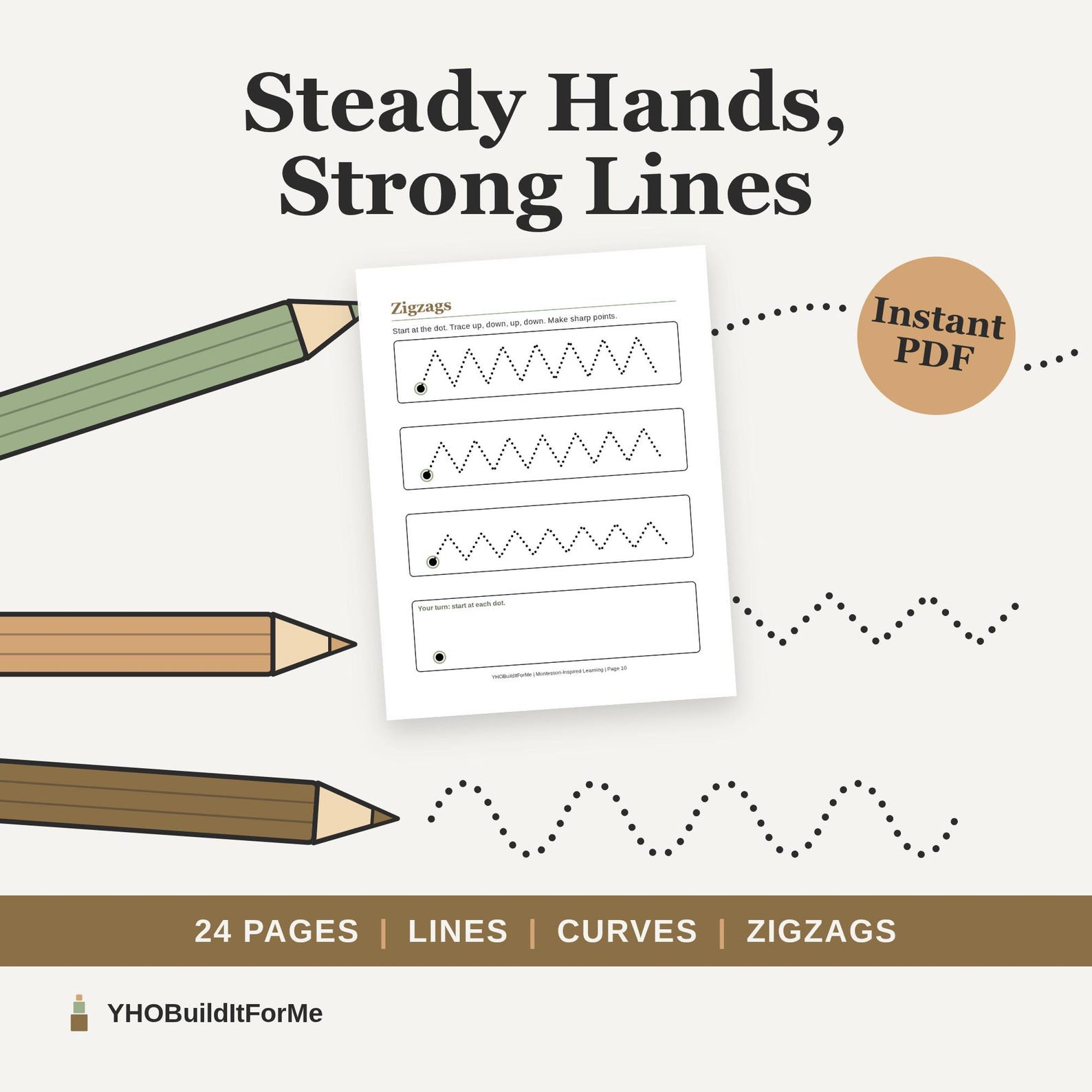
Fine Motor Tracing Book
24 printable tracing pages of lines, arches, zigzags and spirals that build pencil control before writing letters.
View printableSome links go to the Etsy shop. Every printable here is one I would use in my own learning routine.