Calm Down Corner Ideas for Home and Classroom
By The YHO Team · November 6, 2026 · 3 min read
Calm down corner ideas for home or class: a quiet spot, a cushion, calm-down cards, and how to introduce it before it is needed.
Table of contents
Calm down corner ideas usually begin with a simple question: where can my child go to take a pause? A calm corner is a small, quiet spot with a few items that invite a break. It is not a time-out or a punishment. It is a place a child can choose to visit.
This guide covers where to put it, what to include, how to introduce it before it is needed and how to use calm-down cards. It sits within our feelings series.
Choose a quiet spot
Pick a corner away from the busiest part of the room: beside a bookcase, behind a sofa or in a bedroom. In a classroom, choose a spot near the edge of the room where a child can still be seen by the teacher. Keep it small and tidy.
What to put in it
Keep the list short.
- A cushion or small rug
- A soft blanket or stuffed toy
- A couple of books
- A set of calm-down cards
- A feelings poster
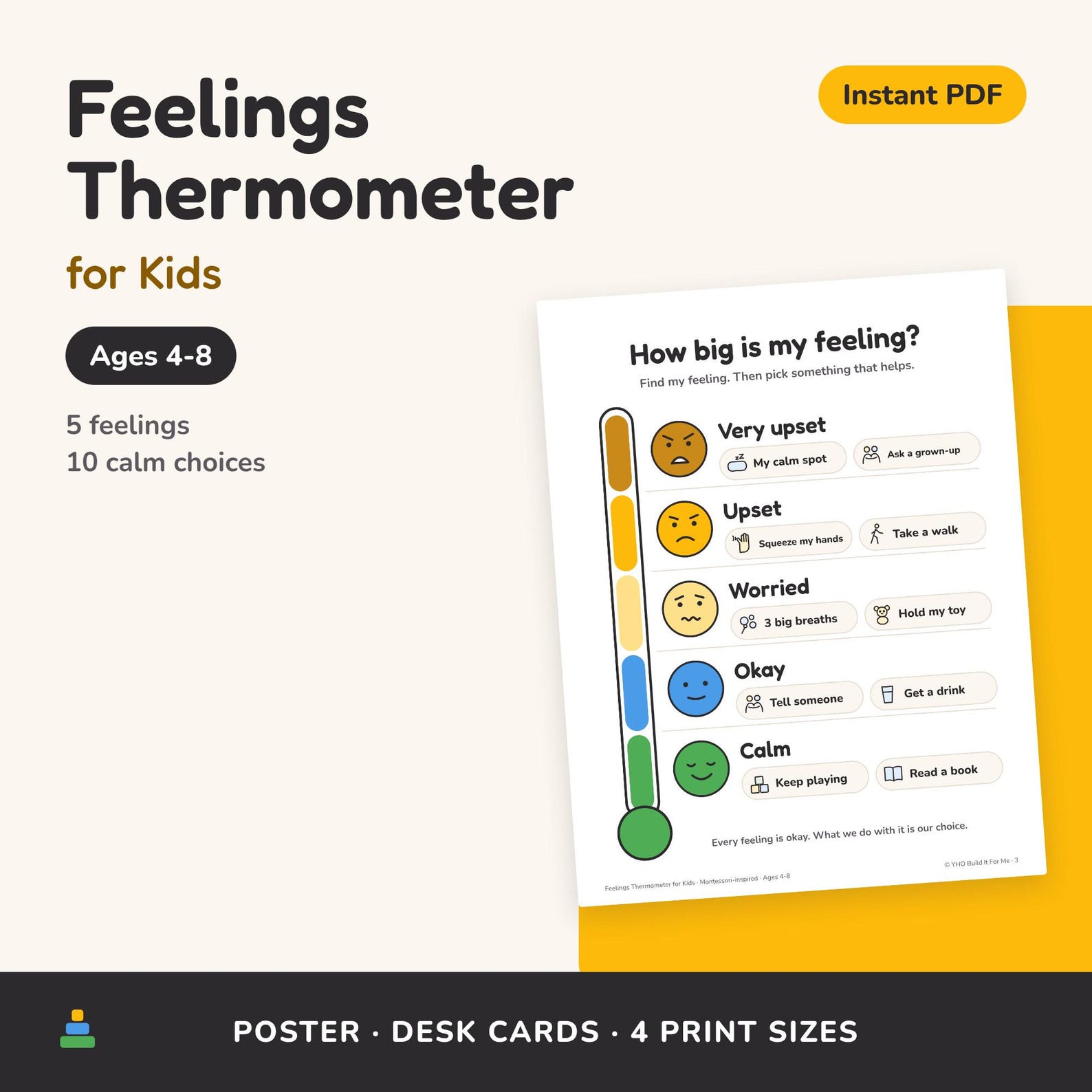
The Calm Down Cards give 24 calm-down choices, including breathing and movement ideas, for ages 4-8. The Feelings Thermometer poster adds a scale from low to high, with calm-down choices alongside.
Introduce it before it is needed
Show the corner on a calm day. Sit in it together. Look at the cards and try one: "Let's take three slow breaths." Children are more likely to use a space they have already explored.
Let the child choose
The corner works well when it is the child's decision. Offer, "Would you like to go to the calm corner or have a hug?" Choosing is part of the skill. Avoid sending a child there as a consequence.
Use the cards together
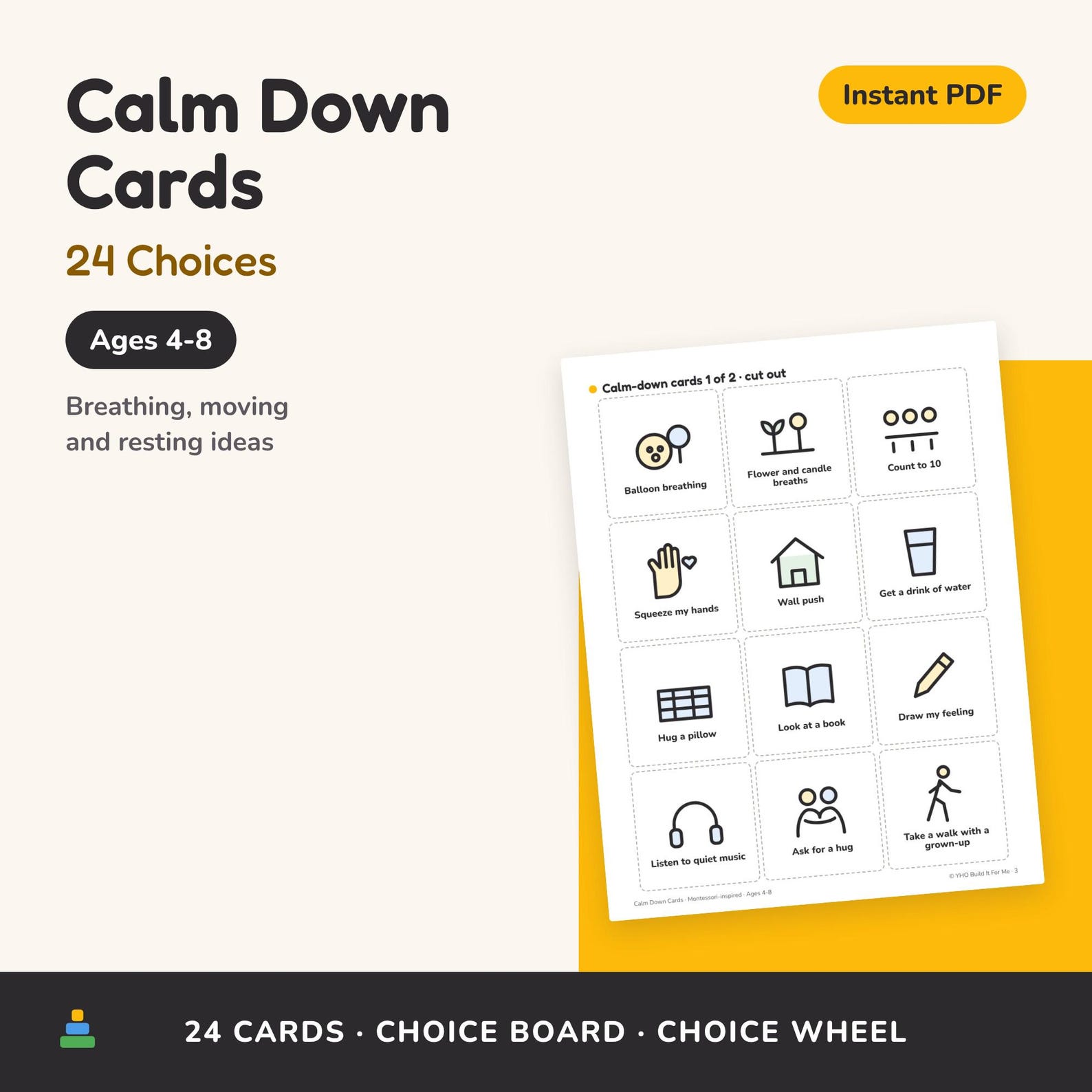
When your child is ready, look at the cards together and ask, "Which one do you want to try?" Let them pick. Practice the choices when everyone is calm so they are familiar.
Keep it simple
Resist the urge to add more and more items. A busy corner stops feeling calm. A cushion, a few cards and a poster are enough.
Adapt for a classroom
Set a clear rule: one child at a time, and a short visit. A small sand timer or a card on a ring can help children know how long to stay. Review the routine with the class at circle time.
Check in afterward
When your child returns, ask a gentle question: "How are you feeling now?" Do not insist on a long conversation. Sometimes just going back to play is the right next step.
Related guides
See emotion words for kids for building a feelings vocabulary and how to use a feelings thermometer.
Where to start
Pick a spot this week, add a cushion and look at the cards together. Browse the feelings collection for cards and posters.
These printables help children name and talk about feelings. They are not a substitute for advice from a doctor or counselor.
Frequently asked questions
What goes in a calm down corner?
A cushion or rug, a soft item, a few books, calm-down cards and a feelings poster. Keep it small and tidy.
Is a calm corner the same as a time-out?
No. A calm corner is a place a child can choose to visit for a pause. It is not a punishment.
How many choices do the Calm Down Cards include?
24 calm-down choices, including breathing and movement ideas, for ages 4-8.
Part of a series: Emotion Words for Kids: Building a Feelings Vocabulary
Where to start
More Feelings and Calm DownWritten by the YHO Team, the makers of the YHO app and YHO Build It For Me printables. Montessori-inspired. Not affiliated with or certified by any Montessori organization. Some links go to our Etsy shop.