
How to Use a Feelings Thermometer With Your Child
By The YHO Team · November 6, 2026 · 2 min read
How to use a feelings thermometer: read the levels together, match a choice to each level, and practice when calm.
Table of contents
If you are wondering how to use a feelings thermometer, the idea is simple. It is a poster with a scale from low to high, and a child points to the level that matches how big their feeling is. The scale helps children say not only what they feel but how strongly.
This guide walks through reading the levels together, matching a choice to each level and practicing when everyone is calm. It belongs to our feelings series.
What the poster shows
The Feelings Thermometer is an emotions chart poster for ages 4-8. It shows a scale from low to high with calm-down choices alongside. Print it at wall size for a classroom or smaller for a calm corner or fridge.
Step 1: introduce the scale on a calm day
Sit with your child and look at the poster. Say, "This shows how big a feeling can be. At the bottom it is small. At the top it is very big." Let your child touch it.
Step 2: practice with easy examples
Give neutral examples. "How big is the feeling when you get a snack you like? How big is the feeling when your block tower falls?" Let your child point. There are no wrong answers.
Step 3: connect words to levels
Add feeling words to each level: a little bit annoyed, getting frustrated, very frustrated. Our emotion words for kids guide helps with vocabulary.
Step 4: match a choice to each level
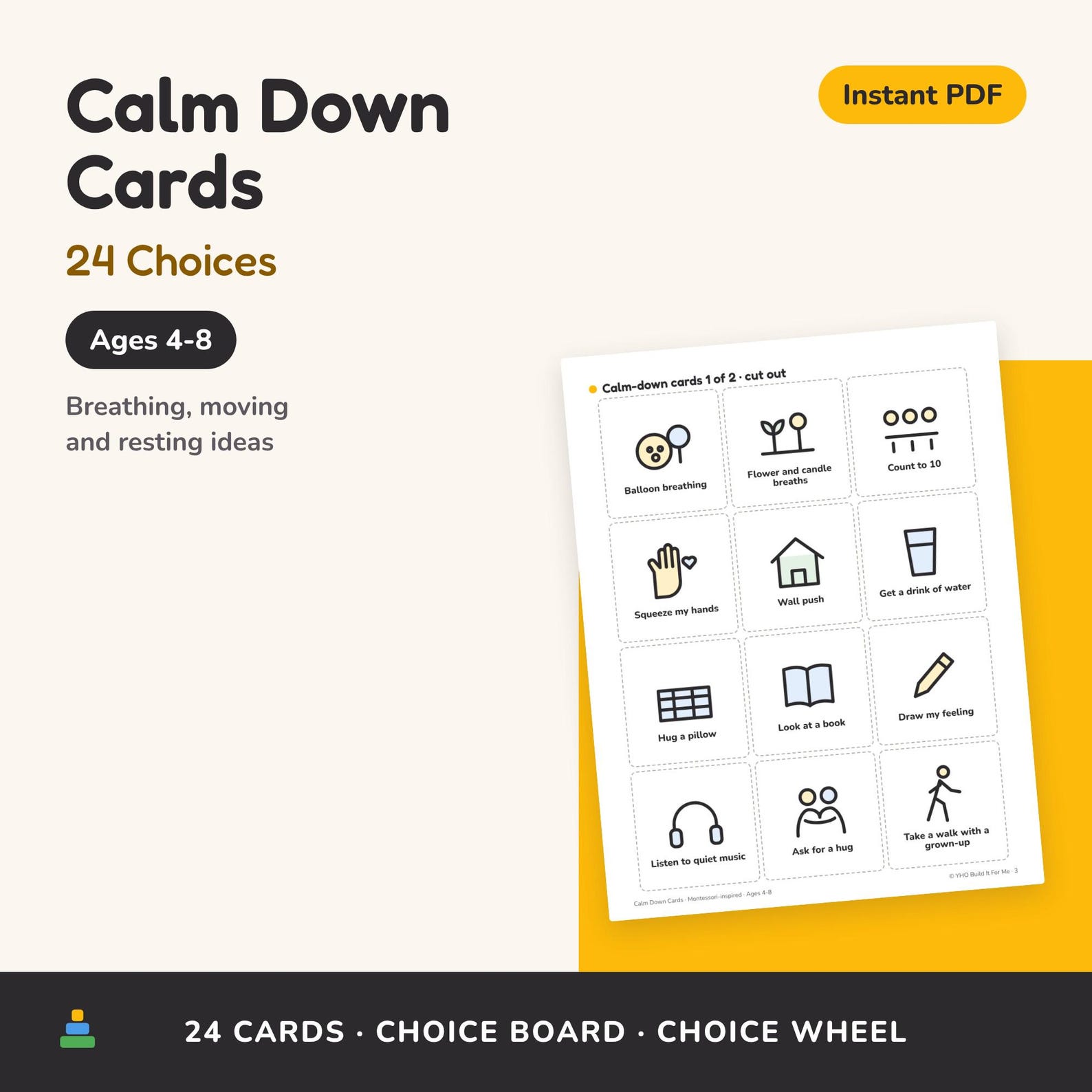
Talk about what might help at each level. At a low level, a deep breath. At a higher level, a squeeze of a pillow or a quiet minute in a calm corner. The Calm Down Cards offer 24 choices for ages 4-8. Let your child decide which choice belongs to which level.
Step 5: use it when feelings show up
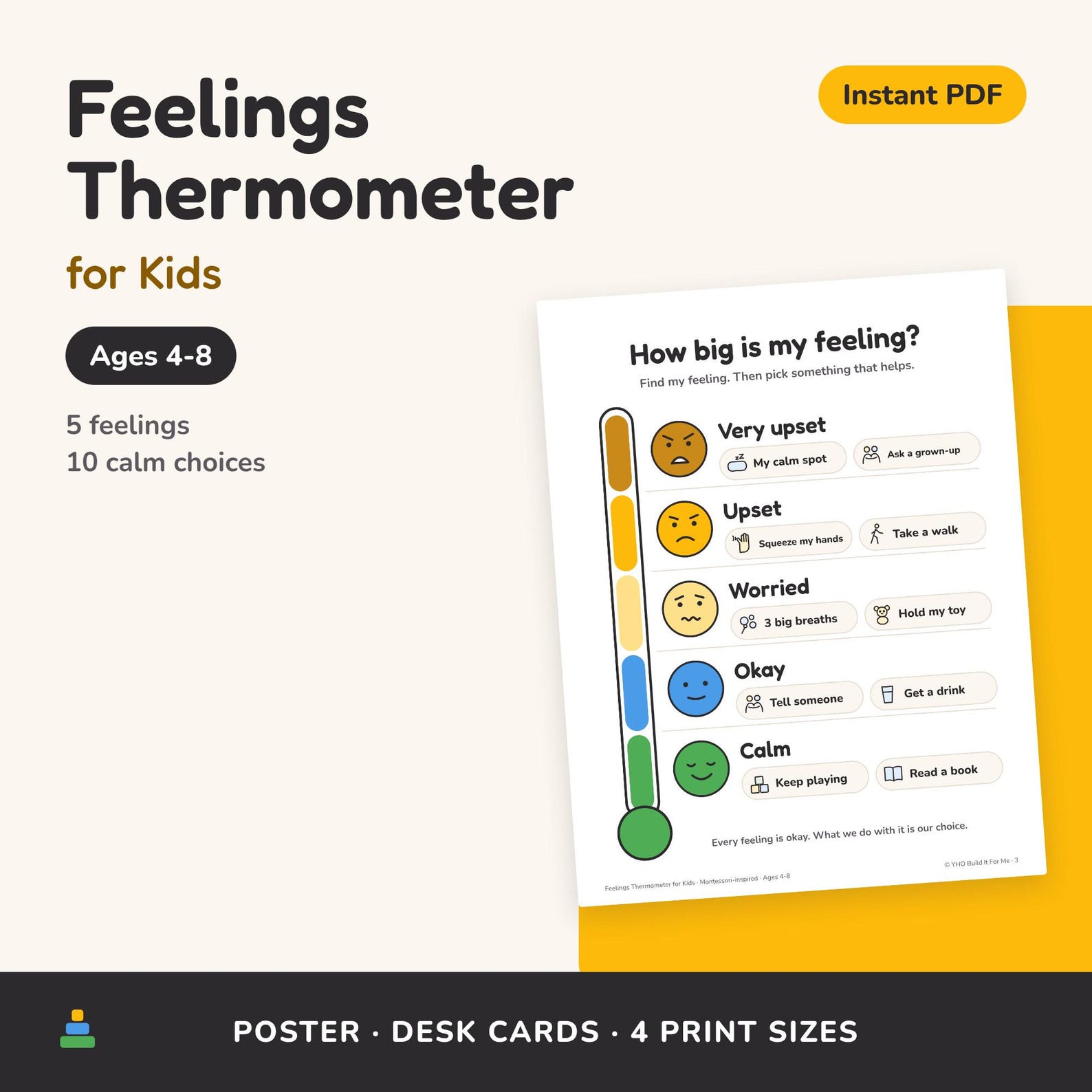
When your child has a feeling, say, "Want to show me on the thermometer?" Then talk about it. Keep your voice quiet and slow. You are not trying to solve the moment, only to name it.
Practice regularly
Use the thermometer for small feelings as well as big ones. Practice at a calm time keeps the tool familiar. A short daily check, such as before dinner, makes it a habit.
Model it yourself
Point to the level yourself: "I am at a three today. I am a little tired." Children learn by seeing adults use the same language.
For classrooms
Post the thermometer near the meeting area. At circle time, ask a few children to show how their morning feels. Keep it voluntary. A child who prefers not to answer can pass.
Related guides
See calm down corner ideas and morning check-in for kids.
Where to start
Print the poster and look at it together tomorrow. Browse the feelings collection for related tools.
These printables help children name and talk about feelings. They are not a substitute for advice from a doctor or counselor.
Frequently asked questions
How do you use a feelings thermometer?
Introduce the scale on a calm day, practice with easy examples, connect feeling words to levels, and invite your child to point to the level that matches how they feel.
What ages is the Feelings Thermometer for?
Ages 4-8.
When should we practice with the thermometer?
At calm times, so the language is familiar when feelings run high.
Part of a series: Emotion Words for Kids: Building a Feelings Vocabulary
Where to start
More Feelings and Calm DownWritten by the YHO Team, the makers of the YHO app and YHO Build It For Me printables. Montessori-inspired. Not affiliated with or certified by any Montessori organization. Some links go to our Etsy shop.