Emotion Words for Kids: Building a Feelings Vocabulary
By The YHO Team · November 6, 2026 · 3 min read
Emotion words for kids start with four basic feelings and grow. Learn how to use faces and words at calm times.
Table of contents
Emotion words for kids are the vocabulary children use to say what is going on inside. "I feel left out" is a different sentence from "I feel mad," and the more words a child has, the more precisely they can describe a moment. Building that vocabulary is a language skill, and it can start early.
This guide shows how to begin with four basic feelings, grow the list, use faces and words together, and pick calm moments to practice. It is the starting point for our feelings series.
Start with four feelings
Begin with happy, sad, mad and scared. Four is enough for a toddler or young preschooler. Show a picture of each face, say the word, and ask your child to make the face with you. Repeat over several days before adding more.
Grow the list slowly
When your child names the first four confidently, add a few more at a time: tired, excited, worried, proud, surprised, silly, frustrated, lonely. Add a new word when it fits something that really happened: "You looked frustrated when the tower fell." Over time, you can reach a large range of words.
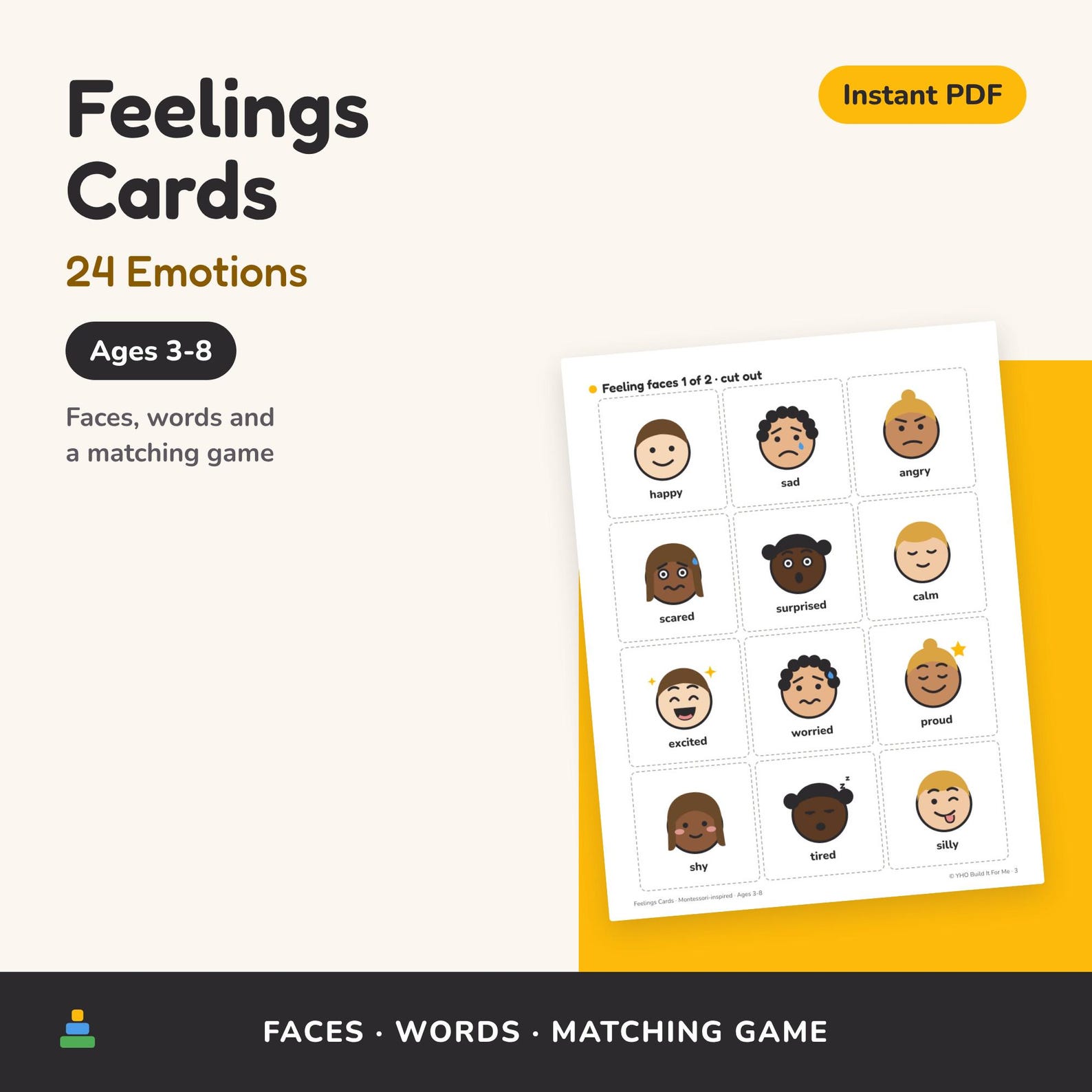
The Feelings Cards are a set of 24 emotions faces and words for ages 3-8, which gives you room to grow without buying anything new.
Use faces and words together
Younger children read faces long before they read words. Pair a face with a word and say both. As children begin to read, they can match words to faces. A feelings matching game is an easy way to do it:
- Lay out several face cards
- Say a feeling word and ask your child to find it
- Swap: your child picks a card and you guess
Talk about feelings at calm times
A child in the middle of a big feeling cannot absorb a new lesson. The easiest time to practice is when everyone is calm: at breakfast, in the car or before bed. Ask, "How were you feeling at the park today?" Over time the words become familiar enough to use when it matters.
Measure the size of a feeling
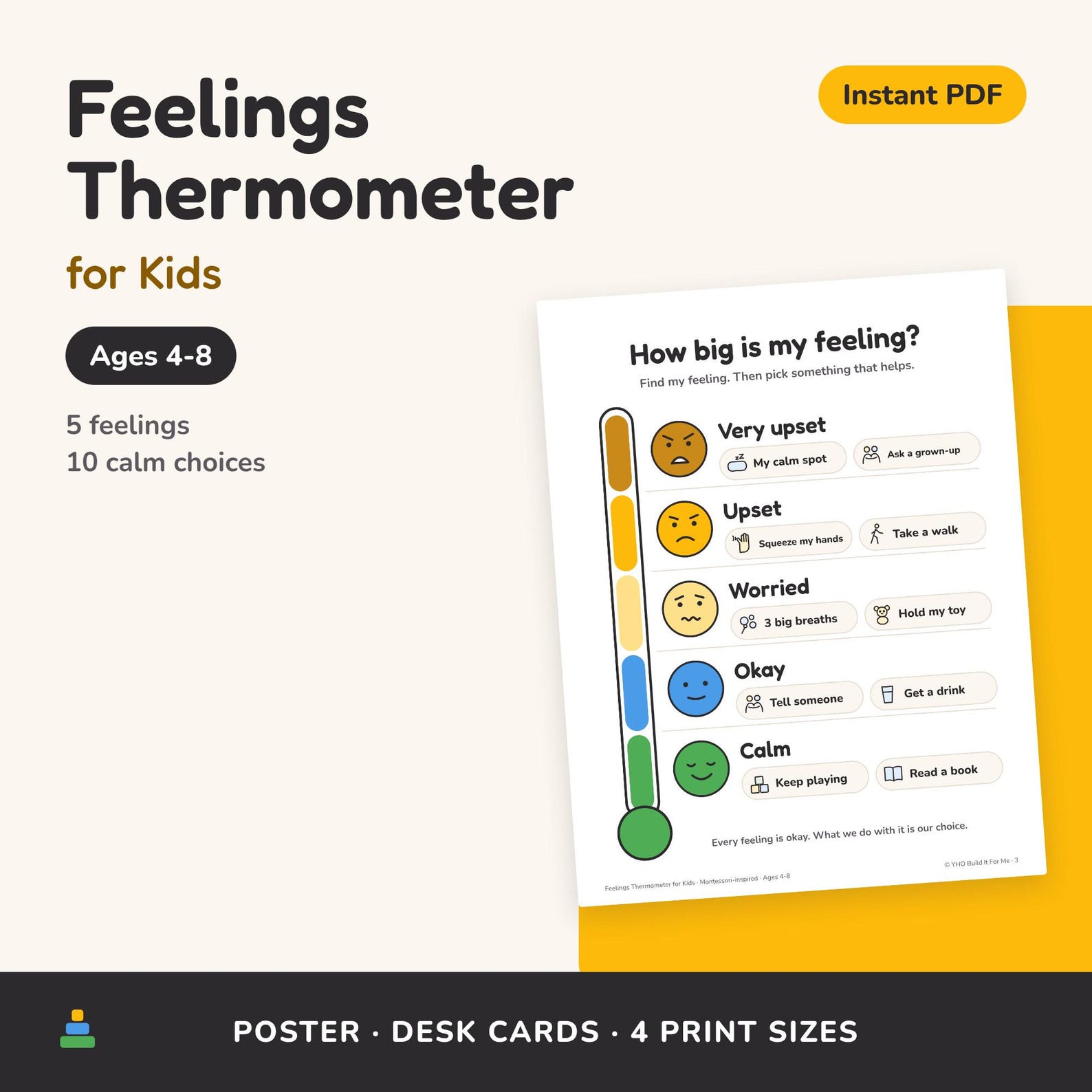
Naming a feeling is one skill; describing how strong it is is another. The Feelings Thermometer is for ages 4-8 and shows a scale from low to high. Our guide to how to use a feelings thermometer explains it step by step.
Model the language yourself
Say your own feelings aloud: "I feel a little tired and I want to sit down." Children pick up vocabulary by hearing it used naturally.
Read books and notice characters
Picture books are full of feelings. Pause and ask, "How do you think she feels?" This builds the habit of noticing others, which is part of emotional vocabulary too.
A set that works together
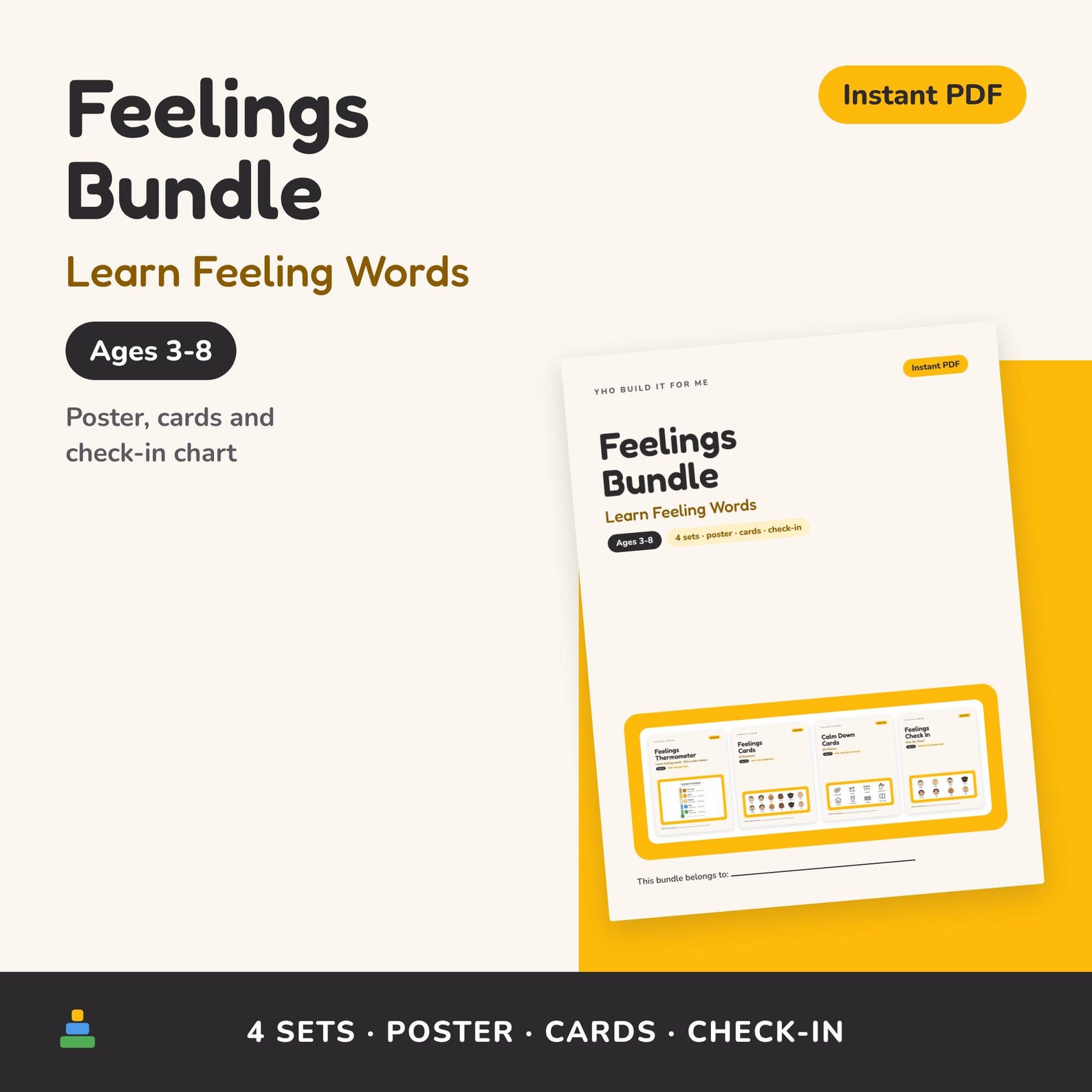
If you want several tools at once, the Feelings Bundle includes a thermometer, emotions cards, calm down cards and a check in chart for ages 3-8. These tools are for naming and talking about feelings.
Related guides
Where to start
Pick four feelings and practice them this week. Browse the feelings collection for cards, charts and posters.
These printables help children name and talk about feelings. They are not a substitute for advice from a doctor or counselor.
Frequently asked questions
How many emotion words should a young child know?
Start with four basic ones: happy, sad, mad and scared. Add more gradually as they come up in daily life.
When should I teach emotion words for kids?
At calm moments, such as breakfast or bedtime, when your child can listen and join in.
What ages are the Feelings Cards for?
Ages 3-8, with 24 faces and words.
Where to start
More Feelings and Calm DownWritten by the YHO Team, the makers of the YHO app and YHO Build It For Me printables. Montessori-inspired. Not affiliated with or certified by any Montessori organization. Some links go to our Etsy shop.