
Kindergarten Sight Words: A Read, Trace, Write Routine
By The YHO Team · November 6, 2026 · 2 min read
Kindergarten sight words are easier with a three-step routine: read, trace, write. Add simple games to review them.
Table of contents
Kindergarten sight words are the common words children meet again and again in early reading: the, and, said, you. Recognizing them quickly lets a child read more smoothly and spend their energy on new words. A short daily routine and a few simple games are enough to build a base.
This guide describes a three-step routine and some games for review. It belongs to our tracing and handwriting series.
The three-step routine: read, trace, write
For each word:
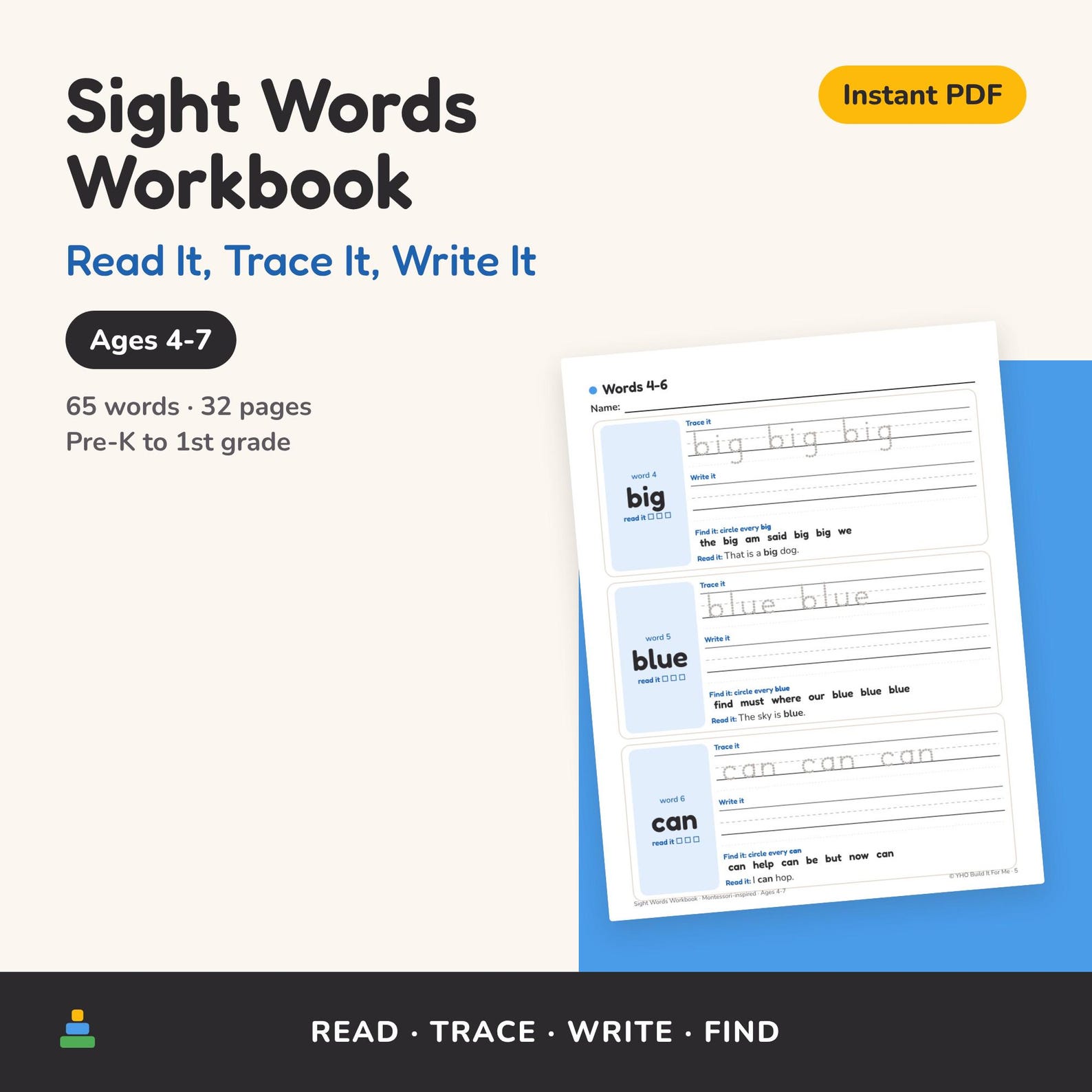
- Read it. Say the word aloud together and point to each letter.
- Trace it. Trace the word with a finger, then with a pencil, to feel the letters.
- Write it. Cover the model and have your child write the word on their own.
Doing all three engages the eyes, the hand and the memory. The Sight Words Workbook follows this pattern. It covers 65 words to read, trace and write for ages 4-7.
One or two words a day
Keep the pace light. One or two new words a day is plenty. Review earlier words now and then so they stay fresh. Short sessions of five to ten minutes keep the work pleasant.
Use the word in a sentence
Say a spoken sentence with the word in it. "I can see you." Ask your child to make up a sentence too. Using a word in meaning helps it stick.
Simple review games
- Word hunt: look for a sight word in a favorite book and point to it each time it appears
- Flash and say: write words on index cards and flip through them quickly
- Hide and find: hide cards around the room and have your child read each one as they find it
- Word of the day: put one word on the fridge and read it every time you pass
Pair sight words with phonics
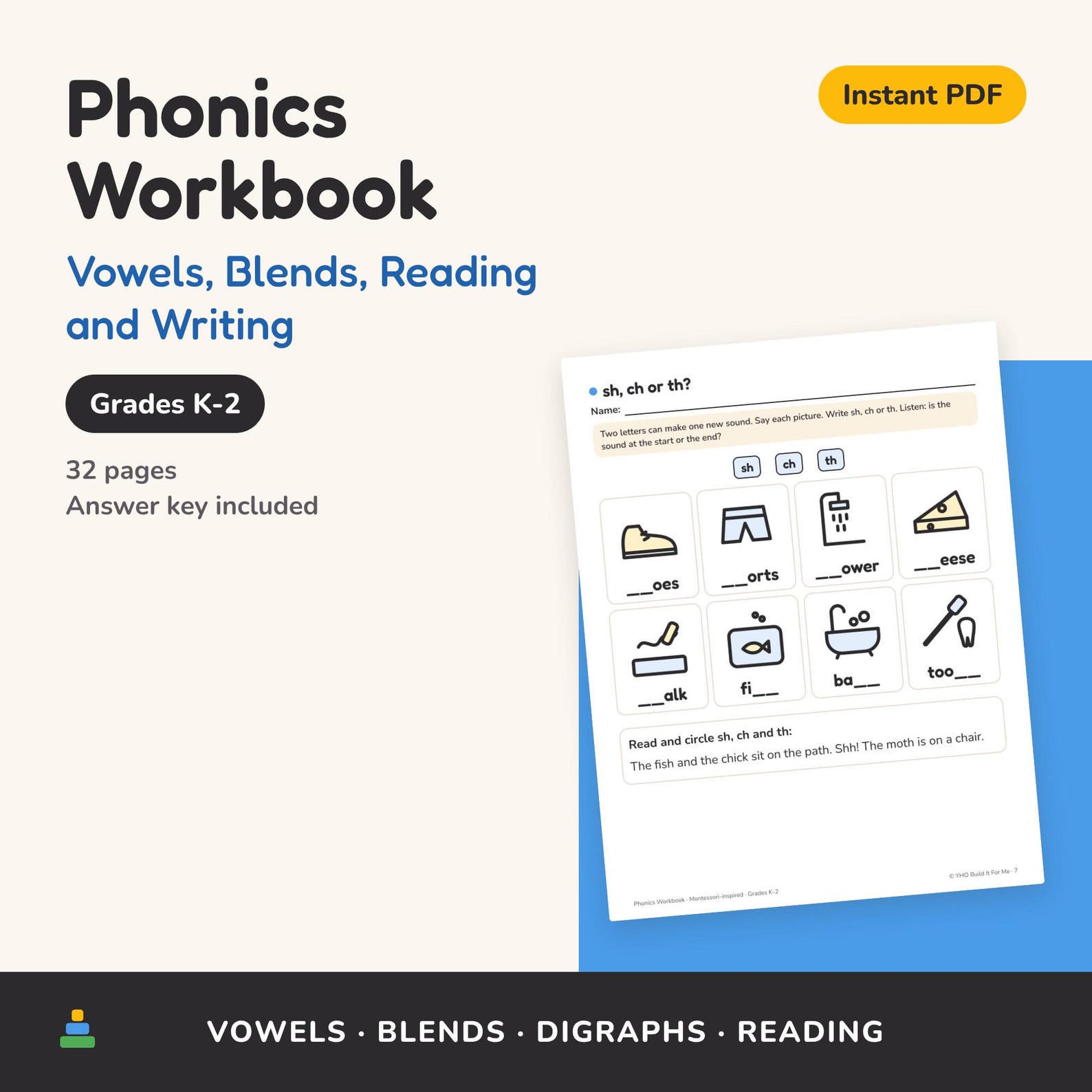
Some sight words follow phonics patterns and some do not. Learning both gives children more ways into a word. The Phonics Workbook K-2 offers reading and writing practice for ages 5-8 to sound out new words.
Keep it low pressure
Avoid turning sight words into a test. If your child cannot read a word, say it and move on. They will meet it again soon enough.
Keep a list
Write down the words your child knows. Seeing the list grow is satisfying, and it shows you what to review.
Connect to handwriting
Tracing and writing words also support handwriting. Our guide to handwriting practice for kindergarten shows how letters, words and sentences fit together.
Related guides
See pre-writing strokes and pencil control activities.
Where to start
Pick two words today, read, trace and write them, and make up a sentence. Browse the reading and writing collection for more workbooks.
Frequently asked questions
How many kindergarten sight words should we learn each day?
One or two is plenty. Review earlier words regularly.
How many words are in the Sight Words Workbook?
65 words to read, trace and write, for ages 4-7.
Should my child sound out sight words?
Some sight words follow phonics patterns and some do not. Practicing both gives children more ways to read them.
Part of a series: Pre-Writing Strokes: The Order That Leads Children to Letters
Where to start
More Reading and WritingWritten by the YHO Team, the makers of the YHO app and YHO Build It For Me printables. Montessori-inspired. Not affiliated with or certified by any Montessori organization. Some links go to our Etsy shop.