Literacy Printable: Letter Sounds | YHO Build It For Me
By The YHO Team · September 11, 2026 · 4 min read
Say the sound, not the letter name, and choose pictures that begin with it. A small routine with a big payoff.
Table of contents
A literacy printable for letter sounds does its job when the adult says the sound and not the letter name. This is the single change that makes the biggest difference, and it costs nothing.
Say sss, not ess. Say mmm, not em. A child who learns sounds can blend them into words; a child who learns names has learned a set of labels that do not connect to speech. The letter name can come later and usually does, without being taught.
Start with the sound in the mouth
Before any page, make the sound together. sss. Feel where it happens. Stretch it. Then say a word: sun. Ask whether they hear the sss at the start. This is a listening game, and it takes thirty seconds.
Children who can hear the first sound in a spoken word are ready for a printed page. Children who cannot yet hear it need more listening games, not more worksheets.
Choosing pictures that begin with the sound
A good letter sound picture is one object, clearly drawn, with the sound at the start. A sun, a sock, a snake. Not a ship for s, and not a picture of several things, because the child then has to guess which object you meant.
Vowels are harder. Keep them for later, and start with the continuous consonants: s, m, f, n, l, r. These can be stretched, which makes them easier to hear.
A five minute routine
- Point at the letter. Say the sound once.
- Say three words, only one of which starts with the sound.
- Child points at the picture that starts with it.
- Trace the letter once with a finger, then once with a pencil.
- Stop. Put the page away.
That is the whole lesson. Repeat the same letter for several days before adding a new one. Two letters learned well beat six met once.
What to leave out
Leave out alphabet-order recitation, letter-of-the-week crafts that take an hour of prep, and anything that asks a four-year-old to write the letter from memory before they can trace it. Also leave out the page with five pictures per letter; two is plenty, and choosing between two is a real decision.
Where this goes next
Once a child knows a handful of sounds, they can build short words: s-a-t, m-a-p. That is reading, and it usually arrives sooner than adults expect. Keep the sessions short and the tone light, and let the child be the one who notices they read something.
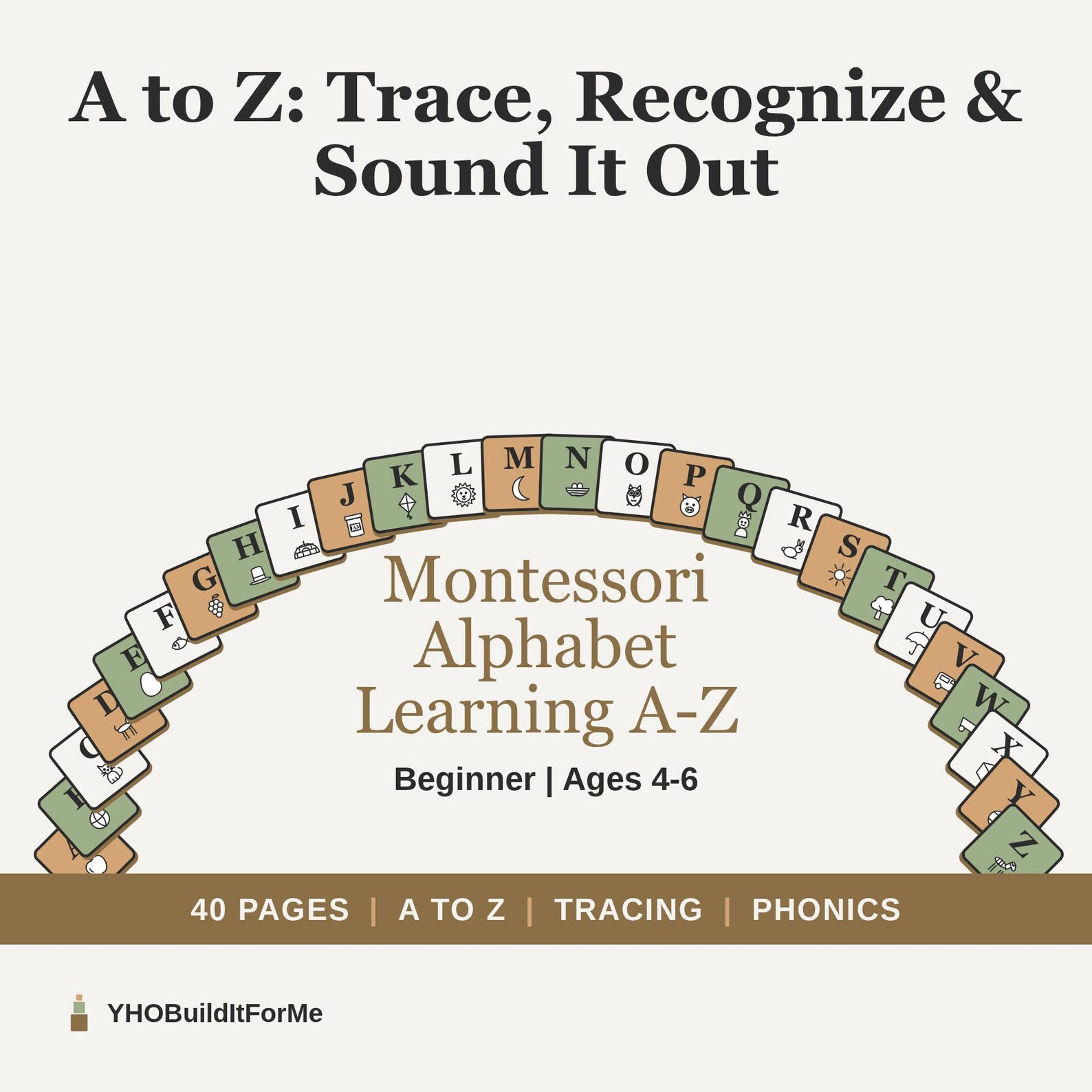
Montessori Alphabet Learning A-Z
Printable A to Z letter cards and pages for tracing, recognising and sounding out letters with real pictures.
View printableLetter tracing and first-sound practice belong to the same routine. This preschool literacy printables guide covers the tracing side, and the preschool printable guide covers choosing a page in general.
Three sound games without paper
Paper is useful, but the listening work happens before it. These three games take a minute each and need nothing printed.
The first sound hunt. Walk around a room and name things, then ask whether each starts with the target sound. Say the sound first so the child has it in their ear.
Three words, one sound. Say three words, only one of which starts with the sound. The child picks it out. This is the game to play in a car.
Sound of the day. Choose one sound in the morning and notice it together all day: in a shop name, in a book, in a sibling's name. Naming it out loud is the repetition.
Tracking what a child knows
A literacy printable folder is also a record. Write the date on each finished page and keep them in order. Within a month you can see which letters are steady and which one is still wobbling, which is far more reliable than memory.
Keep the record simple: letter, date, and one word for how it went. Steady, wobbly, refused. That is enough to plan the next week, and it takes ten seconds.
Do not test a child with flashcards to fill the record. The pages are the record. If a letter needs a test to confirm, it needs another week of play.
A routine that lasts the year
A literacy printable routine survives because it is small. One letter, one sound, one page, four minutes. Add a second letter only when the first is recognised outside the session, in a shop sign or a cereal box. That transfer, from paper to the real world, is the sign that the work has settled. Keep a short list on the fridge of the letters done so far and let the child add to it. The list becomes a record and a small trophy at the same time, and it costs nothing. When a letter is refused, leave it on the list and come back in a fortnight.
Two letters a month is a solid pace at this age, and the folder will show it.
Where to start
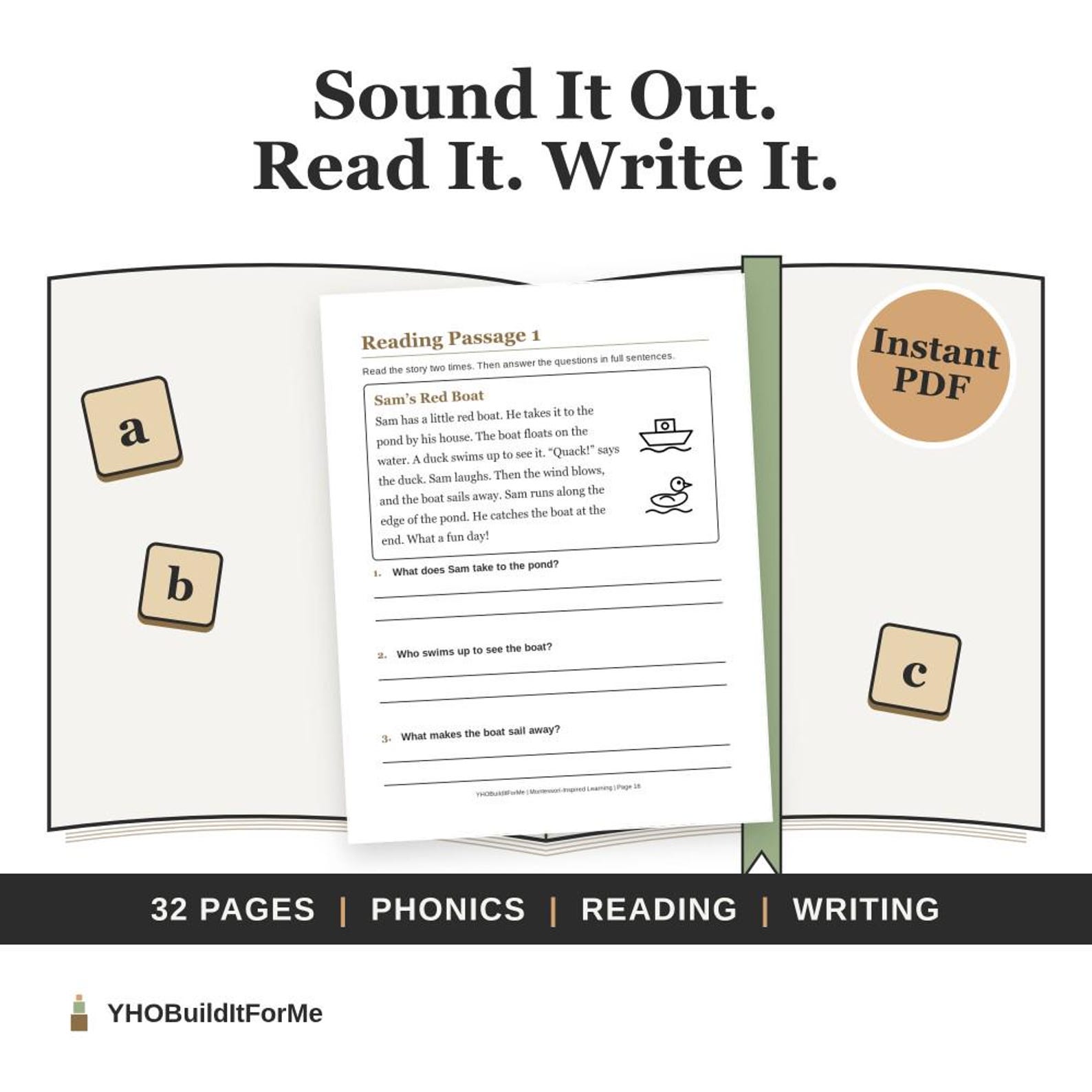
Print one letter, one sound, and two pictures. Say the sound, not the name. Printable alphabet sets with sound pictures are in the YHO Build It For Me shop.
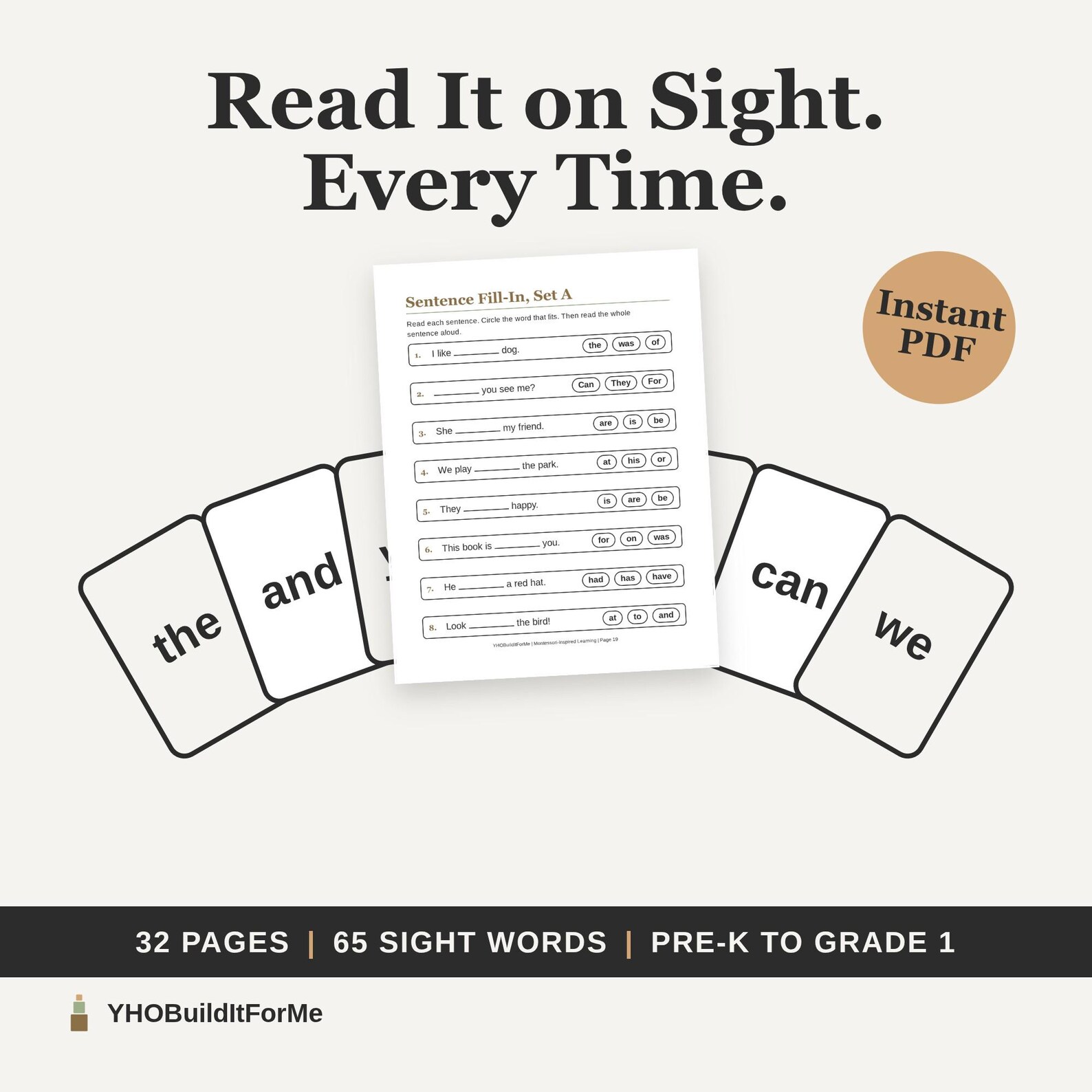
Sight Word Reading Practice
Printable sight word practice with sentence fill-in, word cards, tracing and writing for pre-K to Grade 1.
View printableFrequently asked questions
Should I teach letter names or letter sounds first?
Sounds. A child who knows that the letter says sss can start reading words. A child who only knows the name sees an arbitrary label.
Which pictures should I use for a letter sound activity?
Clear, single-object pictures that begin with the sound: a sun, a sock, a snake. Avoid blends and pictures with several objects.
How do I use a literacy printable for sounds?
Point at the letter, say the sound once, then have the child find the two pictures that start with it. Five minutes is enough.
Some links go to the Etsy shop. Every printable here is one I would use in my own learning routine.