
Pencil Control Activities for Preschool: Before the Letters
By The YHO Team · November 6, 2026 · 2 min read
Pencil control activities build the hand before letters: thick-to-thin paths, picture paths and reusable cards.
Table of contents
Pencil control activities help a child guide a pencil along a path on purpose. It is the quiet skill underneath handwriting: before a child writes a letter, they need to start, stop and turn where they intend to. Plenty of practice with lines, curves and paths makes that control easier.
This guide suggests a simple progression, three kinds of practice and ways to keep it fun. It belongs to our tracing and handwriting series.
Start with big movements
Before a pencil, use large movements: drawing in sand or shaving foam, painting with a brush on a big sheet, tracing lines in the air with an arm. Big movements teach the direction of a stroke, and the pencil can follow later.
Line tracing
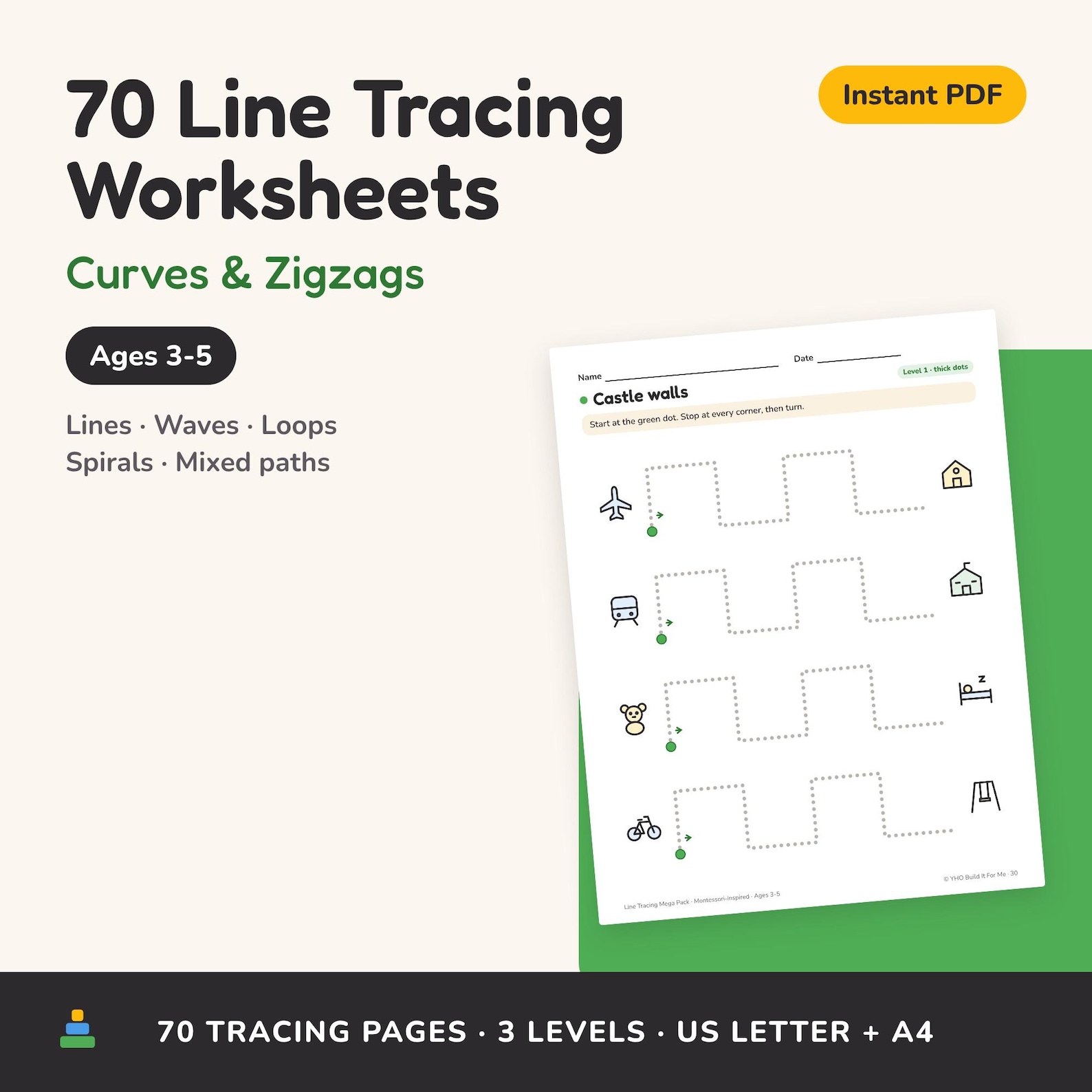
Once children can make simple marks, line tracing gives them paths to follow. The 70 Line Tracing Worksheets cover curves, zigzags, waves, loops and spirals for ages 3-5. The shapes change from page to page, so the hand learns to move in many directions. Two or three pages per session is plenty.
Thick-to-thin progression
Children manage a wide track more easily than a narrow one. Start with thick lines and move to thin ones as control improves. If your child is frustrated, go back a step. The goal is a path they can follow with success.
Picture paths
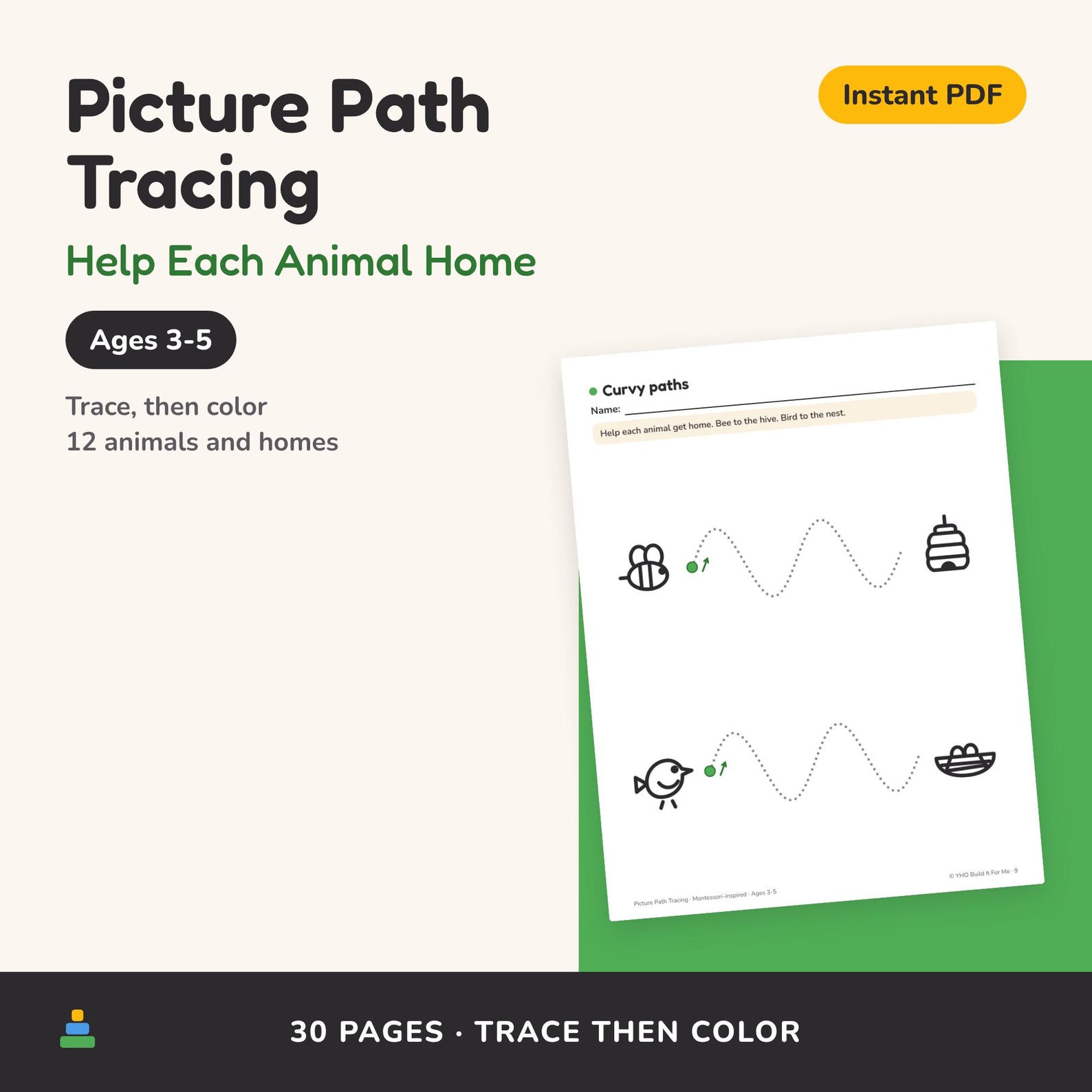
A goal can make tracing feel like play. In the Picture Path Tracing worksheets, children help each animal get home by tracing a curvy path, for ages 3-5. Talk about the picture as your child works; it adds language and keeps the session relaxed.
Reusable cards
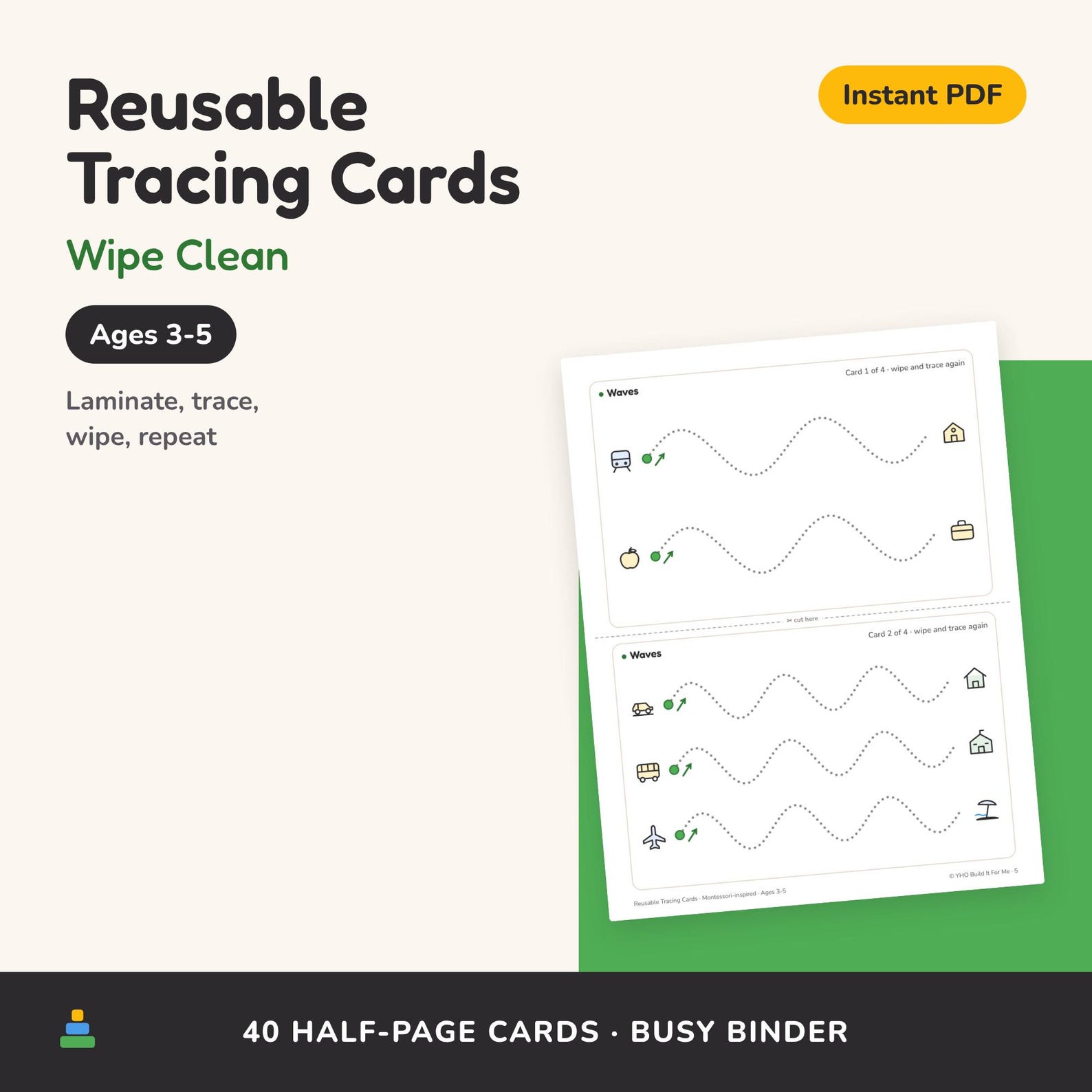
Repetition builds control, and reusable cards make repetition cheap. The Reusable Tracing Cards are a set of 40 half-page line tracing cards for wipe-clean use, for ages 3-5. Slide a card into a clear sleeve, give your child a dry-erase marker, and let them trace, wipe and try again. They fit neatly into a busy binder for the car or quiet time.
Other fine motor activities
Pencil work is one part of fine motor development. Playdough, tearing paper, threading beads, using tweezers and cutting with child-safe scissors all strengthen the hand. Mix paper and non-paper activities through the week.
Posture and grip
A chair that supports the feet and a table at elbow height help. A chunky crayon or short pencil is easier for small hands than a long, thin one. Do not worry about grip perfection at this age; it develops with practice.
Keep it short and positive
Five to ten minutes is plenty. Comment on what you notice: "You went all the way around the curve!" Avoid comparing your child with others.
Related guides
See pre-writing strokes for the order of strokes and handwriting practice for kindergarten for the next stage.
Where to start
Print two tracing pages, hand over a crayon and keep it light. Browse the tracing collection for more packs.
Frequently asked questions
What are pencil control activities?
They are activities such as line tracing, picture paths and drawing shapes that help a child guide a pencil along a path on purpose.
How long should pencil practice take?
Five to ten minutes is plenty for most preschoolers.
How many cards are in the Reusable Tracing Cards set?
40 half-page cards for wipe-clean use, for ages 3-5.
Part of a series: Pre-Writing Strokes: The Order That Leads Children to Letters
Where to start
More Tracing and Pre-WritingWritten by the YHO Team, the makers of the YHO app and YHO Build It For Me printables. Montessori-inspired. Not affiliated with or certified by any Montessori organization. Some links go to our Etsy shop.