Printable Scissor Skills: A Progression That Actually Works
By The YHO Team · October 26, 2026 · 1 min read
Snip, then straight lines, then curves, then corners. Four steps that stop scissor practice from ending in tears.
Table of contents
Cutting is one of the few skills where the order of teaching really matters. Skip a step and the child struggles with something that looks simple, then decides they are bad at scissors.
Step one: snip
Start with a strip of paper about two fingers wide. One snip, done. The child learns to open and close the blades and to hold the paper still. Confetti is a legitimate outcome here.
Step two: straight lines
A single straight line across a page, then two, then a column of short lines. Straight lines teach the child to keep the paper turning instead of the scissors wandering.
Step three: curves and waves
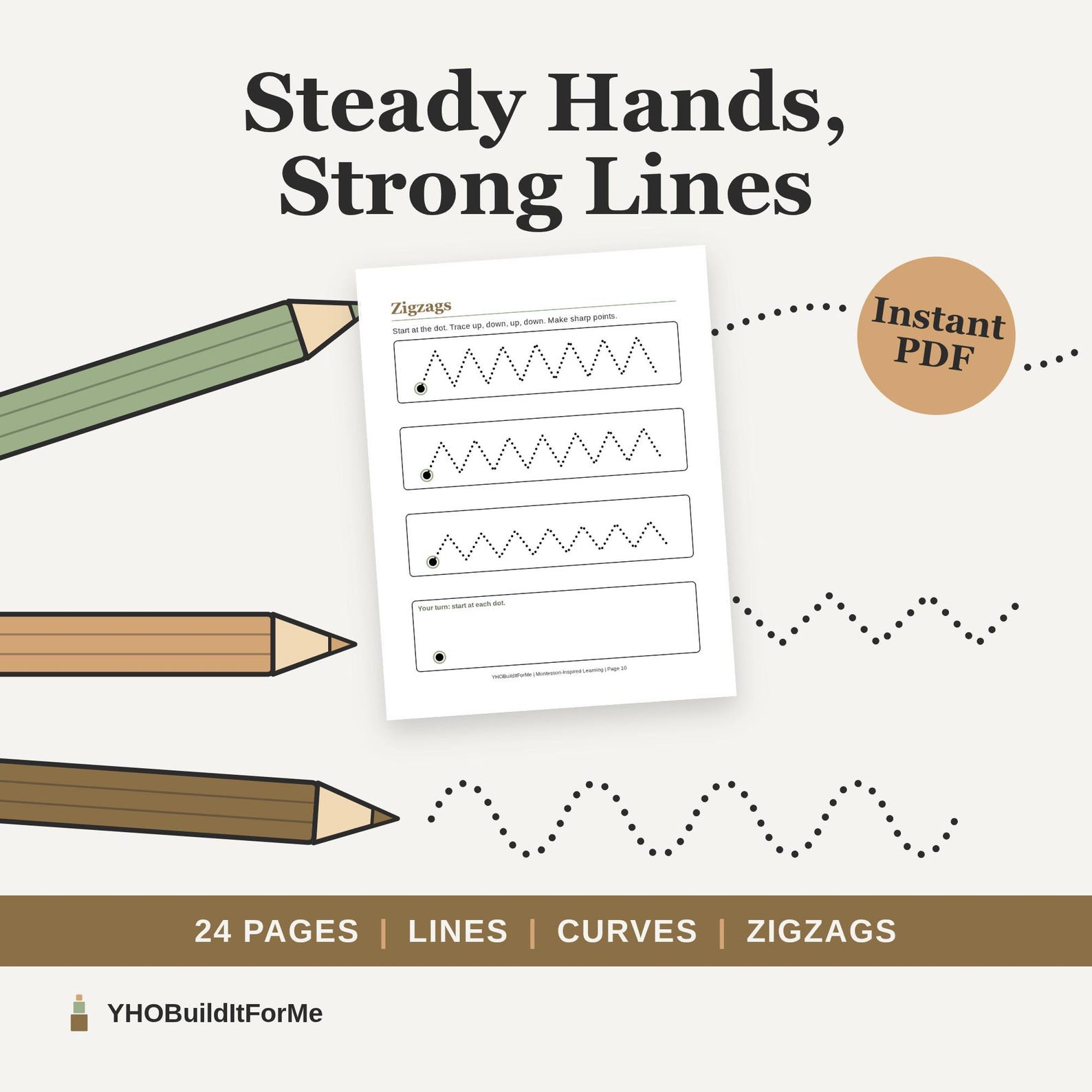
Fine Motor Tracing Book
24 printable tracing pages of lines, arches, zigzags and spirals that build pencil control before writing letters.
View printableCurves ask the hand to steer while the other hand rotates the paper. This is the step that takes the longest. Expect several weeks and a lot of small scraps.
Step four: corners
A corner needs a stop, a turn, and a restart. It is genuinely harder than a curve, which is why so many cutting pages fail children by jumping straight to shapes.
Set up that helps
- Safety scissors that actually cut. Dull blades teach nothing.
- A tray to catch the scraps.
- Short sessions, five to ten minutes.
- A folder for finished cuttings, because the work matters.
A printable fine motor book gives you the lines and shapes; the pace is yours to set.
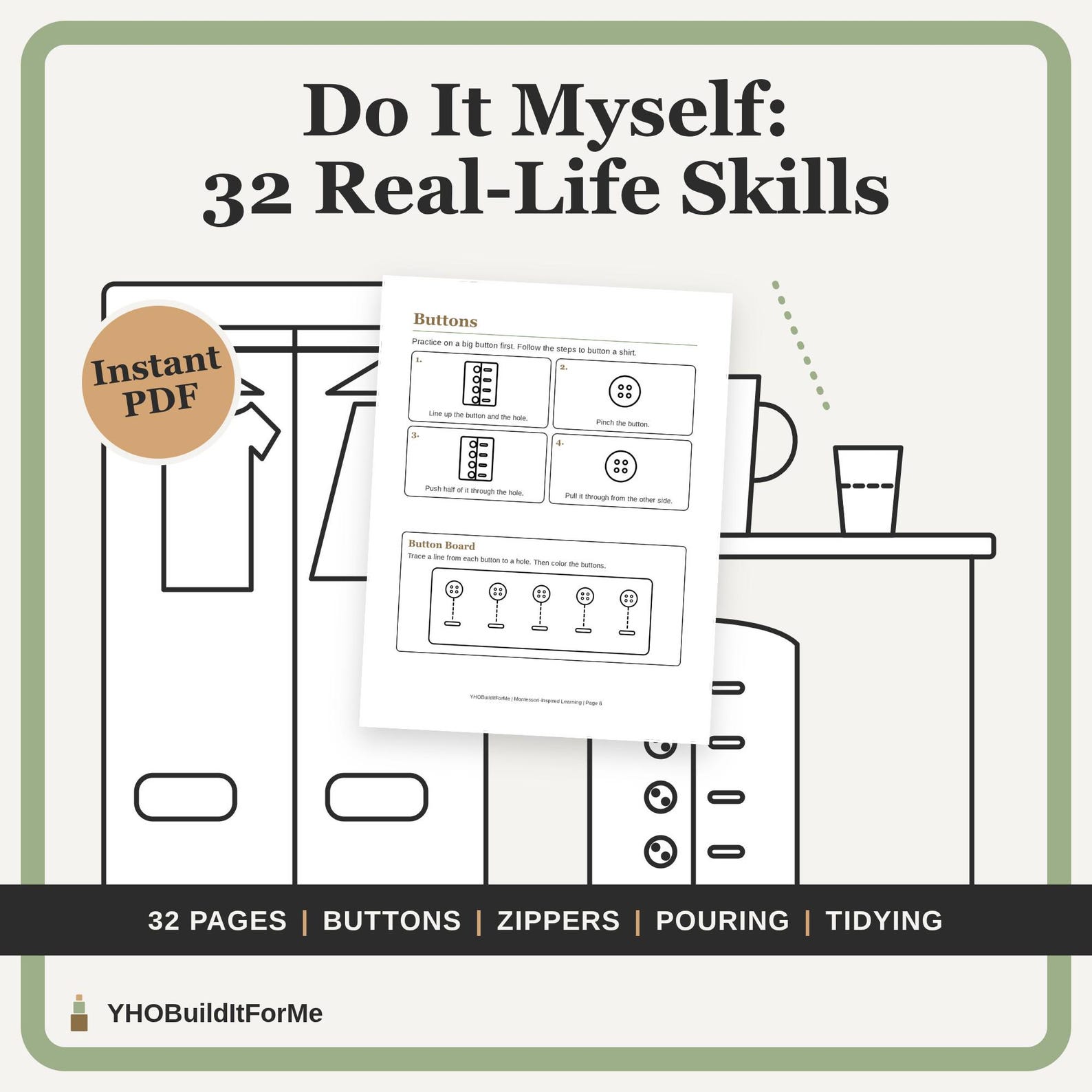
Montessori Practical Life Printable
32 printable pages of real-life skills: buttons, zippers, pouring, tidying and table setting, with step-by-step pictures.
View printableSome links go to the Etsy shop. Every printable here is one I would use in my own learning routine.