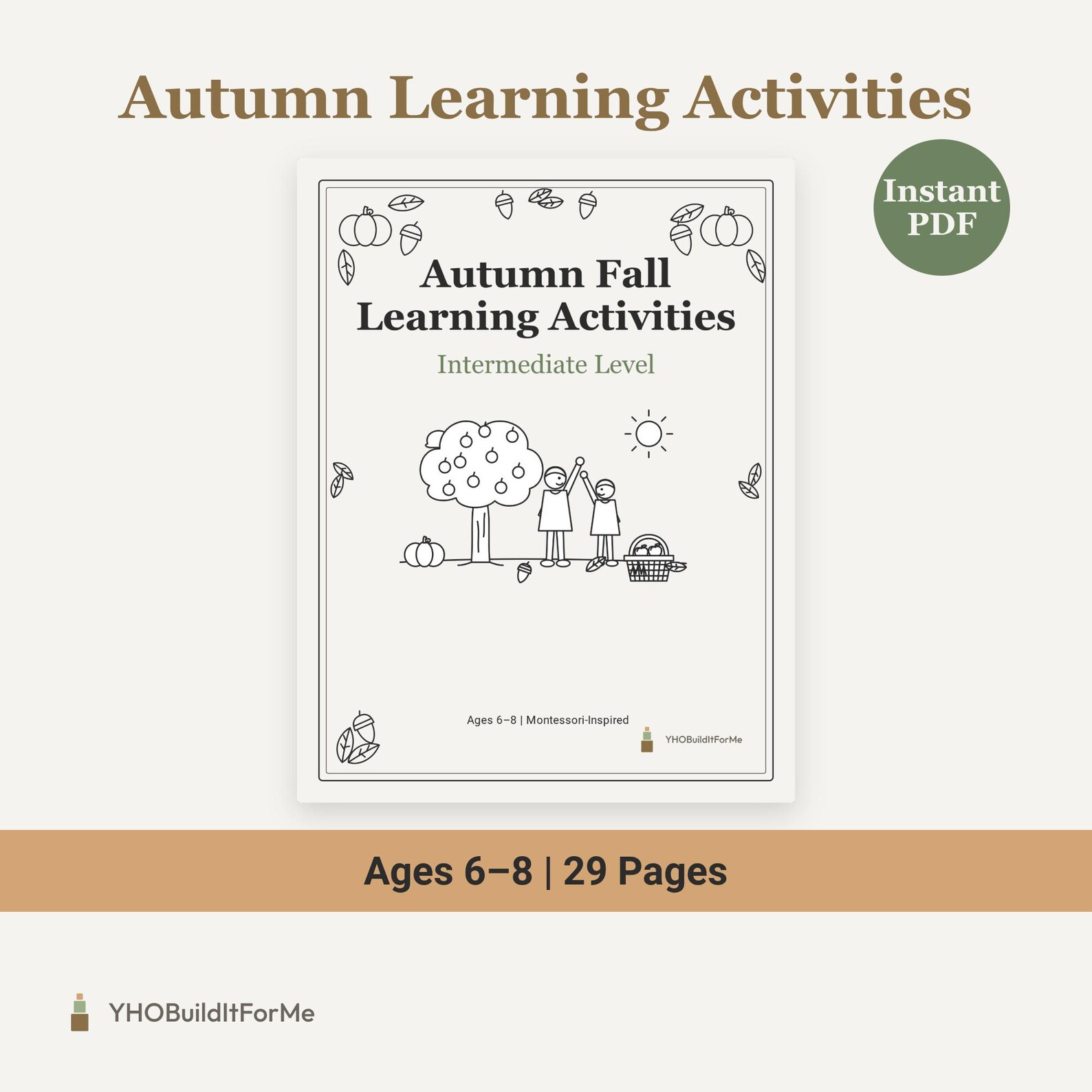
Spring Summer Fall Activities | YHO Build It For Me
By The YHO Team · October 2, 2026 · 4 min read
One nature activity each for spring, summer and fall, using the same four steps so the routine carries across the year.
Table of contents
Spring, summer and fall can each carry one activity, and if you use the same four steps every time, the child stops needing instructions. That is the whole plan: one collection per season, sorted, sequenced, and drawn.
Planning spring summer fall activities as one set keeps the routine identical, which is what makes the work independent. Novelty is easy to find outside; repetition is what a child needs at the table.
The four steps, once
- Collect eight to twelve objects outside.
- Sort them on a mat by one property.
- Sequence them along a line.
- Draw one object and tell an adult about it while the adult writes the word.
Four steps, ten to fifteen minutes, once a season at minimum. Some families do it weekly and simply change the collection.
Spring: what is emerging
Spring gives buds, new leaves, petals on the ground, and the first seed heads. The interesting property is change: two leaves from the same tree at different stages is a whole lesson.
Collect a bud, a half-open leaf, and a full leaf. Sequence them by how open they are. The child is ordering a process, not just a set of objects, which is a step beyond size ordering.
Summer: what is abundant
Summer is the season where the adult's job is to limit the collection. There is too much available, and a bucket of everything teaches less than eight chosen things.
Ask for eight objects and no more. Sort by texture, which summer material suits well: smooth stones, rough bark, soft petals, dry grass. Then sequence by weight in the hand, a different physical experience from size.
Fall: what is on the ground
Fall is the easiest collection, because the material is already lying there. Leaves in several colours, seed pods, twigs, fallen petals. Sort by colour, then by shape, then by whether the edge is smooth or toothed.
Press a few leaves between sheets of newspaper for a week and keep them in the folder. Label with the month, not the year.
Keeping the year visible
Use one folder with a section per season, or three envelopes in a box. Each season adds a sorting mat, a drawn record, and one line in your handwriting about what the child said. By the end of the year the folder is a record of nine months of attention, which is more than most workbooks can show.
Reuse the same printed mat every season. Print it once on card stock and it will survive the year.
What to skip
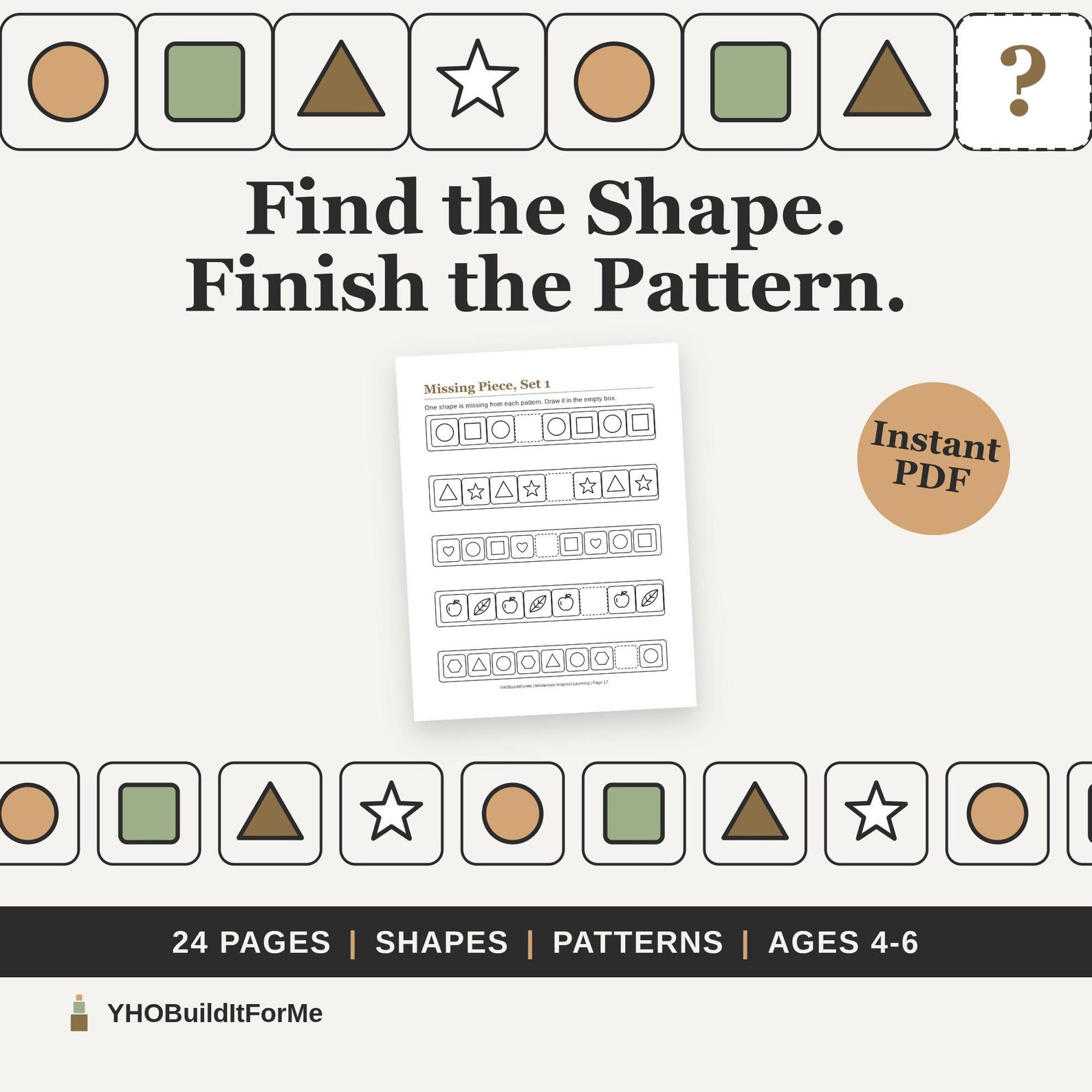
Shapes and Patterns Explorer
24 printable pages of shape tracing, sorting and pattern work, from AB patterns to growing number patterns.
View printableSkip the seasonal craft that takes an hour of adult prep. Skip the worksheet that asks a child to colour a season rather than notice one. Skip anything that requires a special trip; the walk to the shop has enough material.
Where the rest of the year goes
For the cold months, the winter nature activities guide covers weather, snow, and animals. To plan all four seasons at once, use the seasons activities overview.
What to print once and reuse
Three printed pages carry all three seasons, and printing them once in September means you never think about it again.
A sorting mat with two circles, on card stock. A sequence strip with five blank squares, which will hold leaves in one season and shells in the next. A record sheet with a large drawing box and one line for a word.
Print two copies of each. One lives on the shelf and one lives in the folder, so a lost mat does not end the routine.
Keeping the year visible
A folder with three sections, labelled spring, summer and fall. Each section holds the mat the child used, the strip, one drawing, and one line in your handwriting about what they said.
At the end of nine months, the folder is a record of three collections, which is more than most families manage with a full curriculum. The spring summer fall rhythm is deliberately modest so that it survives a busy year.
When a season gets skipped
It happens. A summer of moving house, a fall of illness. Skip it and pick up at the next season rather than squeezing two collections into one month.
The value of spring summer fall learning activities is the repetition of the same four steps. Missing one season costs one instance of that repetition, not the habit.
Three collections, one habit
By the third season, the routine belongs to the child. They will fetch the bag, choose the eight objects, and set out the mat without being asked, because the shape is familiar and the ending is predictable. That is the return on planning spring summer fall activities as one set rather than three separate projects. Keep the folder visible between seasons so the work looks like a continuing record rather than a series of one-off crafts, and let the child add the date to each page themselves once they can write it. The handwriting matters less than the ownership.
Where to start
Take a bag outside and bring back eight objects. Sort them on a tray before explaining anything. Printed sorting mats and nature record pages are in the YHO Build It For Me shop.
STEM Science Learning Activities for Kids
Habitats, life cycles, and observation prompts that spark curiosity about the natural world, K-2.
View printableFrequently asked questions
Why plan spring summer fall activities as one set?
Because the same four steps work in all three seasons, so the child recognises the routine and only the objects change.
What is the activity for fall?
A leaf collection: eight to twelve leaves, sorted by colour, then sequenced by size, then one leaf drawn and labelled.
Do spring summer fall activities need a printable?
No, but a printed sorting mat and a record sheet give the collection a place to land and something to keep.
Some links go to the Etsy shop. Every printable here is one I would use in my own learning routine.