Counting Coins for Kids: From Real Coins to Making Change
By The YHO Team · November 6, 2026 · 2 min read
Counting coins for kids starts with real coins, then counting, comparing amounts and making change in pretend play.
Table of contents
Counting coins for kids is a skill that connects math to everyday life. Children see adults pay for things, and they are curious about what coins are worth. The jump from "this is a quarter" to "these coins make this amount" takes practice, and a good way to start is with real coins you can hold.
This guide walks through the steps: real coins first, then counting groups, comparing amounts and making change in pretend play. It fits within our early math and literacy guides.
Step 1: handle real coins
Put a small handful of coins on a tray and let your child look, touch and sort them. Ask: which are the same size? Which are the same color? Name each coin and say its value once. There is no need to memorize on day one.
Sort the coins into piles by type. Sorting is a skill children already enjoy, and it prepares them to count each pile.
Step 2: count one kind of coin
Start with one coin type. Count pennies by ones. Count nickels by fives, saying "5, 10, 15" as you touch each one. Count dimes by tens. Skip counting is the foundation of counting mixed coins later, so repeat it until it feels easy.
Step 3: count mixed groups
When single-coin counting is steady, mix two types. Start with the larger value, then add the smaller: "Dime, ten. Plus a penny, eleven." Always count the highest-value coins first. Move slowly, and use the same order each time.
Step 4: compare amounts
Put two small piles of coins side by side and ask which is worth more. Then check by counting. A child may think a pile with more coins is worth more; comparing real piles helps correct the idea gently.
Step 5: make change in pretend play
Set up a pretend shop with a few items and price tags. One person is the shopper and the other is the shopkeeper. The shopper pays with a coin and the shopkeeper hands back change. Start with simple prices and a single coin. Swap roles often.
Add a workbook
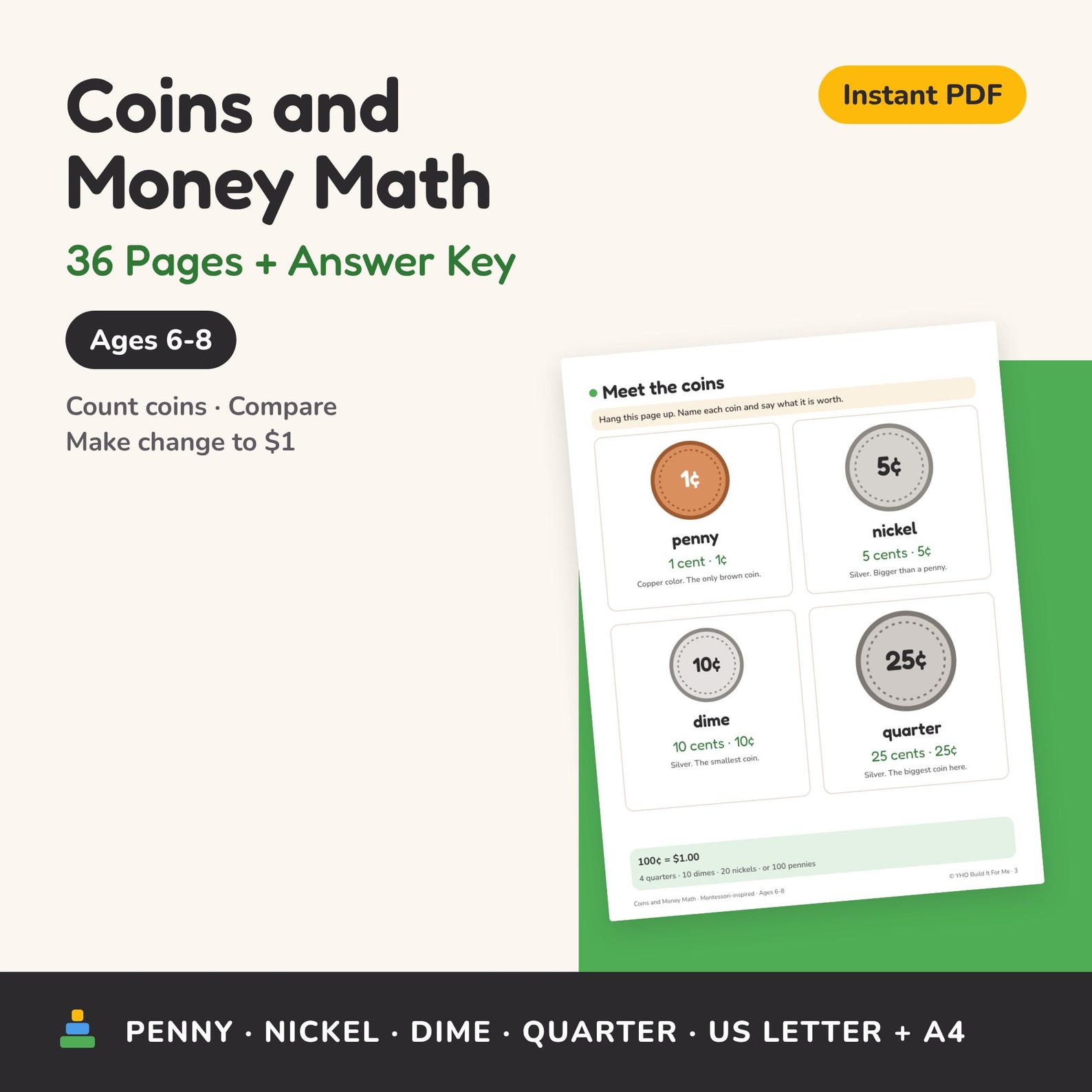
Worksheets turn what your child has done with real coins into a record on paper. The Coins and Money Math Worksheets are a Montessori-inspired workbook for ages 6-8 that covers counting coins, comparing amounts and making change. Pair the pages with real coins whenever you can.
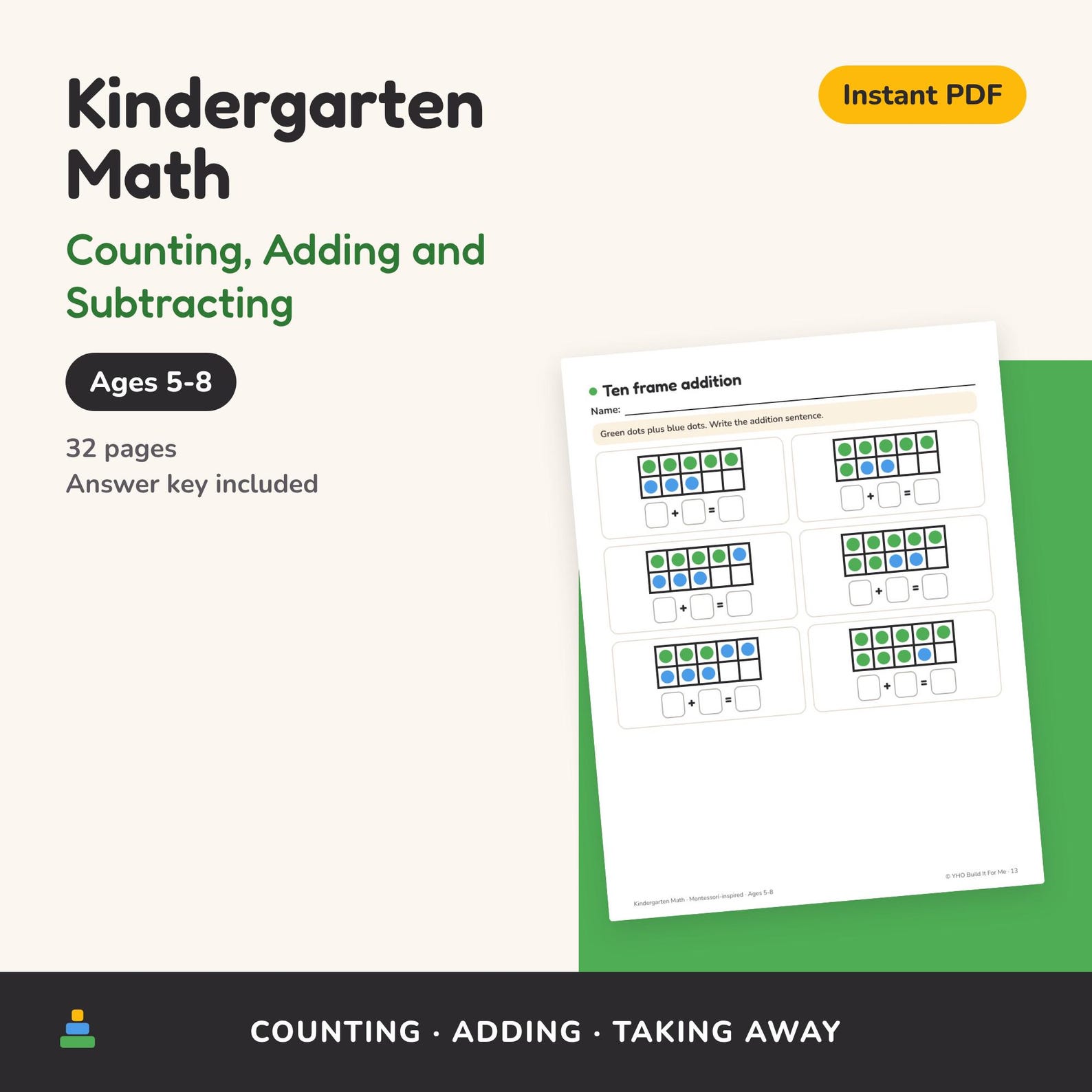
For children who need more practice with counting and adding first, the Kindergarten Math workbook covers counting, addition and subtraction for ages 5-8.
Keep sessions short
Ten minutes is plenty. Money math is easier when you connect it to real moments: counting the change in a jar, paying for a small item at a market.
Related guides
See two-digit addition for 2nd grade for the next math step.
Where to start
Put a handful of coins on a tray tomorrow and sort them together. Browse the math collection for workbooks.
Frequently asked questions
How do I start counting coins for kids?
Start with real coins. Let your child sort them, name them and count one kind at a time before mixing types.
What ages is the Coins and Money Math workbook for?
Ages 6-8, covering counting coins, comparing amounts and making change.
Should kids count the biggest coin first?
Yes. Counting the highest-value coins first and then adding smaller ones makes mixed counting easier.
Part of a series: Preschool Printable Guide | YHO Build It For Me
Where to start
More MathWritten by the YHO Team, the makers of the YHO app and YHO Build It For Me printables. Montessori-inspired. Not affiliated with or certified by any Montessori organization. Some links go to our Etsy shop.