
Two-Digit Addition for 2nd Grade: Tens, Ones and Regrouping
By The YHO Team · November 6, 2026 · 3 min read
Two-digit addition for 2nd grade starts with objects, then paper. Learn tens and ones, regrouping and simple word problems.
Table of contents
Two digit addition for 2nd grade is the moment when children move from counting to thinking about place value. Instead of adding single numbers, they work with tens and ones, and sometimes a group of ten ones becomes a new ten. It is a big idea, and it goes better when children can see and touch it first.
This guide explains the steps: objects first, then paper, regrouping in plain words and a few word problems. It sits within our early math and literacy guides.
Start with tens and ones using objects
Use small objects such as beans, blocks or craft sticks. Put ten objects in a cup or bundle them with a rubber band; that is a ten. Loose objects are ones. Show 23 as two bundles and three loose ones.
Ask your child to build a number: "Show me 34." Then build a second number. Seeing numbers as tens and ones is the foundation of everything that follows.
Add without regrouping
Begin with problems where the ones do not make a new ten, like 23 + 14. Put the two numbers side by side. Add the ones: 3 and 4 make 7. Add the tens: 2 and 1 make 3. The answer is 37. Do several with objects before moving to paper.
Move to paper
Once your child can do it with objects, write the problem vertically, with tens above tens and ones above ones. Say the steps aloud: "Ones first. Then tens." The paper version should match what the objects showed.
Regrouping in plain words
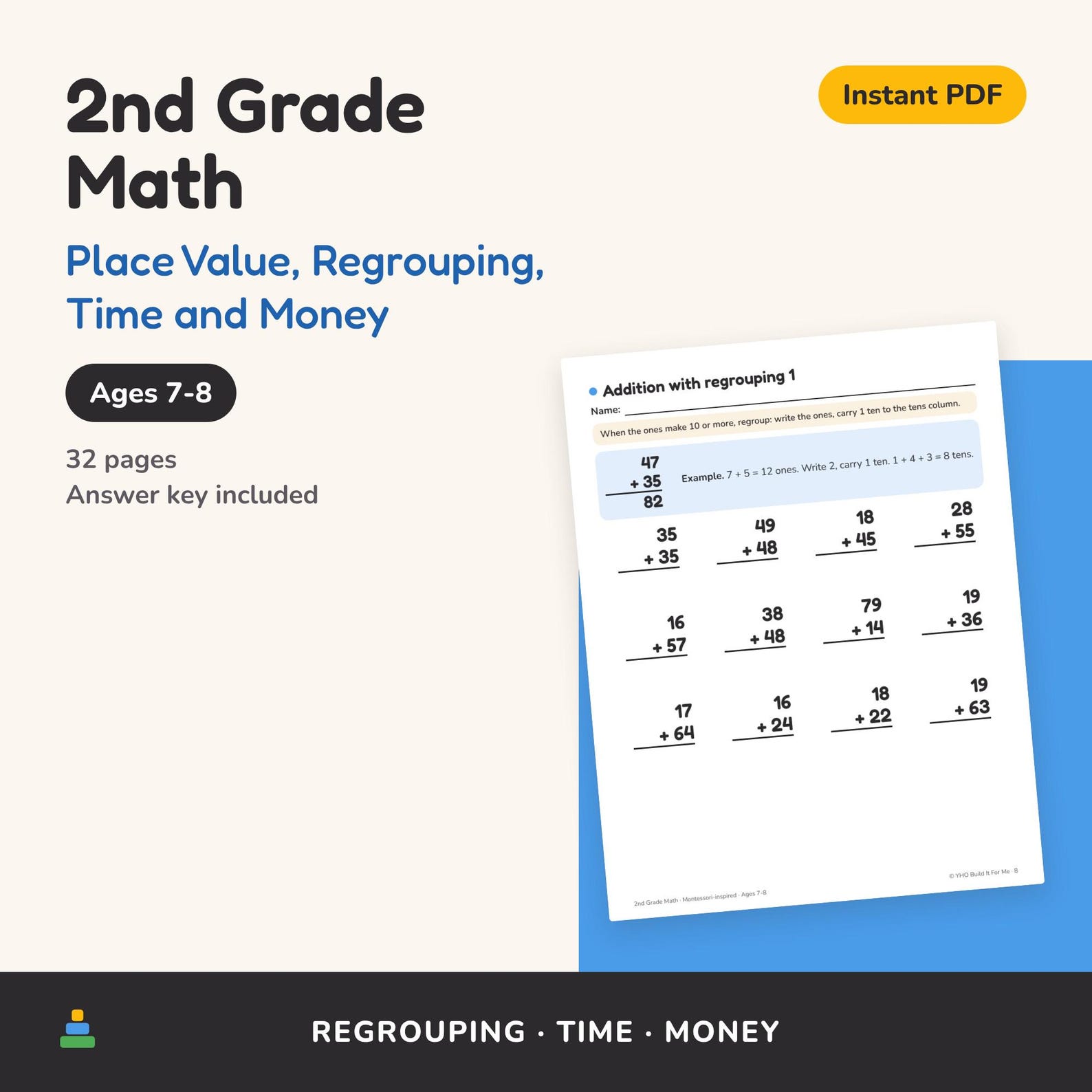
Regrouping happens when the ones add up to ten or more, like 27 + 15. Seven ones and five ones make twelve ones. That is one ten and two ones. Bundle the ten, move it to the tens group, and leave two ones. Then add the tens: 2 + 1 + 1 (the new ten) makes 4. The answer is 42.
Say it as "trading ten ones for one ten." Do many examples with objects before writing it on paper.
Subtraction is the other direction
Once addition feels steady, try two-digit subtraction with the same objects. Taking away works in the same tens-and-ones pattern, and sometimes a ten has to be opened into ten ones.
Word problems
Start with short stories. "There are 26 apples in one basket and 18 in another. How many apples in all?" Ask your child to say what they need to do before calculating. Drawing a quick picture helps.
Add practice pages
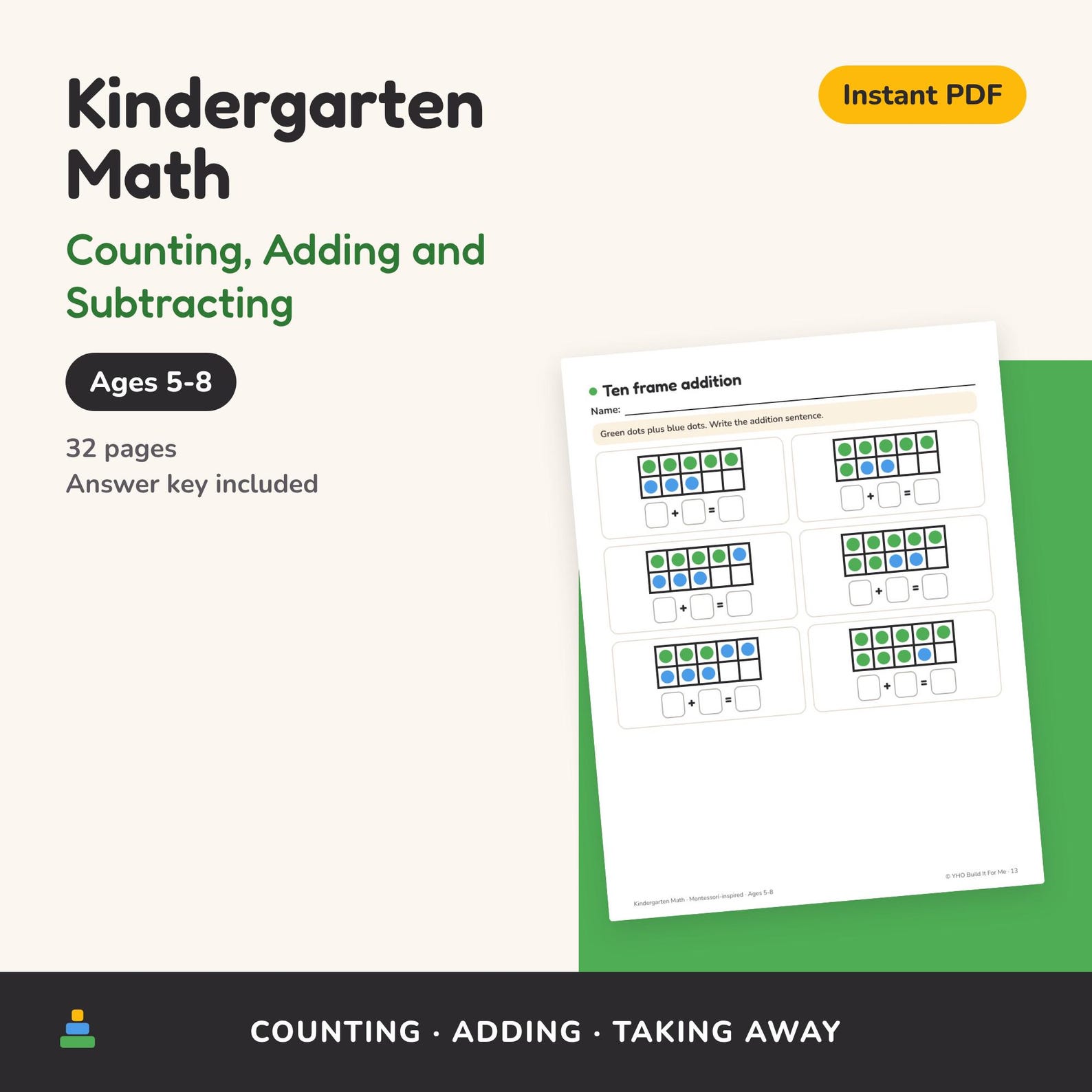
The 2nd Grade Math Worksheets are for ages 7-8 and cover two-digit addition and subtraction, word problems and measurement. Do a few problems a day rather than a whole page at once, and ask your child to explain how they solved each one. For earlier skills, the Kindergarten Math workbook covers counting, addition and subtraction for ages 5-8.
Keep it low pressure
Mistakes are information. When an answer is wrong, ask your child to build it with objects. They often find the mistake themselves.
Related guides
See counting coins for kids for putting number skills to work.
Where to start
Bundle ten beans in a cup and build a two-digit number together. Browse the math collection for workbooks.
Frequently asked questions
What is regrouping in two digit addition?
Regrouping happens when the ones add up to ten or more, so ten ones are traded for one new ten.
What ages are the 2nd Grade Math Worksheets for?
Ages 7-8, covering two-digit addition and subtraction, word problems and measurement.
Should children use objects before paper?
Yes. Building numbers with objects helps them understand tens and ones before they write the steps.
Part of a series: Preschool Printable Guide | YHO Build It For Me
Where to start
More MathWritten by the YHO Team, the makers of the YHO app and YHO Build It For Me printables. Montessori-inspired. Not affiliated with or certified by any Montessori organization. Some links go to our Etsy shop.