Printable Mazes for Kids | YHO Build It For Me
By The YHO Team · October 13, 2026 · 4 min read
The three maze levels, what each one asks of a child, and how to draw a simple maze at home.
Table of contents
Printable mazes for kids come in three levels, and the differences are practical rather than decorative. Wide paths and short routes ask one thing of a child. Loops and long dead ends ask something else entirely. Choosing the wrong level is the main reason a maze ends up crumpled.
Easy: one route, visible
Easy mazes have wide corridors, few junctions, and a route a child can see almost immediately. The point is not challenge. The point is that the child finishes and asks for another.
At this level, a finger can trace the path before the pencil does. That is not cheating; it is the recommended first pass.
Medium: choices that cost something
Medium mazes add real junctions and dead ends of a decent length. The child has to look ahead, commit, and back out. This is where the useful frustration lives, and where most children spend the longest.
Expect a medium maze to take five to ten minutes. Expect a conversation about which way to go. Let the child decide.
Hard: loops and false finishes
Hard mazes add loops that return to the same junction, paths that pass close to the finish without reaching it, and sometimes a second exit. These suit a child who finishes medium work comfortably.
If a child gets lost and upset, the page is too hard for this week. Keep it in a folder and bring it back in a month; the same maze is a different experience with three more weeks of pencil control.
Making a maze at home
You can draw one in two minutes, and a homemade maze has a real advantage: the child can help make it.
- Draw a grid in pencil, about eight by eight squares.
- Mark a start on one edge and a finish on the opposite edge.
- Draw one path between them, turning a few times.
- Add two or three dead ends branching off the path.
- Thicken the walls with a marker and rub out the grid.
For a harder maze, add a loop: a path that leaves the route and rejoins it later. For an easier one, remove junctions until there is only one decision.
A tip about pencils
Mazes are easier with a short pencil and a firm surface. A child pressing hard on a single sheet on a soft table makes trenches. A clipboard under the page fixes it in one move.
Where mazes sit in a week

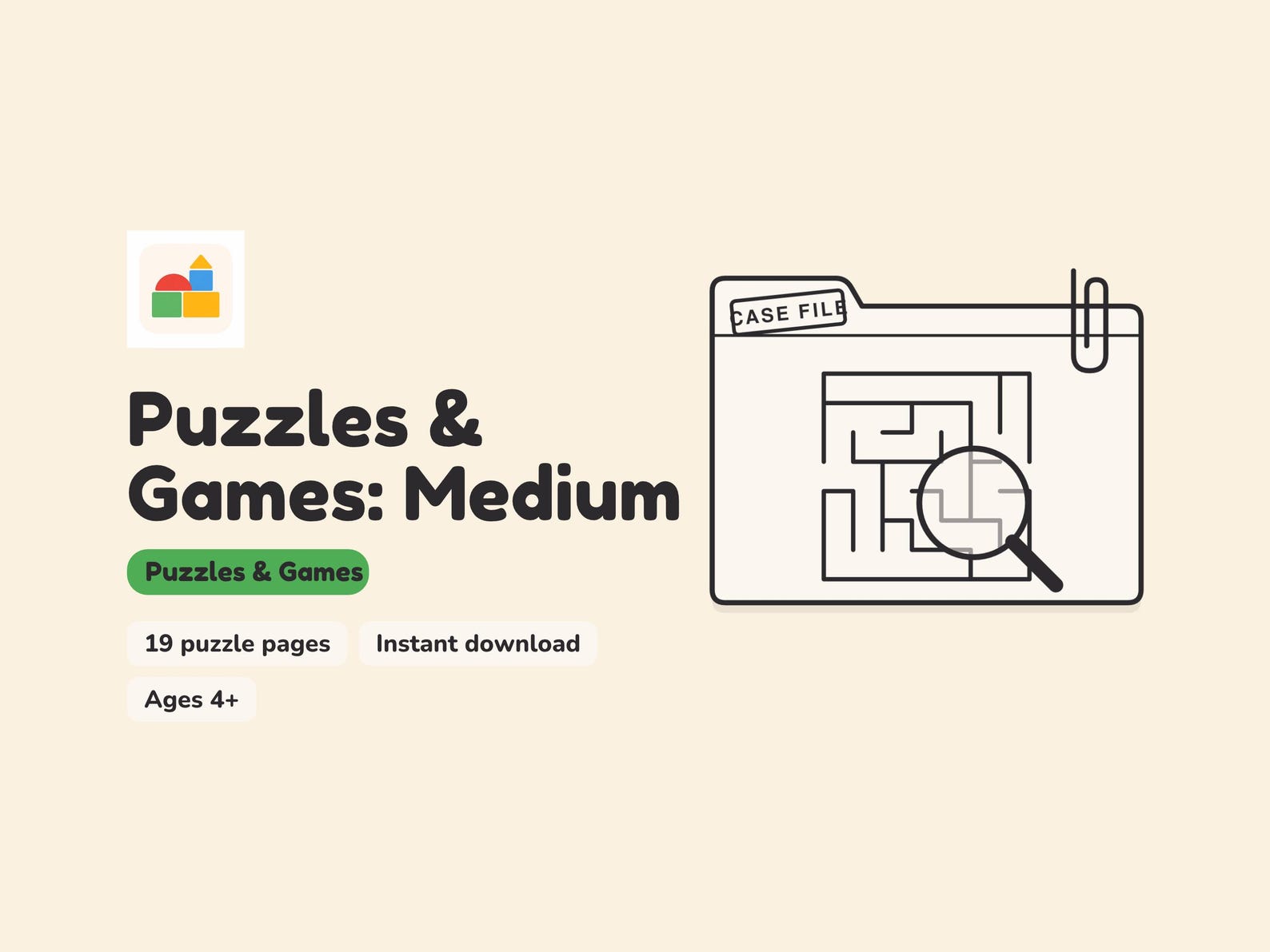
Puzzles & Games: Hard
19 expert pages: ciphers, logic grids, sudoku-style puzzles and crosswords.
View printableOne maze a day is plenty. Pair it with a word search for a slower session, or with counting pages when the child wants variety.
For first steps, read easy mazes for kids. For the step after that, this guide to challenge mazes printable pages covers loops and readiness. For the wider picture, start with printable puzzle books for kids.
Sizes that matter more than difficulty
Two mazes can look equally hard and behave completely differently, because corridor width decides more than path length.
A wide corridor can be followed with a finger and a pencil without much control. A narrow corridor needs precision the child may not have. Before changing level, change width.
The second size that matters is the page. A maze printed across a whole sheet is easier to follow than the same maze shrunk to half a page, because the corridors shrink with it. Print at 100 percent and never at fit to page.
Reusing a maze
Slip a maze into a plastic sleeve and use a dry erase marker. A child can then do the same maze three times, which is more useful than three new mazes at the same level.
Repeating a solved maze is not a waste. The second pass is faster and calmer, and the child notices that they remember the route. That memory is the beginning of planning.
A cheap way to build a set
Draw four mazes in pencil, one per evening, and keep them in a folder. Four homemade mazes at the right width will get used more than a printed pack at the wrong one.
Choosing with the child
The level is easier to hold when the child chooses it. Lay out the three books and ask which one looks right today. A tired child will often pick easy, and that is a sensible decision rather than a step backwards. Printable mazes for kids only work when the stack stays small and finishable. Keep four or five pages out and the rest in the folder, and replace a page when it is done rather than adding to a pile. The pile is what makes a shelf feel like homework, and the folder is what makes it feel like a choice.
Keep printable mazes for kids at the width the child can follow, and change the route before changing the size.
Where to start
Print one maze at the level your child can finish without help, and let them trace it with a finger first. Maze books at three levels are in the YHO Build It For Me shop.
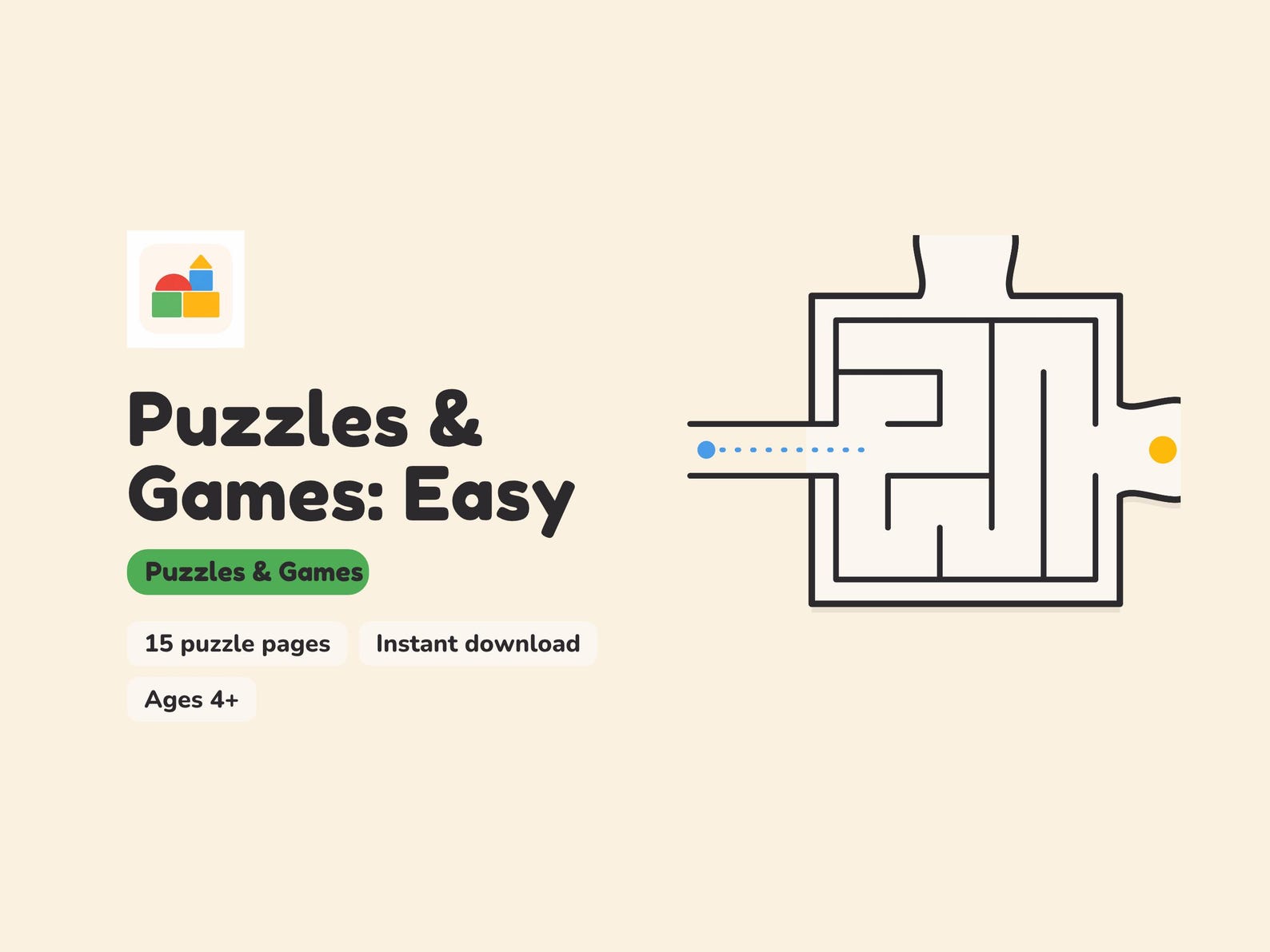
Puzzles & Games: Easy
15 puzzle pages for first solvers, with a lesson plan and answer key.
View printableFrequently asked questions
What are printable mazes for kids actually teaching?
Pencil control, looking ahead, and recovering from a wrong turn. A maze is a plan you can see, which makes it good practice for patience.
How do I draw a simple maze at home?
Draw a grid, mark a start and a finish, then draw one correct path. Add two or three dead ends that lead away from it. Keep the walls far apart.
What if a child gives up halfway through a maze?
Fold the paper and come back later, or offer a smaller maze. A half-finished maze is not a failure, it is a page for another day.
Some links go to the Etsy shop. Every printable here is one I would use in my own learning routine.